



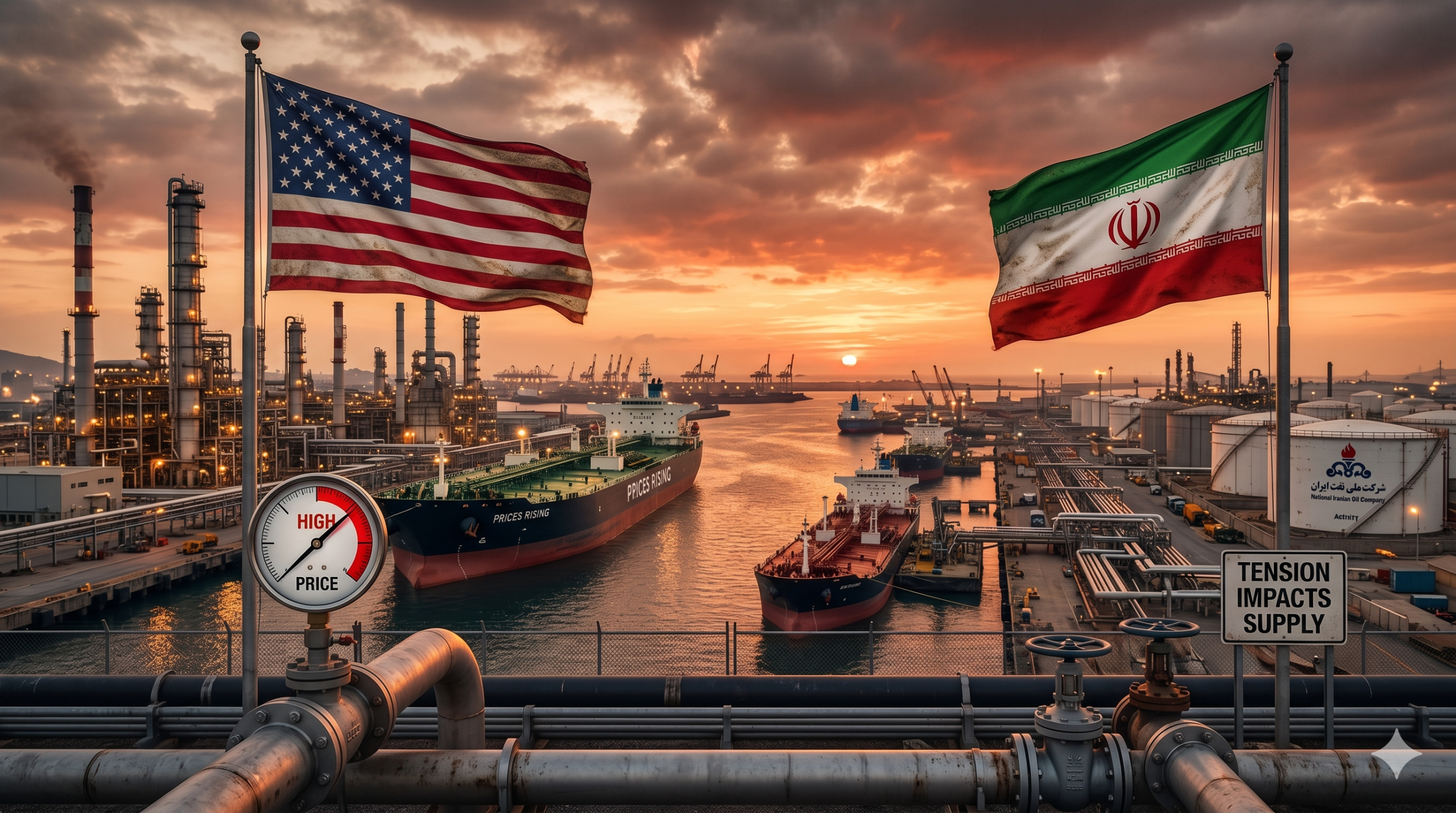
Global oil prices climbed sharply this Tuesday after renewed U.S. strikes in southern Iran disrupted expectations for a near-term peace agreement and reignited concerns over energy supplies moving through the Strait of Hormuz.
Brent crude futures rose $3.44, or 3.6%, to settle at $99.58 a barrel after earlier trading above the $100 mark, while U.S. West Texas Intermediate crude fell $2.71, or 2.8%, to close at $93.89 per barrel . The gains followed a volatile week in global energy markets tied to developments in the U.S. and Iran negotiations.
The price increase came after the United States carried out strikes in southern Iran, which Tehran described as a violation of a fragile ceasefire. The attacks weakened optimism about the ongoing talks between the two countries could soon reopen shipping routes through the Strait of Hormuz, one of the world’s most critical energy chokepoints.
READ: Oil prices rise again amid US-Iran deadlock (April 28, 2026)
Roughly one-fifth of global oil and liquefied natural gas flows normally pass through the Strait of Hormuz. Shipping traffic through the waterway has remained limited since the conflict escalated earlier this year, contributing to tighter global supplies and continued market volatility.
Some vessels resumed limited movement through the strait in recent days, including three LNG tankers headed toward Pakistan, China and India, along with a supertanker carrying Iraqi crude to China. However, shipping risks remained elevated after a tanker near Oman reportedly experienced an external explosion close to the vessel’s waterline on Tuesday.
Oil markets have experienced sharp swings throughout May as investors reacted to conflicting signals from Washington and Tehran. On Monday, Brent crude fell 7% to its lowest level since April 20 after reports suggested progress toward a possible agreement. By Tuesday, renewed military activity reversed much of that decline.
READ: Global oil prices surge past $115 per barrel (March 30, 2026)
Analysts warned that continued disruption in the Gulf could tighten global inventories during peak summer demand. Tamas Varga of PVM Oil Associates told Reuters that oil inventories were already “depleting at an alarming pace” as restricted flows through Hormuz continued. Giovanni Staunovo of UBS also said traders were still waiting for more details on a possible diplomatic agreement while tensions persisted in the region.
Despite the renewed violence, negotiations between the United States and Iran continued on Tuesday in Doha through mediators including Qatar and Pakistan. Iranian officials said discussions remained active, although key disagreements over sanctions relief and shipping access through Hormuz had not yet been resolved.