



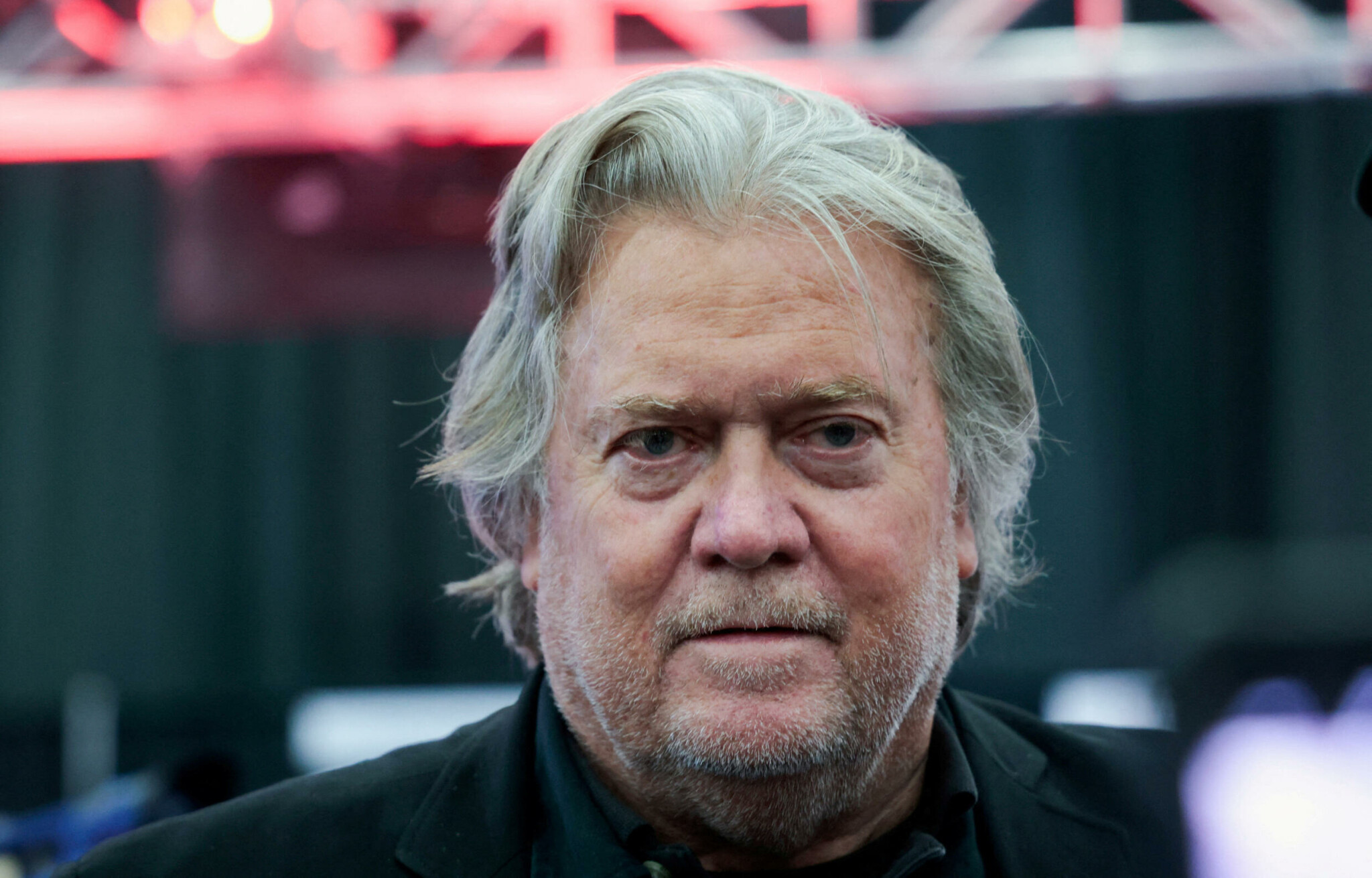
Former White House strategist Steve Bannon has sparked a fresh controversy over immigration, higher education, and technology sector hiring. He called for sweeping restrictions on foreign students and argued that American workers should not have to compete with international talent for jobs inside the United States.
In a recent interview, Bannon questioned the role of foreign students in American universities and the technology workforce.
“Why should American citizen — his family been here five or six generations that can go to college — get a degree and … smart enough? Why should they have to compete against the world on the territory inside the United States?” Bannon said.
He argued that colleges should prioritize American citizens and suggested that international students who graduate from U.S. universities should be required to leave shortly after completing their studies.
“I’d like to put an exit visa on every college graduate. A foreign student that graduate from college here in 30 days to leave and go back home and help make their nation great again,” Bannon said.
The former Trump adviser framed the issue as one of economic opportunity, particularly for African American and Hispanic communities.
READ: Supreme Court backs Trump in immigration judges dispute (May 26, 2026)
“It’s not about intelligence, it’s about access to opportunity,” he said. “You’re never going to get folks into high value added post-industrial jobs based around artificial intelligence or coding or anything like that until we make the engineering schools and computer science schools available to them.”
The remarks quickly circulated across social media, where supporters and critics clashed over immigration, meritocracy and diversity policies.
One user partially agreed with Bannon’s concerns about labor market competition but directed criticism toward Indian professionals working in the technology industry.
“He’s half right. Silicon Valley is clearly hiring a lot of incompetent Indian engineers who can’t code,” the user wrote, before claiming that “In a true meritocracy, Silicon Valley would mostly be Chinese and White.”
The same post also alleged that Indian workers engage in racial favoritism in hiring decisions, a claim offered without supporting evidence.
Another user voiced support for Bannon’s broader argument against identity-based preferences, writing: “Full support to this dude. Reservations by race seems as disastrous as reservations by caste.”
The exchange highlights growing tensions surrounding immigration, skilled worker visas and workforce diversity programs as artificial intelligence and advanced technology industries continue to expand.
Indian Americans remain one of the largest and most influential immigrant groups in the U.S. technology sector. The debate also comes amid continuing disputes over the H-1B visa program, which U.S. technology firms argue is critical for attracting highly skilled talent. As immigration once again emerges as a central political issue ahead of the 2026 midterm elections, Bannon’s comments and the reaction they generated underscore how questions of economic opportunity, education, and national identity continue to divide public opinion.