



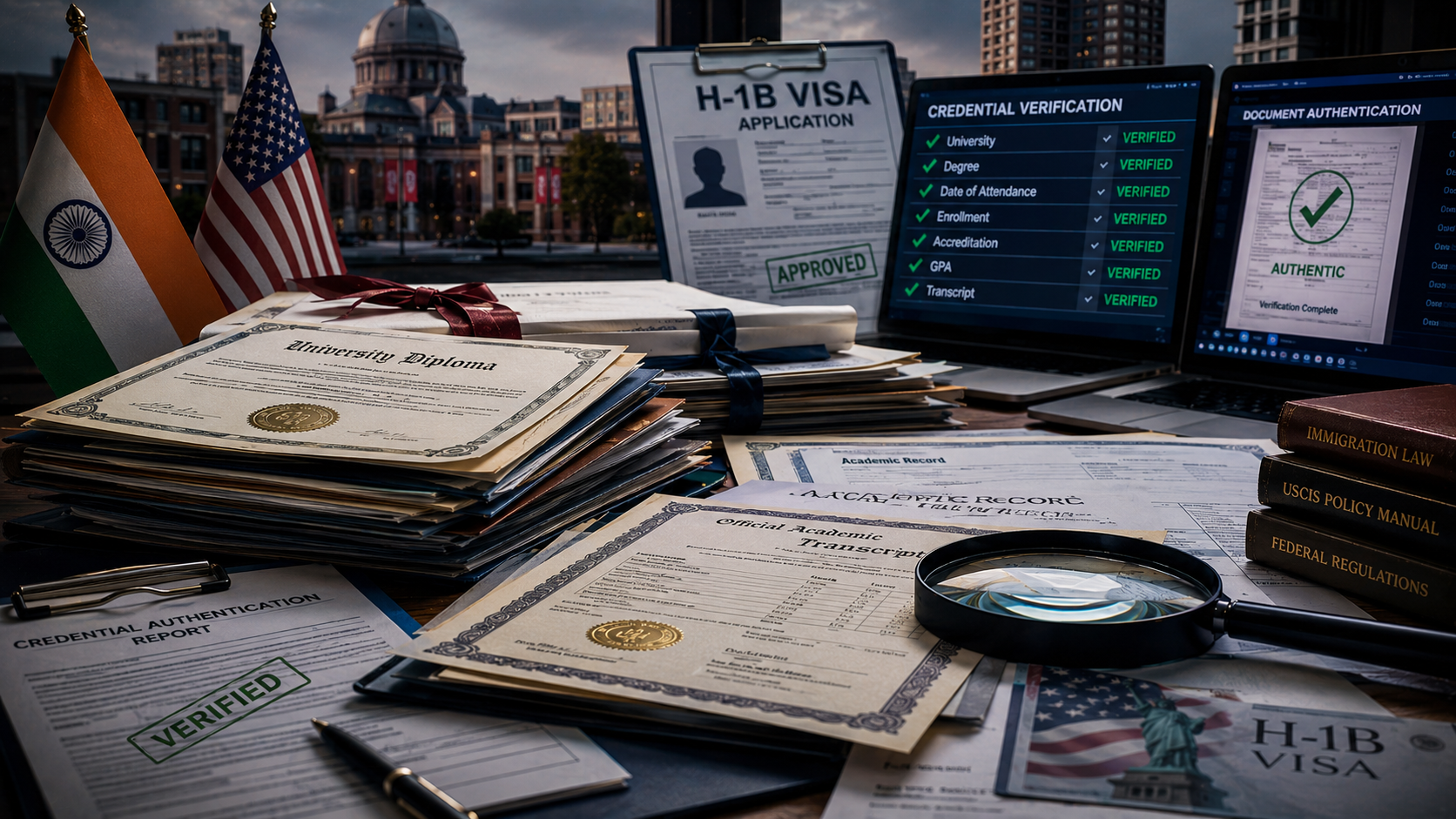
A sweeping investigation in India has uncovered a large-scale academic fraud network involving counterfeit university degrees, prompting renewed scrutiny of credential verification in the U.S. H-1B visa system. It also raises concerns for employers, immigration authorities, and the broader Indian diaspora.
According to a report by The Financial Express, citing Insider Wire and Indian law enforcement authorities, investigators have seized nearly 100,000 fake degree certificates and forged academic documents linked to at least 28 universities across India. Authorities allege that some fraudulent credentials may have been used to support applications for U.S. H-1B visas, one of the primary pathways for highly skilled foreign workers seeking employment in America.
READ: Indian mango row sparks diaspora backlash (June 6, 2026)
The investigation is being described as one of the largest education fraud probes recently. Officials reportedly recovered counterfeit university seals, fabricated transcripts, and forged certificates spanning professional fields including engineering, medicine, and nursing. One institution alone is accused of issuing more than 36,000 fraudulent degrees, according to the reports.
Indian authorities are now tracing where the documents were used and whether they were used to support employment applications, professional licensing requests, or visa petitions, both within India and overseas. Investigators reportedly found that some fake degrees were sold for as little as $1,400, a fraction of the earning potential associated with overseas employment opportunities.
The findings could carry significant implications for the H-1B program, which allows U.S. employers to hire foreign workers in specialty occupations that generally require at least a bachelor’s degree or its equivalent. Educational credentials form a central component of H-1B eligibility, making the authenticity of academic records critical to the integrity of the system.
READ: Overseas hiring grows, Experts warn US firms (June 6, 2026)
For Indian Americans and the hundreds of thousands of Indian professionals who have entered the United States through employment-based immigration pathways, the case highlights a sensitive issue. Indian nationals consistently account for the overwhelming majority of approved H-1B visas. Immigration advocates have long argued that isolated fraud cases should not be used to characterize the broader community of highly qualified workers who contribute to the U.S. economy. At the same time, experts say large-scale document fraud can undermine confidence in legitimate applicants and increase pressure for stricter verification procedures.
The current investigation has also revived debate surrounding past allegations of abuse within the H-1B system. However, reports note that widely circulated claims that most Indian H-1B applications contain fraudulent information are unrelated to the present investigation and stem from older, disputed assessments rather than current government findings.
No U.S. agency has yet announced a formal review tied to the Indian investigation. However, immigration attorneys say the case could lead to increased scrutiny of foreign academic credentials, additional verification requirements, and heightened compliance expectations for employers sponsoring foreign workers.
As Indian and U.S. authorities continue their investigations, the episode underscores the growing importance of credential verification in a global labor market where education, immigration, and technology increasingly intersect. The outcome could influence not only future visa adjudications but also broader discussions about trust, transparency, and accountability in international talent recruitment.