



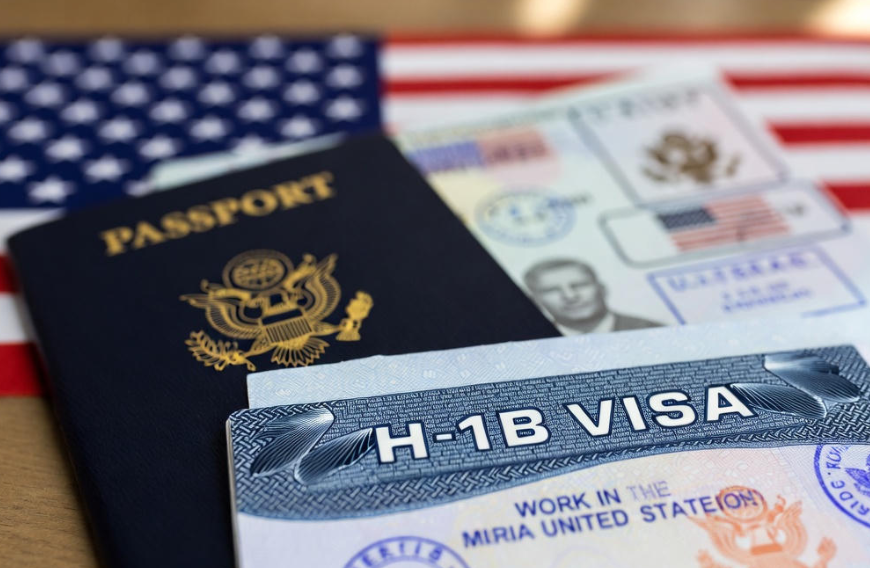
Immigration attorneys say an increasingly common question at U.S. visa interviews is reviving memories of the Trump-era “Buy American, Hire American” policy. For H-1B and L-1 applicants, particularly in tech and consulting, the answer could make the difference between approval and refusal.
“The adjudication standards appear to be tightening for Indian and Chinese nationals in general. Specifically, I am always going to be most concerned with L-1Bs and H-1Bs for IT contracting companies and for large consulting companies.” – James Hollis, Business immigration Attorney
Back in 2017, during the first Trump administration, President Trump signed a Buy American, Hire American executive order. The order was aimed to direct U.S. agencies to propose rules so as to prevent immigration fraud and abuse and also to ensure that the H-1B visas are awarded to the most-skilled or highest-paid applicants.
Several immigration attorneys say they are seeing echoes of the earlier order as work visa applicants increasingly encounter heightened scrutiny and delays. Business immigration attorney, James Hollis of McEntee Law Group says, “There are questions that I see coming up more and more as I debrief clients from visa refusals and these questions recall the “Buy American and Hire American” executive order from the prior Trump Administration.”
READ: Trump administration introduces $750 fast-track visa interview option (June 10, 2026)
One of the questions that often leaves applicants flummoxed is typically are on the lines of – “Why can’t an American do this instead of you?”
And while attorneys maintain that the answer to these questions would vary by the client’s context, it is best to be prepared with a reasonable response. Many applicants admit that while they prepare answers regarding their qualifications, experience, the nature of their expertise, justifying why they would be a better fit than any American with a similar background can be a slippery slope.
James Hollis says, “I am most concerned about the question: Why can’t an American do this instead of you?” in L-1B and E-2 employee visa application contexts. He adds, “The reason this question catches applicants and even lawyers off guard is because the immigration law doesn’t ask whether it would be better for a US worker to do the job instead of the person applying for the visa. The L and E categories have no limit on the number of employees that may be transferred into the US from abroad. So, the system itself creates limits in the form of USCIS and visa interviews. In this case, the limit is the extent to which the consular officer thinks the transfer is truly necessary.” This means that the consulate does have considerable leverage on the issue. In a circumstance where they feel that an employee may not possess extraordinary professional abilities, they pose this question which may not unfortunately have a direct answer. Many applicants face rejections either because they were not expecting such a question or they were not able to sufficiently demonstrate what unique skillset they bring to the table.
On how can a candidate brace themselves against such a rejection, attorney Hollis recommends that the preparation should begin way ahead of the interview. He says, “(Attorneys should) Prep their clients to explain what is so special about their work before the interview so that they are ready to defend themselves if this question comes up.” It is also a good idea, he adds, “to have them identify the knowledge, experience, and connections that they have that a US worker would not have.” He cautions, “But also try to limit the number of interviews these types of applicants are doing in the next 3 years. The system is overcorrecting, and if you can avoid your client being caught up in it, all the better.”
READ: ‘I gave up my H-1B visa because it restricted my potential as an entrepreneur’ (June 10, 2026)
Now, are there any specific industries, roles, or applicant profiles—particularly among Indian and Asian professionals that are facing heightened scrutiny under this mindset? And what practical steps can they take to reduce the risk of refusal?
Hollis says, “The adjudication standards appear to be tightening for Indian and Chinese nationals in general. Specifically, I am always going to be most concerned with L-1Bs and H-1Bs for IT contracting companies and for large consulting companies. In some cases, there is not going to be much that an applicant can do on their own because part of the analysis is going to be the number of applicants of that type from the company, the salary for the role, and other details that they likely don’t have control over. There will be guidance in the background at the consulates telling them what in particular to more highly scrutinize. In that situation, my general recommendation is to ensure that the documentation is clear and accurate and they understand it and that they are ready to explain what they are intending to do in the US, where they will be working and why/how they are specifically qualified for the role based on their background. Fraud in particular is a significant concern in India, so the more that the applicants can do to appear knowledgeable and confident about the details of the role, the better position they will put themselves in.”