



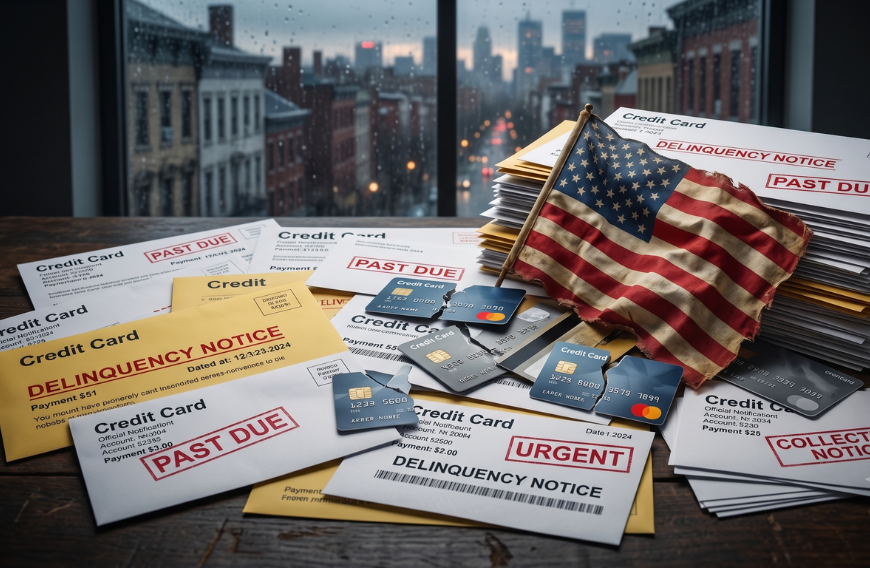
A report by USA Today revealed that American consumers are falling behind on credit cards at levels not seen since the Great Recession Era. It cited a report from the Federal Reserve Bank of New York, which mentioned that around 13% of the nation’s credit card balance was at least 90 days delinquent in the first quarter of 2026.
This is the highest figure reached since 2011, when the nation was recovering from the 2008 financial crisis. The nation’s collective credit card balance stands at $1.25 trillion, just below its historic peak.
Credit card experts claim that the numbers suggest a small but increasing number of American consumers have fallen into serious credit card debt, which they are unable to come out of.
“It points to increasing vulnerability among a subset of consumers,” said Grace Zwemmer, a U.S. economist at Oxford Economics. “It’s not a matter of new consumers falling into delinquency, but rather consumers who are already in delinquency, falling deeper into delinquency.”
READ: US consumer confidence falls as inflation worries grow (May 27, 2026)
The report also mentioned that credit card debt rose in 2022 and 2023 with a staggering rise in inflation. This came after a decline in the nation’s collective card balance through much of 2020 and 2021, as consumers rode out the COVID-19 pandemic and cashed federal stimulus checks.
The national card balance topped $1 trillion in early 2023. The portion of that balance that was 90 or more days delinquent, a sign of cardholders falling behind, rose from 8% in the second quarter of 2023 to 10.7% in the first quarter of 2024 and 12.3% in the first quarter of 2025. The delinquency rate is now getting close to its Great Recession peak, 13.7%, which was reached in early 2010.
“There’s no question we are on a concerning trajectory,” said Odysseas Papadimitriou, founder and CEO of the personal finance site WalletHub.
READ: Food prices in US rise sharply as fuel, tariffs strain grocery costs (May 14, 2026)
Credit experts say the growing share of delinquent debt signals that a pocket of cardholders have fallen behind on their cards and may not be able to catch up.
“It’s pointing to the fact that when people get in trouble, there aren’t options for them to get out of trouble,” Papadimitriou said.
The report also mentioned that half of American cardholders are doing fine. “There are a lot of people who pay on time, and there are a lot of people who are super-late,” said Ted Rossman, principal analyst at Bankrate. “It’s not big, evil, scary debt if you’re paying it off every month and getting the free miles.” Rossman added that high delinquency rates probably represent a relatively small number of consumers with significant balances, large enough that they cannot easily repay them.