



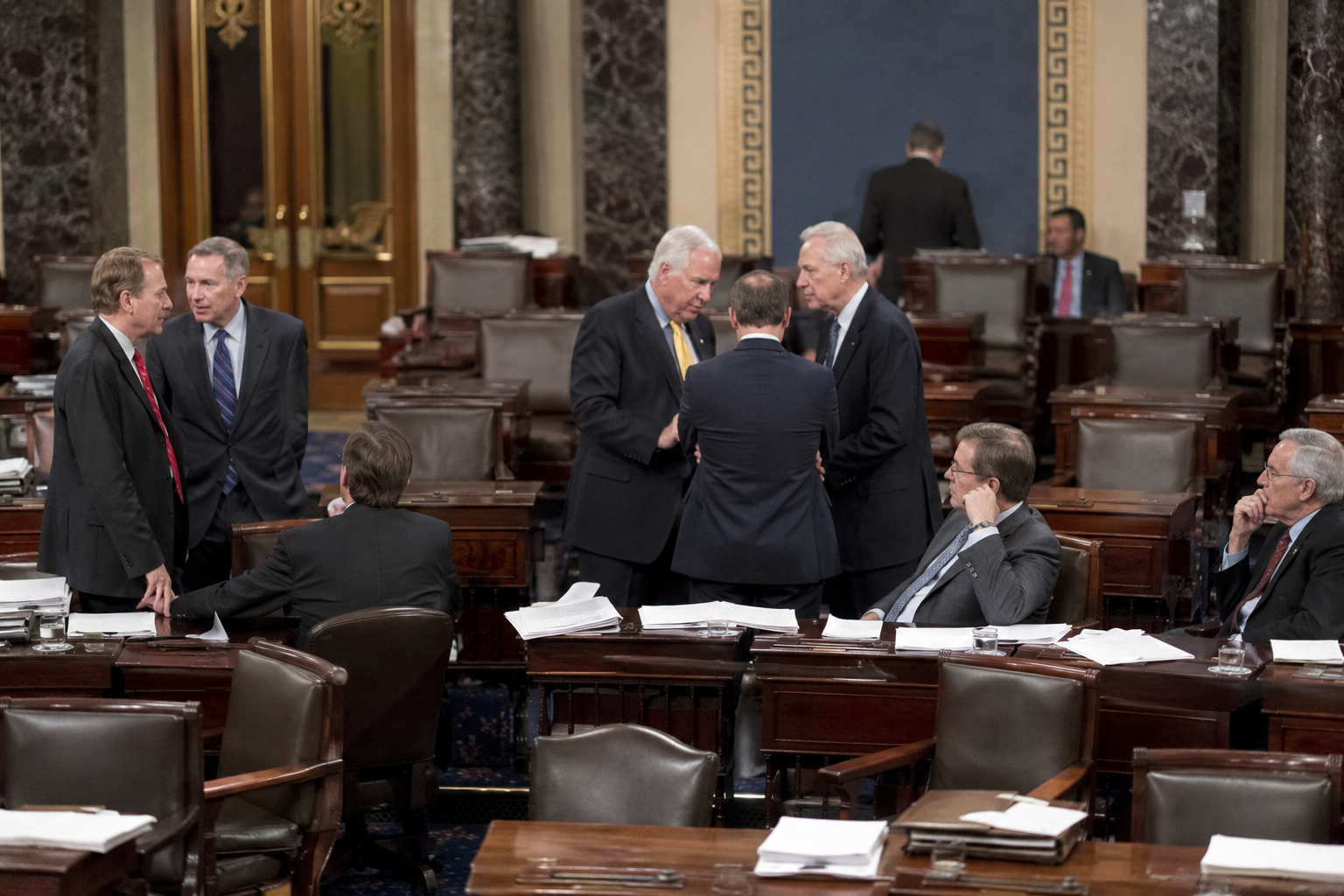
A growing number of Senate Republicans are pushing back against President Donald Trump, exposing tensions within the GOP as lawmakers balance loyalty to the president against the political realities of a challenging midterm election cycle. The disagreements span voting legislation, intelligence appointments, government spending and congressional authority, signaling one of the most visible rifts between Trump and Senate Republicans since his return to the White House.
At the center of the latest dispute is Trump’s insistence that Republicans tie passage of the SAVE America Act, a voter-identification and election security proposal, to other major legislation. This includes the renewal of key surveillance authorities under the Foreign Intelligence Surveillance Act (FISA). Senate Majority Leader John Thune and several Republican senators have argued that such a strategy is unlikely to succeed given the lack of sufficient support in the Senate.
READ: Kash Patel clashes with Van Hollen over drinking allegations at Senate hearing (May 13, 2026)
The disagreement intensified this week when Trump intervened in Senate plans to advance the nomination of former Securities and Exchange Commission Chairman Jay Clayton as director of national intelligence. The move forced the cancellation of a scheduled confirmation hearing and frustrated lawmakers who had hoped to fill the position quickly amid broader national security concerns.
Many Republican senators publicly criticized the decision. Sen. Thom Tillis described Trump’s intervention as a significant mistake that complicated efforts to achieve the administration’s broader objectives. Senate Intelligence Committee Chairman Tom Cotton also expressed disappointment over the disruption.
The intelligence nomination dispute is tied to concerns about Bill Pulte, Trump’s controversial choice to oversee the nation’s intelligence apparatus temporarily. Both Republicans and Democrats have questioned Pulte’s qualifications, creating additional friction within Congress.
Beyond intelligence matters, Senate Republicans have also resisted several White House-backed initiatives, including a controversial compensation fund for individuals claiming political targeting by federal authorities. Concerns over oversight and eligibility prompted lawmakers to delay action on major immigration enforcement funding legislation earlier this year.
READ: Senate approves $70 billion immigration enforcement bill after dispute over Trump fund (June 5, 2026)
The emerging divide comes as Republicans prepare for competitive midterm contests across several states. Some senators have expressed concern that controversial political battles could distract from economic and legislative priorities important to voters. Analysts note that while Trump remains highly influential within the Republican Party, lawmakers facing reelection are showing a greater willingness to challenge specific proposals they view as politically or legislatively risky.
Despite the disagreements, there is little indication of a broader revolt against Trump. Most Republican senators continue to support the administration’s core agenda. However, the recent clashes highlight the growing complexity of governing with narrow congressional majorities and competing political pressures ahead of November’s elections.