



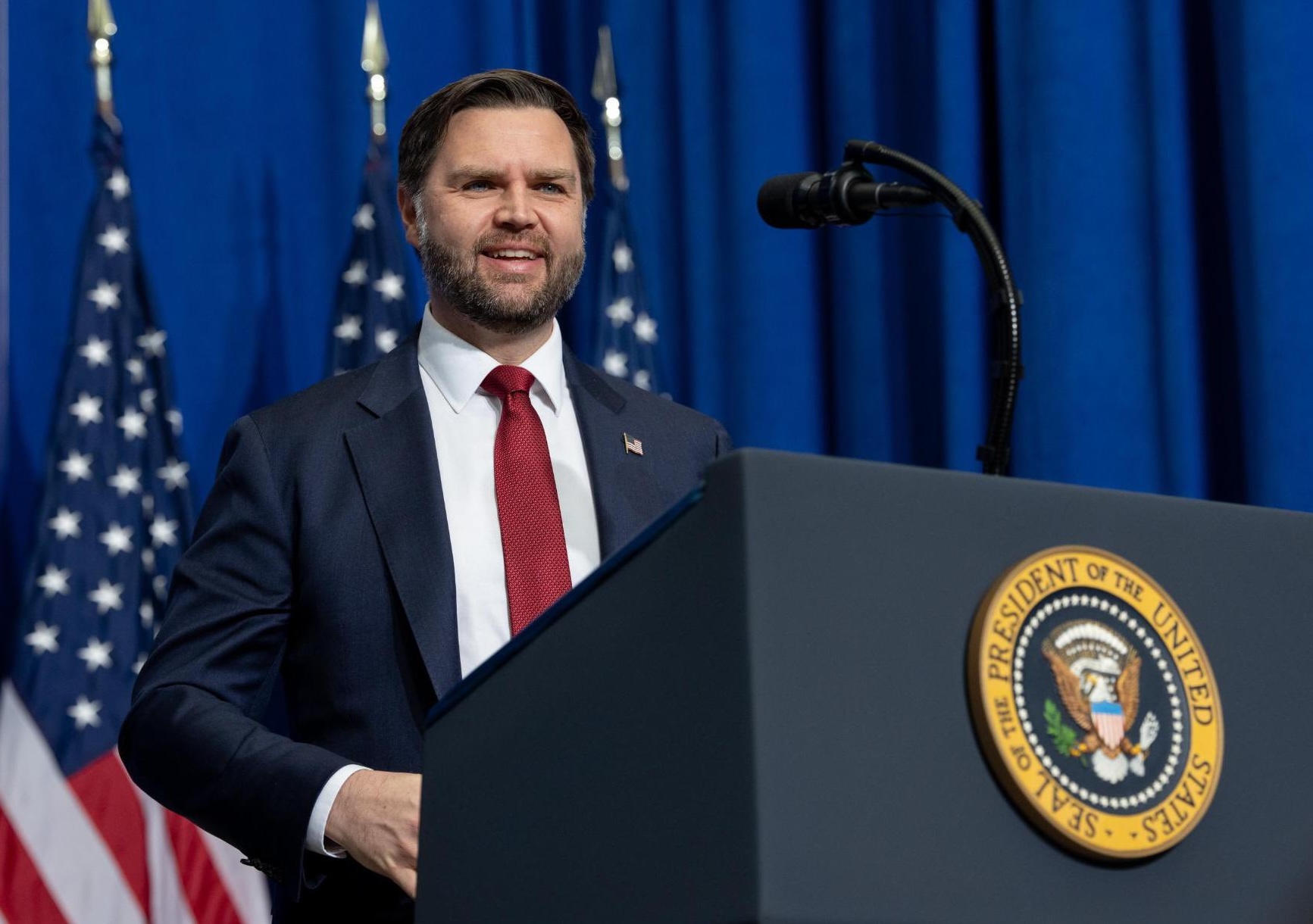
The White House said Thursday night that Vice President JD Vance was delaying a trip to Switzerland to lead a new round of negotiations with Iran over its nuclear program. This has raised questions about what’s next for the tentative end of the war.
The talks had been due to begin in the Swiss village of Obbürgen two days after the signing of a memorandum of understanding (MoU) that opened a 60-day window to negotiate a permanent understanding over Iran’s nuclear program, while opening up the Strait of Hormuz for oil traffic.
The announcement about the postponement came after a Hezbollah strike killed four Israeli soldiers, and Israel carried out a wave of retaliatory airstrikes in south Lebanon and the Bekaa valley, killing at least 18 people.
Read: ‘Going strong’: JD Vance and Usha Vance celebrate 12 years of marriage (June 16, 2026)
“The logistics of these negotiations have never been simple or predictable. As of now, the vice-president is not departing tonight,” a White House spokesperson said late on Thursday.
The U.S. had said that it had lifted its blockade, allowing oil tankers to begin freely moving through the Strait of Hormuz after months of restrictions to the channel.
“As they dial up their good behavior, we can dial up the economic relief,” Vance said. “If they dial down their good behavior, we can turn it off.”
A top Trump administration envoy told U.S. lawmakers in a private briefing that Iran will invite the U.N.’s nuclear watchdog agency to inspect its nuclear sites. Iranian Supreme Leader Ayatollah Mojtaba Khamenei seemed to endorse direct negotiations for his officials. According to reports, Trump’s proposed nuclear agreement with Iran could end up imposing fewer restrictions than the landmark agreement reached under former President Barack Obama, a deal Trump repeatedly criticized before withdrawing the United States from it.
Read: JD Vance says major Medicaid and autism fraud is being uncovered in Minnesota (May 22, 2026)
Khamenei’s response to the agreement has been seen as a change in Iran’s approach, considering his father and predecessor had long opposed direct talks, especially after the U.S. pulled out of the 2015 nuclear deal between Iran and world powers.
The agreement states that Iran’s stockpile of highly enriched uranium must at minimum be diluted under international supervision. It also says that Iran shall not procure or develop nuclear weapons, a commitment it has made previously.
Trump envoy Steve Witkoff told members of Congress that Iran will invite the International Atomic Energy Agency to inspect its nuclear sites and begin work on identifying and uncovering the locations of Tehran’s enriched material, which is believed to be buried under rubble. The agreement requires Iran to “commit to renounce their nuclear ambitions in writing,” White House spokeswoman Olivia Wales said.