



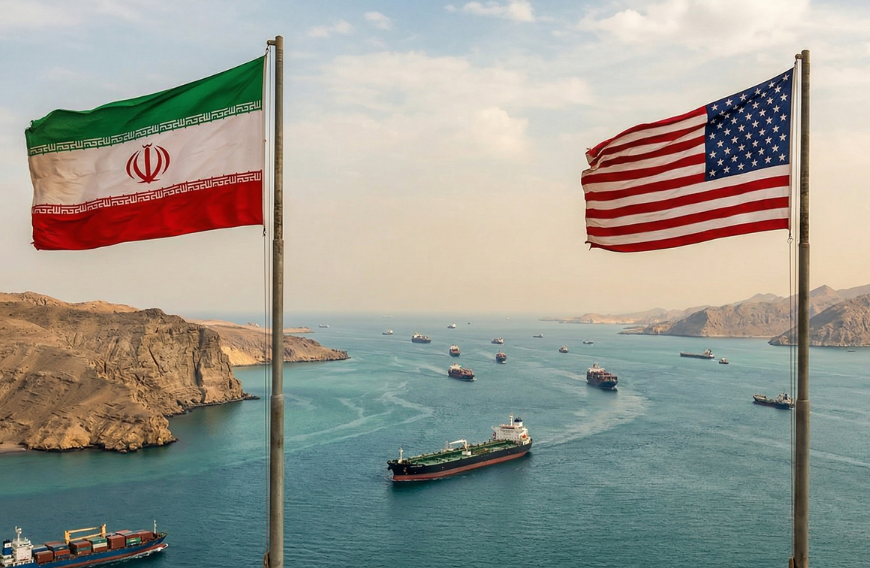
President Donald Trump’s proposed nuclear understanding with Iran could end up imposing fewer restrictions than the landmark agreement reached under former President Barack Obama, a deal Trump repeatedly criticized before withdrawing the United States from it.
The emerging framework, expected to be negotiated over a 60-day period, is based on a memorandum of understanding that broadly states Iran’s stockpile of near-weapons-grade uranium must be “adequately addressed.”
However, the document does not clearly spell out what will happen to the existing uranium reserves, which are believed to be sufficient for producing multiple nuclear weapons. The ambiguity raises questions about whether the new arrangement can match, let alone exceed, the safeguards built into the 2015 nuclear accord.
Trump has also offered conflicting views on the significance of Iran’s enriched uranium stockpile. During the Group of Seven summit in France, he appeared uncertain about whether securing control over the material was essential to ending the conflict with Iran, which began on February 28. Referring to the uranium as “nuclear dust,” Trump suggested its practical value may be limited.
Read: Pentagon officials say Grok AI was used to fire 2,000 missiles at Iran (June 17, 2026)
“You could make the case ‘why are you even bothering?’ because it’s not really valuable,” as per President Trump during a meeting with Qatari Emir Sheikh Tamim bin Hamad. “Psychologically we want to get it.”
The comments have fueled debate over the effectiveness of a military campaign that was launched with the stated goal of preventing Iran from obtaining a nuclear weapon.
Further complicating matters, inspectors from the International Atomic Energy Agency have not independently confirmed the condition or whereabouts of Iran’s enriched uranium stockpile since a 12-day U.S.-Israeli bombing campaign conducted in June last year.
Beyond the questions surrounding uranium restrictions, the proposed framework appears to offer Tehran several major concessions. Under the memorandum of understanding, the United States would move toward lifting all sanctions imposed on Iran, including measures tied to United Nations Security Council resolutions.
The deal would also unlock billions of dollars in Iranian assets that have remained frozen abroad for years. In addition, Iran would gain access to an estimated $300 billion earmarked for reconstruction, infrastructure projects, and broader economic development.
Read: Rupee gains momentum, oil prices slide after US-Iran ceasefire agreement (June 16, 2026)
The agreement would also clear the way for the country to return to global oil markets, allowing it to resume crude exports at a time when its economy has been strained by years of sanctions. For critics, these provisions raise concerns that Iran could secure significant economic and diplomatic benefits while leaving key questions about its nuclear capabilities unresolved.
The benchmark for any new Iran nuclear arrangement remains the 2015 agreement negotiated during the Obama administration, a deal Trump withdrew from during his first term. Reached after nearly two years of negotiations, that accord imposed strict limits on Iran’s nuclear program. It capped the country’s stockpile at 300 kilograms of low-enriched uranium, restricted advanced nuclear research, required the dismantling of parts of its nuclear infrastructure, and granted the International Atomic Energy Agency broad inspection powers, including the ability to conduct short-notice inspections.
A direct comparison between that agreement and Trump’s emerging framework is difficult because many of the new deal’s specifics are still under negotiation. Nevertheless, Trump has continued to dismiss the earlier accord. Speaking on Tuesday, he argued that the Joint Comprehensive Plan of Action, the formal name of the 2015 deal, failed to stop Iran’s nuclear ambitions.
“That was a road to a nuclear weapon. Mine is a wall against a nuclear weapon,” Trump stated.
The draft memorandum, expected to be signed in Switzerland on Friday, includes a renewed pledge from Iran that it will never develop nuclear weapons. However, Tehran has issued similar assurances in the past. Iran remains a signatory to the Nuclear Non-Proliferation Treaty and has previously cited religious decrees prohibiting the pursuit of atomic weapons.
The evolving agreement shows a dramatic shift in Washington’s approach. Earlier this year, officials were weighing options that included seizing Iran’s uranium stockpile through direct military action. Now, the administration appears more willing to accept uncertainty surrounding the material if it helps stabilize the region, restore energy supplies, and support the global economy.
Read: World reacts to US, Iran striking a peace deal to end war (June 15, 2026)
That apparent change in strategy is drawing criticism on Capitol Hill, including from some Republicans who have traditionally backed Trump. Senator Lindsey Graham, one of the president’s longtime allies and a vocal advocate of a hardline Iran policy, recently argued that Tehran should not be permitted to enrich uranium under any circumstances.
The debate has gained urgency as the International Atomic Energy Agency continues to warn about heightened nuclear proliferation risks following this year’s conflict.
Iran has previously rejected demands to transfer its uranium stockpile abroad, instead suggesting that any highly enriched material could be neutralized within the country. Before the outbreak of war in June 2025, IAEA inspectors maintained detailed oversight of nuclear material stored at key facilities including Fordow, Isfahan, and Natanz, tracking inventory down to precise quantities.