



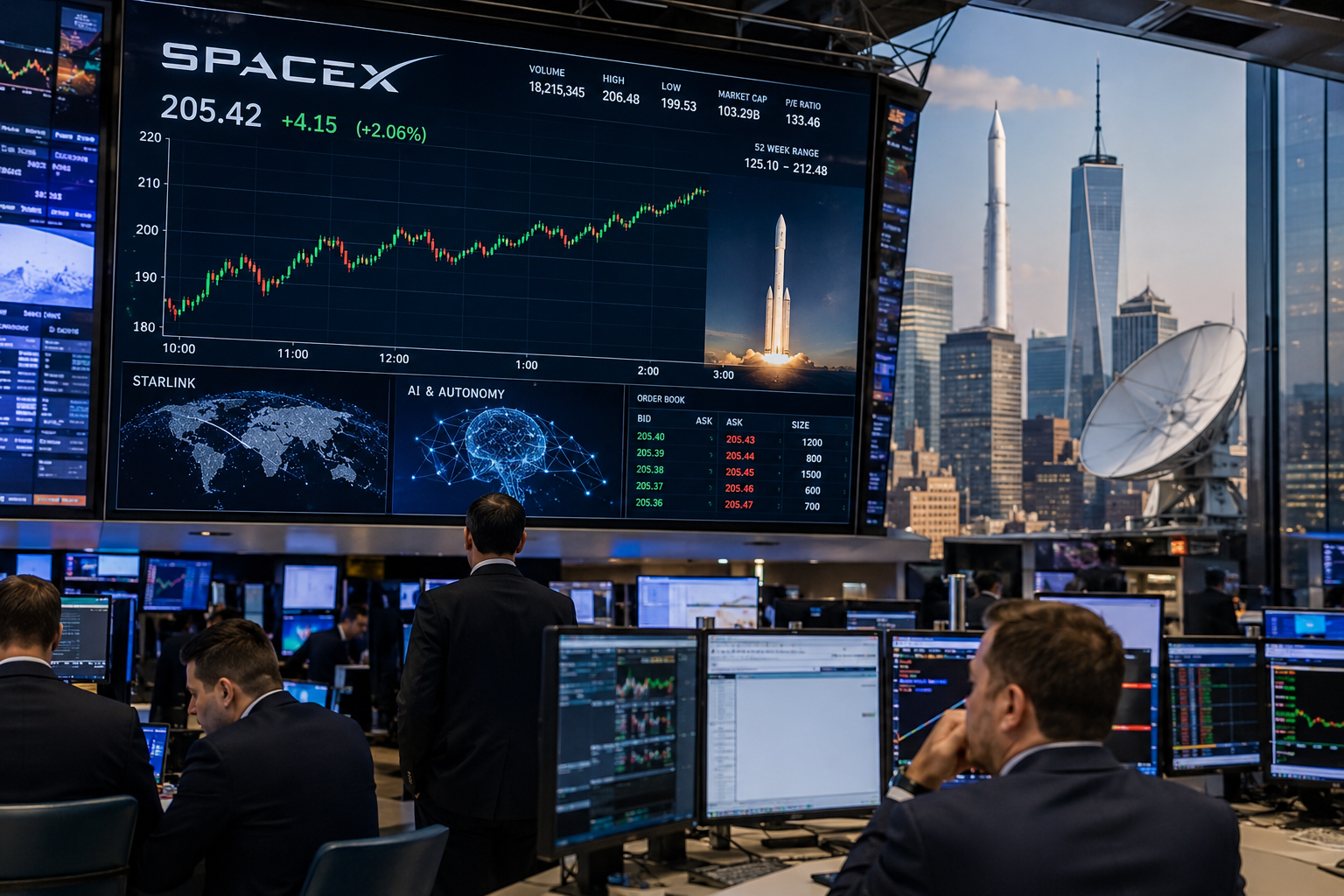
While SpaceX had surged 19% during its IPO debut, the company’s shares have fallen ever since. According to reports, the company is down more than 4% in premarket trading on Monday, continuing a selloff that has seen the stock fall in the past two full days of trading after a rally after its IPO.
Earlier this month, SpaceX went through a much-anticipated IPO that made a record $75 billion on the sale of 555.56 million shares, and raised CEO Elon Musk to trillionaire status. Stock surged in SpaceX’s first two full days as a public company, with market cap surpassing Amazon and briefly, Microsoft on Tuesday, before falling back below both. However, of late, there has been a decline in the company’s shares.
READ: SpaceX shares slide as IPO Euphoria begins cooling (June 21, 2026)
Shares sank 5% and 3.6% on Wednesday and Thursday last week. The stock was still up 37% since its historic debut at market close on Thursday, which offered shares at a set price of $135. According to CNBC, while bullish investors are betting on Musk driving long-term gains, however, the average investor who bought SpaceX shares in the open market after its debut had seen nearly all of their gains disappear by the end of last week.
According to reports, this pattern is common for mega-IPOs. Large, highly-anticipated IPOs often tend to find it difficult to exceed expectations. Mega-IPOs over $50 billion have historically delivered a median one-year return of -31.9%.
Research finds that the largest companies by market capitalization have historically underperformed broader indexes over long periods. That’s largely because expectations become almost impossible to satisfy.
READ: SpaceX plans for potential $20 billion bond offering (June 19, 2026)
Reports also mentioned that SpaceX had reported a net loss of roughly $4.9 billion in 2025 after incorporating xAI. The company lost another $4.3 billion during the first quarter of 2026 as AI investments accelerated. At roughly $2.4 trillion, investors are paying more than 100 times trailing revenue. They also noted that SpaceX structured its lockup agreement so portions of insider holdings can become available much sooner than the traditional 180-day restriction. Additional share supply could create pressure on the stock later this year.
Meanwhile, SpaceX said its bankers are preparing to meet investors as early as next week to discuss a bond offering of at least $20 billion. The offering would mark the first time the rockets-to-AI company has issued investment-grade dollar bonds. The report mentioned that Bank of America, Citigroup, JPMorgan Chase, Goldman Sachs and Morgan Stanley provided the bridge financing and are expected to run the deal.