



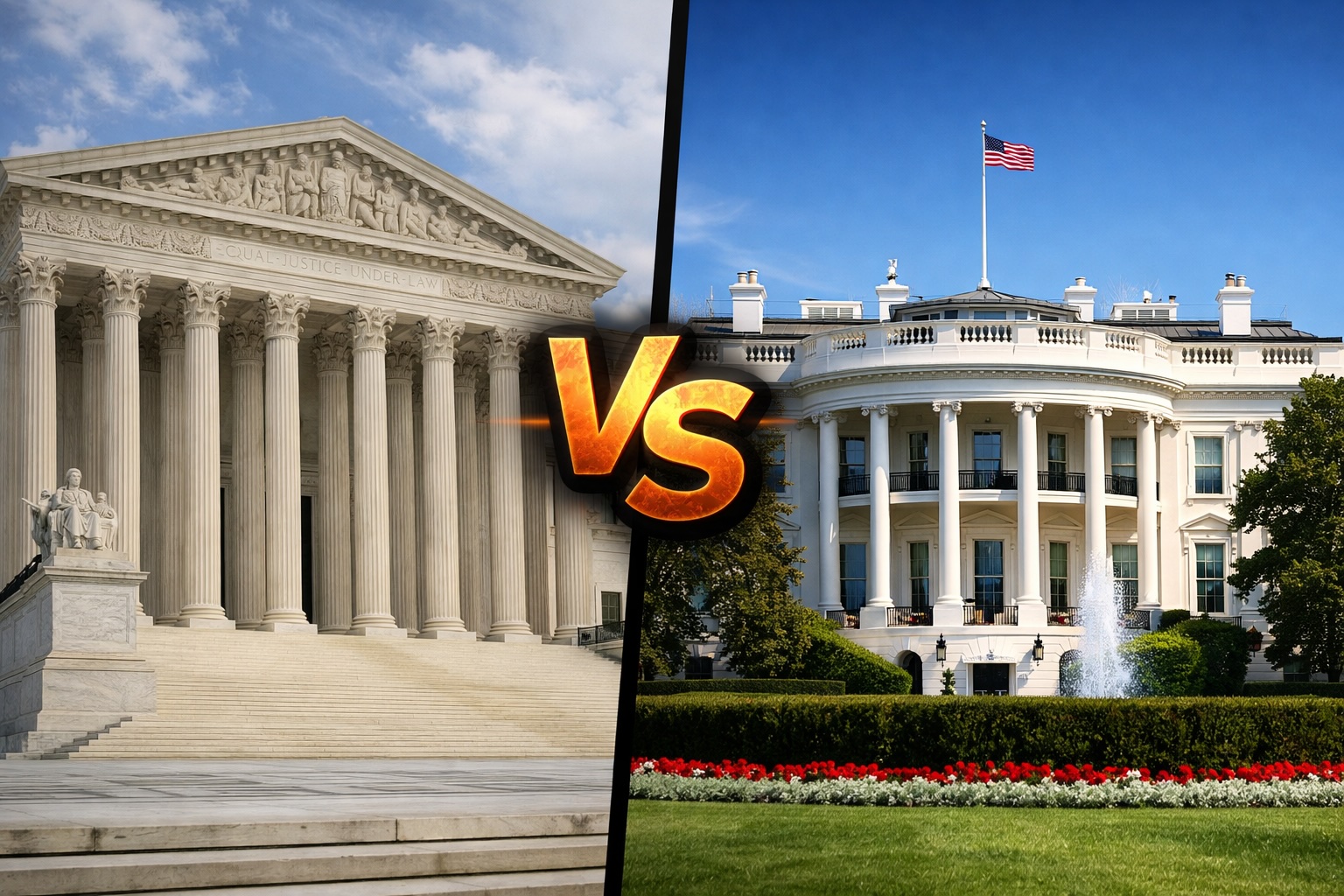
The U.S. Supreme Court on Tuesday struck down President Donald Trump’s effort to restrict birthright citizenship, handing his administration one of its biggest legal defeats since he returned to office.
In a 5-4 decision, the court ruled that the executive order Trump signed on Jan. 20, 2025, the first day of his second term, cannot stand. A majority of the justices found that the order conflicts with the 14th Amendment, which has long been understood to guarantee U.S. citizenship to nearly everyone born on American soil.
The 14th Amendment states: “All persons born or naturalized in the United States, and subject to the jurisdiction thereof, are citizens of the United States.”
Trump’s executive order sought to narrow that interpretation by limiting automatic citizenship to children with at least one parent who is a U.S. citizen or lawful permanent resident. Under the proposal, babies born in the United States to temporary visitors or to parents living in the country without legal authorization would no longer automatically receive U.S. citizenship at birth.
Conservative Justice Brett Kavanaugh agreed that the executive order was unlawful, but said it violated federal law rather than the Constitution.
The ruling marks Trump’s third major Supreme Court setback in recent months. In February, the court struck down his sweeping tariff policy, and on Monday it ruled that he could not immediately remove Lisa Cook from the Federal Reserve. Even so, the court’s 6-3 conservative majority, including three justices appointed by Trump, has sided with the president in several other high-profile cases.
Writing for the majority, Chief Justice John Roberts said there was “scant evidence” to support the Trump administration’s attempt to reinterpret a constitutional principle that has been settled for decades.
“Citizenship then and now, was the right to have rights — to freely participate in our political community,” Roberts wrote.
Roberts said the 14th Amendment was adopted after the Civil War to ensure those rights extended to everyone, including formerly enslaved people.
“We keep that promise today,” Roberts stated.
READ: Can a LinkedIn request affect your US citizenship? Lawyer challenges USCIS position (
The court’s three dissenting conservative justices, Clarence Thomas, Samuel Alito and Neil Gorsuch, said they would have upheld Trump’s executive order, arguing that the 14th Amendment allows the administration’s interpretation.
Trump had not publicly responded to the ruling at the time of publication, but the decision is expected to be a significant setback for one of the signature immigration policies he has championed for more than a decade.
Trump has long argued that ending birthright citizenship is essential to tightening U.S. immigration laws. During his 2015 presidential campaign, he called the policy “the biggest magnet for illegal immigration,” and has continued to make the issue a central part of his immigration agenda.
He signed the executive order within hours of returning to the White House in January 2025 and has repeatedly defended it in public speeches and on Truth Social.
Only weeks before Tuesday’s ruling, Trump wrote that the United States “cannot live with the shackles” of birthright citizenship.
“It is not economically, or otherwise, sustainable and no other country in the world, of consequence, does it,” he added.
Trump has previously criticized Supreme Court decisions that blocked key parts of his agenda, including the court’s ruling against his tariff policy earlier this year. Tuesday’s decision is expected to draw a similarly strong response from the president.