



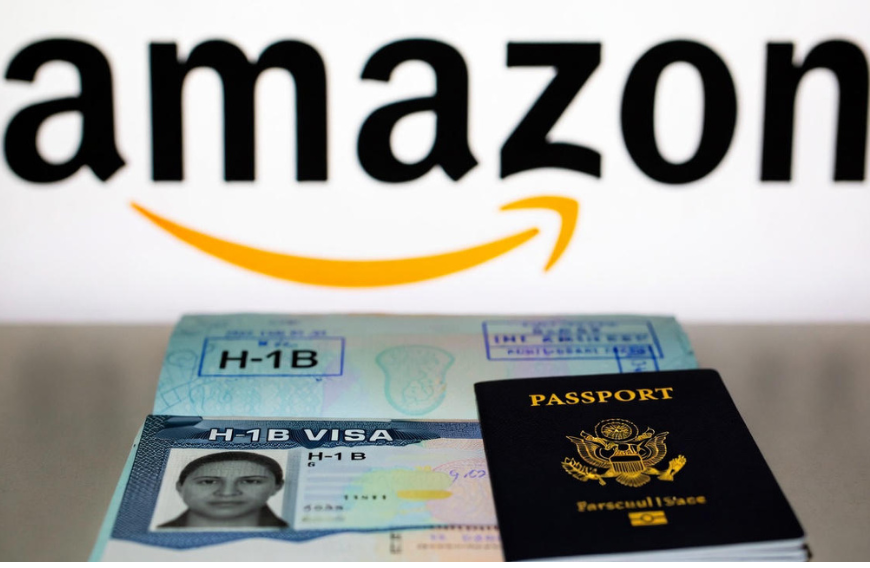
Many highly skilled international graduates in the United States, gain opportunities at top-tier tech companies after elite education.
Yet, for Jugal Bhatt, an engineer at Amazon, that trajectory recently collided with the harsh realities of the American immigration system.
Despite a standout resume, including graduating from the University of Illinois Urbana-Champaign in 2025, securing multiple job offers, and building an online tech community of over 300,000 followers, Bhatt’s future in the U.S. was recently stalled by a computerized game of chance: the H-1B visa lottery.
The federal government uses this random lottery to distribute a limited number of specialty occupation visas each year.
For Bhatt, missing out on this year’s selection was a reminder of the system’s indifference to individual achievement.
“No matter how strong your work is, the H-1B doesn’t care,” Bhatt shared in a public update, describing the frustration of having years of hard work reduced to a random draw.
READ: ‘I gave up my H-1B visa because it restricted my potential as an entrepreneur’ (June 10, 2026)
“Everything you’ve built, reduced to a coin flip.”
Rather than waiting on luck in future lottery cycles, Bhatt is taking control of his immigration journey. He has launched an effort to secure an O-1 visa, a non-immigrant status reserved specifically for individuals who possess “extraordinary ability” in fields such as science, business, or the arts.
Unlike the H-1B, which relies entirely on chance when demand exceeds the annual cap, the O-1 is merit-based. Applicants must satisfy at least three of eight strict criteria established by U.S. Citizenship and Immigration Services.
These benchmarks include judging the work of peers, securing press coverage, holding critical roles in distinguished organizations, and making original scientific or scholarly contributions.
Bhatt, who has judged major hackathons and was once featured on a Times Square billboard, already possesses the foundation for several of these categories.
READ: ‘Watching my parents through FaceTime’: US citizen considers returning to India with $3M savings (May 26, 2026)
However, he cautioned that simply qualifying on paper is merely the first hurdle.
“The real work starts after that,” Bhatt noted, pointing out that many applications fail due to weak storytelling, disorganized documentation, and a lack of cohesive evidence.
To navigate the complex administrative process, Bhatt is working with specialized consultants from EB-1A Experts, a group that helps high-achieving professionals build robust portfolios.
By documenting his journey step-by-step, Bhatt hopes to demystify the process and help other international professionals realize they might also qualify for extraordinary ability pathways.
For thousands of foreign-born tech workers facing similar immigration bottlenecks, Bhatt’s proactive shift explains a growing movement to bypass the lottery altogether in favor of a self-determined, meritocratic future.