



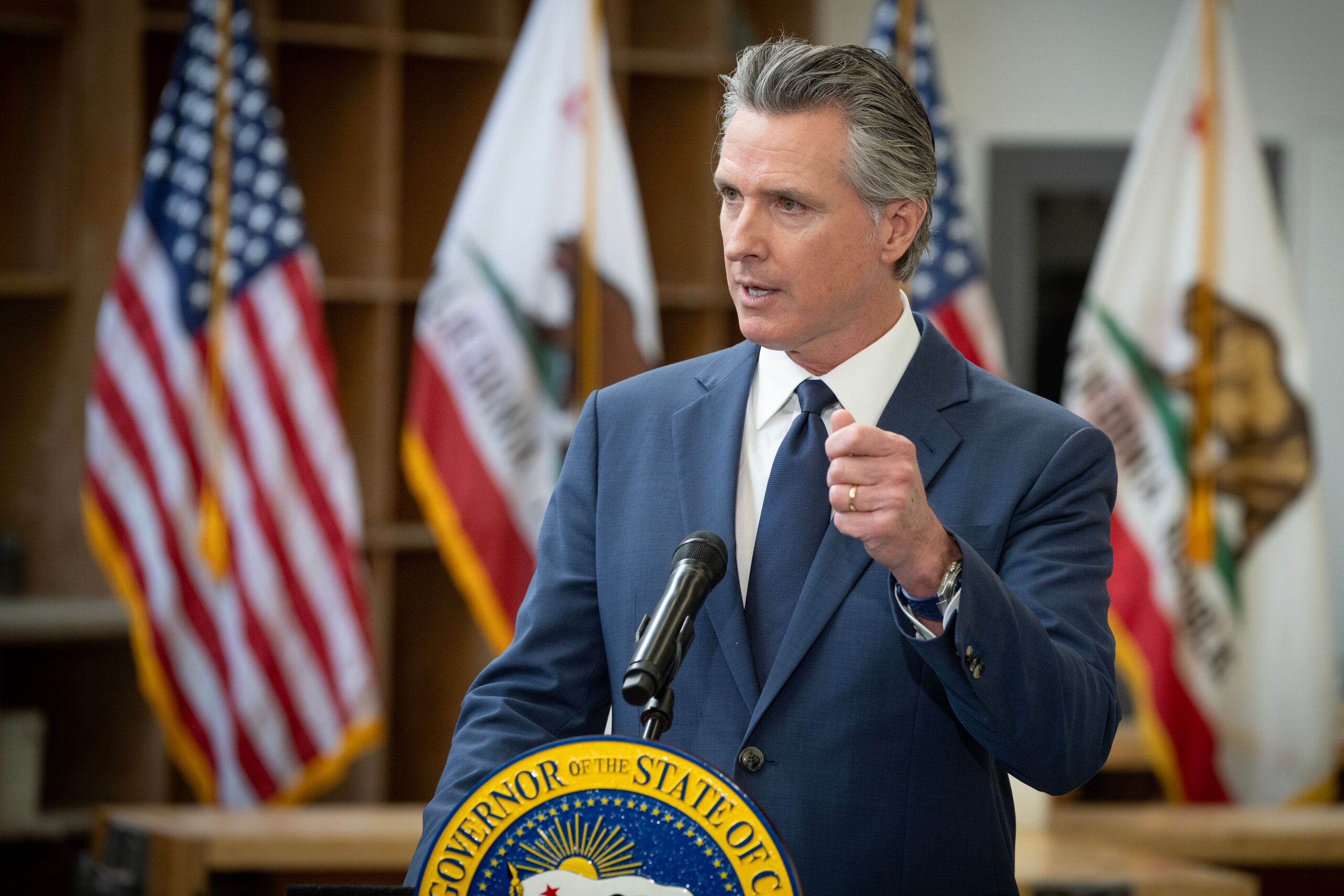
California Gov. Gavin Newsom has commuted the death sentences of all 548 prisoners on the state’s death row, marking the largest mass commutation of capital punishment sentences in U.S. history.
Newsom announced the decision on Thursday. Death sentences have now been converted into life imprisonment without the possibility of parole and ensuring that they cannot be executed under future administrations as well.
“I take this action because I firmly believe that state-sanctioned killing is incompatible with California’s values, undermines the foundations of our legal system, and diminishes each of us I know we cannot execute people in our imperfect legal system and remain true to our core values, first among them justice and human decency,” he wrote.
The decision comes amid renewed attention on capital punishment following the failed execution attempt of Christa Pike in Tennessee. Pike was sentenced to death for a 1995 murder of a fellow Job Corps trainee, but she survived an attempted lethal injection. This called for a nationwide pause on executions and raised concerns about the methods used to carry out such punishments.
READ: California Gov. Newsom signs 13 laws targeting social media, AI risks for children (September 11, 2026)
California has not executed anyone since 2006, though the state continued to maintain the largest death row population in the country. Out of 548 death sentenced prisoners, 529 were men and 19 women. Newsom had already imposed a moratorium on executions in 2019 and subsequently ordered the dismantling of the execution chamber at San Quentin State Prison. Death row prisoners were then transferred to other facilities that gave them more freedom of movement and access to rehabilitation program.
“This decision is among the most difficult of my career, not because I doubt its necessity for our state but because I know its announcement may surface excruciating memories for victims’ families,” Newsom said.
Newsom’s office also pointed out serious delays in the state’s death penalty system. Out of the 548 prisoners affected, 220 waited at least 15 years to be appointed habeas counsel, while 139 waited 20 years or longer to receive legal representation to challenge their convictions. Without the existing execution moratorium, 45 prisoners had exhausted their appeals and could have become eligible for execution.
READ: California bans child marriage as Newsom signs law setting minimum age at 18 (October 1, 2026)
Newsom decision received support from civil rights organizations and death penalty advocates, including the American Civil Liberties Union, Death Penalty Information Center (DPIC) Martin Luther King III. “Governor Newsom’s announcement marks a decisive moment in the history of the death penalty in the United States. Though other governors have granted universal clemencies, none have been at this scale,” executive director of the DPIC Robin Maher said.
However, the move also comes with further legal requirements. The California Supreme Court must review the clemency decisions involving prisoners convicted of multiple felonies before those commutations become final. According to DPIC, approx. Two-thirds of the cases require such review.
Newsom is approaching the end of his second and final term. He is widely viewed as a potential Democratic presidential contender in 2028. His successor, former U.S. Health and Human Services Secretary Xavier Becerra is expected to take office on Jan. 4, 2027. In U.S., around 23 states have abolished capital punishment and 27, including California continue to retain it in law.