



By Rajwa Quasim
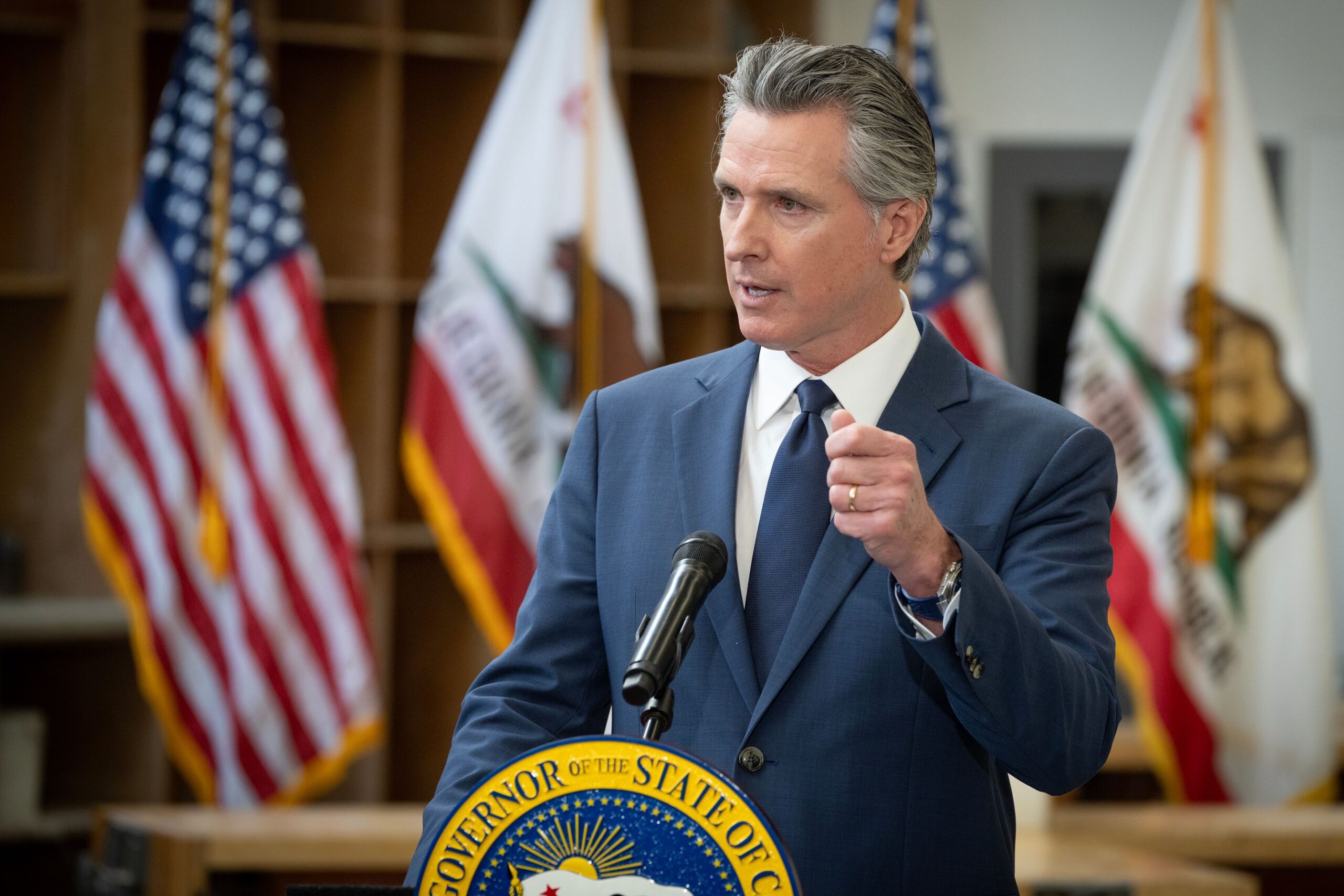
California Gov. Gavin Newsom signed 13 new laws Thursday aimed at protecting children from risks linked to social media and artificial intelligence. The laws place new restrictions on how technology companies design and operate products used by children.
At the center of the package is Assembly Bill 1709, introduced by Assemblymember Josh Lowenthal. The bill would bar social media platforms from offering behaviorally “addictive” features, such as infinite scroll and autoplay, to users under 16 or require those minors to be blocked from the platforms entirely.
Companies found negligent in harming children through their platforms could face penalties of up to $1 million per child.
One of the 13 measures, known as “Adam’s Law,” requires AI companies to determine users’ ages, set time limits for minors, restrict targeted advertising and report self-harm or suicide threats. It also disables “persistent conversational memory” by default.
READ: DHS ‘Mr. Singh’ post denounced as racist, accused of putting Sikh Americans at risk (September 10, 2026)
The law is named after 16-year-old Adam Raine, who died by suicide in April. His parents said he had isolated himself and had months of conversations with ChatGPT before his death. State officials described the measure as the country’s strictest regulatory framework for AI companion chatbots.
The law also requires companies to notify parents if a child disables safety settings.
Newsom said during the signing, “We’re going to again lead the nation, but the bar is pretty damn low, and that’s what’s so frustrating. That Congress and the president can’t lead to get this done is an abomination.”
He added, “We want our children – and every California kid – to grow up in a world where technology supports their wellbeing, rather than exploits their vulnerabilities.”
The package introduces a four-year moratorium on manufacturing or selling toys equipped with AI companion chatbots for children under 16.
The state has also moved to address emerging forms of child exploitation using AI. The new laws expand existing protections against child sexual abuse material to include digitally altered or AI-generated content depicting a person under 18 engaged in sexual conduct.
Along with Newsom, his wife, Jennifer Siebel Newsom, several lawmakers and Maria Raine, Adam Raine’s mother, attended the signing ceremony at the Bay Area Discovery Museum. Raine spoke about the impact of AI and social media addiction on families and communities.
California enacted the laws as thousands of lawsuits have been consolidated against social media companies including Meta, TikTok and Snapchat. The lawsuits accuse the companies of designing platforms in ways that encourage addictive use and contribute to mental health harms.
READ: US lawmakers call for stricter AI rules as Anthropic researchers sound alarm (September 10, 2026)
In August, Meta agreed to pay as much as $18 billion to resolve a similar lawsuit in the U.S. while introducing tighter restrictions on teenagers’ use of Facebook and Instagram.
Meanwhile, the Electronic Frontier Foundation issued a press release opposing the measures, arguing that they could impose unnecessary restrictions.
The press release, titled “We All Deserve a Better Internet, Not a Smaller One,” said, “California should be passing laws to ensure that technology really works for people of all ages, not enacting social media bans that cut young people off from digital lifelines, communities, and speech.
Denying minors access to digital forums – or stripping out basic tools needed to navigate them – is not going to help make young people safer or healthier in the AI age.”
In the U.S., Utah was the first state to adopt laws regulating children’s access to social media. Outside the U.S., countries including Australia have introduced restrictions on social media use by children under 16.