



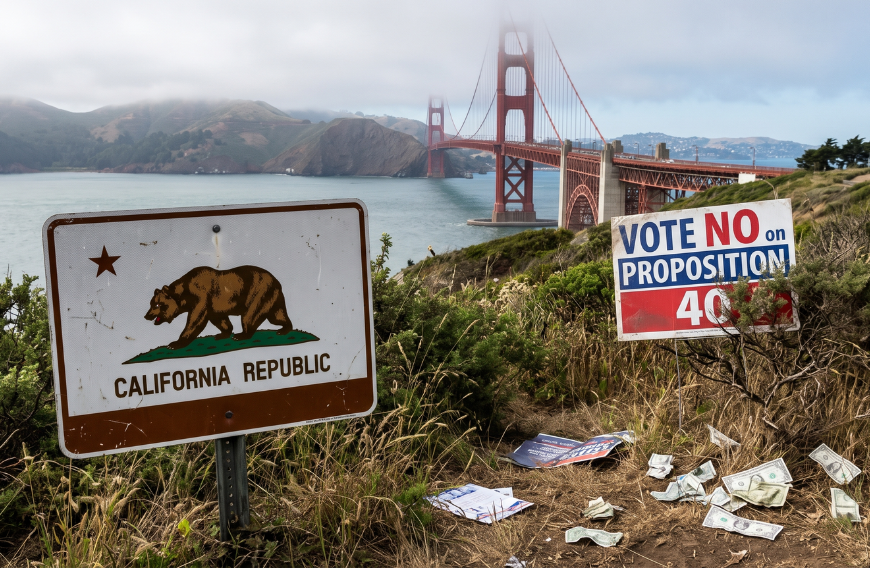
California voters have rejected a proposed tax on billionaires, dealing a setback to efforts to increase taxes on the state’s wealthiest residents.
The proposal, known as Proposition 40, appeared headed for defeat in Tuesday’s vote, with 55.6% of voters opposing it and 44.4% supporting it, with 60% of ballots counted, according to The Associated Press.
What is Proposition 40?
Proposition 40 would have imposed a one-time tax on the net worth of California residents with assets exceeding $1 billion. Covered assets would have included businesses, securities, art, collectibles and intellectual property.
If passed, the proposal would have affected approximately 250 billionaires in California, whose combined wealth exceeds $2 trillion. The state is home to some of the world’s wealthiest entrepreneurs and investors.
The proposed tax was introduced by the Service Employees International Union-United Healthcare Workers West (SEIU-UHW) to address potential healthcare funding shortfalls following federal spending cuts under President Donald Trump. The proposal was endorsed by several Democrats and labor organizations, including the California Federation of Labor and the California Nurses Association.
READ: Larry Page could avoid $15 billion in California tax (October 21, 2026)
Under the proposal, approximately 90% of the revenue generated would have gone toward healthcare programs, while the remaining 10% would have supported education and food assistance.
California Rep. Ro Khanna described Proposition 40 as a choice between the working class and oligarchs.
“In Trump’s America, working people pay more than they should, while billionaires are so unburdened that they are becoming trillionaires. In the America we seek, billionaires and trillionaires will pay their fair share, while working people will be unburdened,” he told The Guardian last month.
Who opposed the proposed tax?
The campaign also exposed divisions within California’s Democratic Party. Gov. Gavin Newsom warned that imposing a wealth tax could encourage billionaires to relocate to other states, potentially affecting California’s economy and tax revenues. The proposal also faced opposition from several advocacy groups aligned with the Democratic Party.
Stanford University economists Benjamin Jaros and Joshua Rauh reported that seven billionaires had already moved out of California, taking approximately $540 billion in combined wealth out of the state and beyond the proposed tax’s reach.
Google co-founder Sergey Brin emerged as one of the largest contributors to the campaign opposing the proposed tax. He contributed nearly $132 million to a political committee established to defeat the measure.
READ: United Airlines CEO calls for national wealth tax (October 20, 2026)
Others backing the opposition effort included Palantir co-founder Peter Thiel, former Google CEO Eric Schmidt, DoorDash CEO Tony Xu and Stripe CEO Patrick Collison. The billionaires contributed millions of dollars to defeat the proposal, with total contributions reaching approximately $425 million, making it the most expensive opposition campaign.
Propositions 41 and 42, introduced as countermeasures to Proposition 40, sought to impose additional requirements on how new tax measures are reviewed and how their revenues are accounted for. Proposition 41 would require the state auditor to review new special tax measures, while Proposition 42 would ensure that revenue from new taxes counts toward the state’s voter-approved spending limit. The measures also sought to restrict new taxes on assets and property, including retroactive taxation.
Both measures would take effect if they receive at least one more vote than Proposition 40, regardless of whether Proposition 40 passes.
Meta CEO Mark Zuckerberg had warned that he could leave California if voters approved a proposed wealth tax on billionaires. The company subsequently established a new stock arrangement by introducing a nonvoting Class C common stock structure. This would allow Zuckerberg to sell shares to cover a potential tax bill while retaining voting control of the company.
According to Forbes, Zuckerberg’s estimated net worth is $240 billion.
Despite the rejection of the proposed wealth tax, supporters said they could bring the measure back before voters in 2028 if state lawmakers fail to find an alternative so