



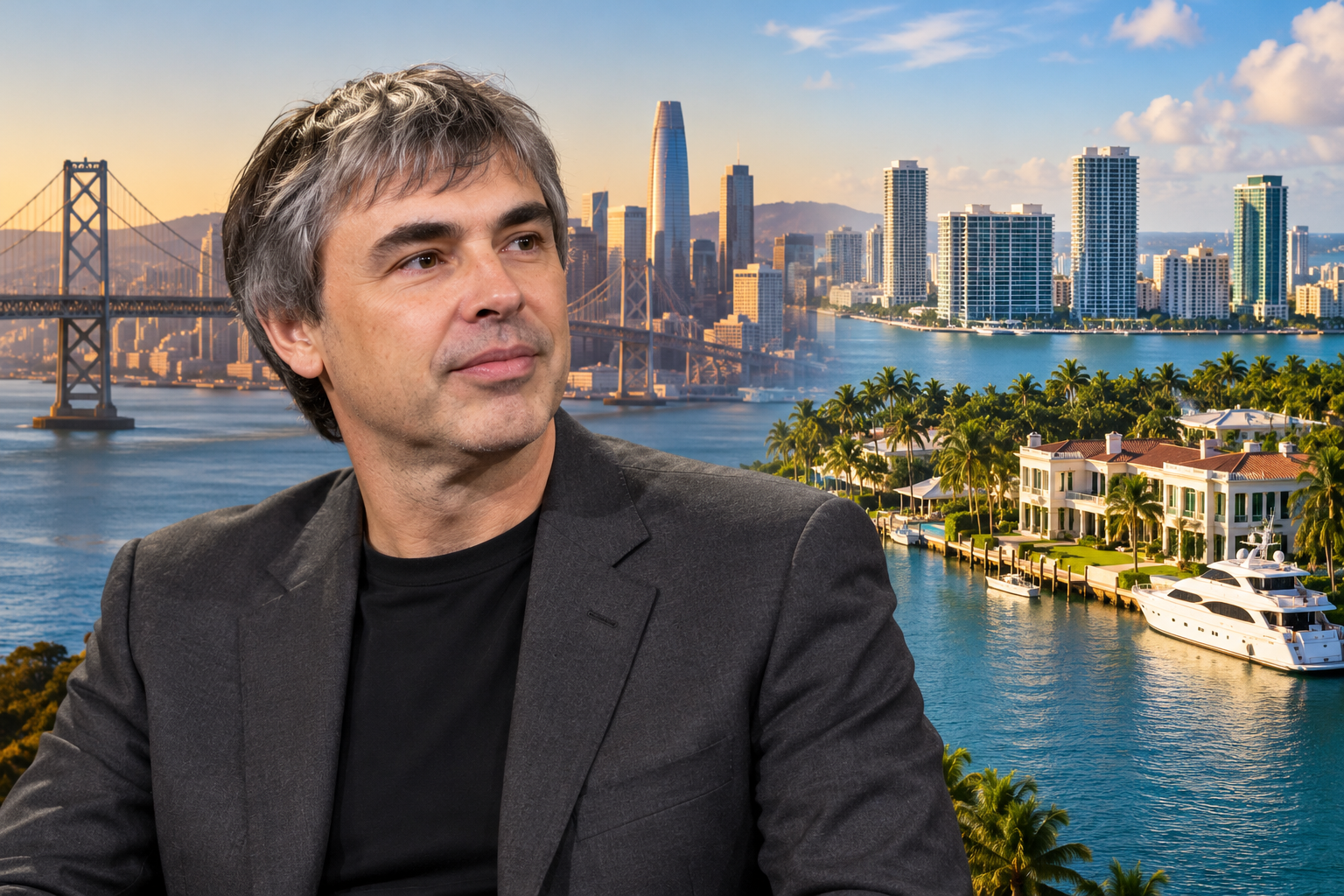
Google co-founder Larry Page could avoid nearly $15 billion in taxes under California’s proposed billionaire wealth tax after moving business entities out of the state and purchasing luxury properties in Miami, Florida, according to a report by Fortune published by Yahoo Finance.
The proposed tax, known as Proposition 40, would impose a one-time 5% levy on the wealth of billionaires who were California residents as of January 1, 2026. Voters are scheduled to decide on the measure on Nov. 3.
Page, whose estimated net worth is approximately $292 billion, would have faced a potential tax bill of nearly $15 billion if he had remained subject to the proposal, Fortune reported on Oct. 20.
The Google co-founder has been reducing his business ties to California since last year, as the proposed tax gained momentum. His family office, Koop, was converted out of California and incorporated in Delaware in December 2025, according to state filings reviewed by Fortune. Other organizations linked to Page, including Flu Lab LLC, One Aero and Oceankind, also shifted their incorporation to Delaware during the same period.
READ: Google releases Gemini 4 Argon AI model to public (October 14, 2026)
Page has also made substantial real estate purchases in Florida. He bought two properties in Miami’s Coconut Grove neighborhood for a combined $173.4 million, according to The Wall Street Journal.
The purchases include a waterfront estate acquired for $101.5 million and a nearby property purchased for $71.9 million. Florida has no state income tax, capital gains tax or wealth tax, making it an attractive destination for some of the country’s wealthiest individuals.
California’s proposed billionaire wealth tax
The proposed levy has triggered a debate over whether California should impose a one-time tax on billionaire wealth to raise revenue for public services or whether it could prompt wealthy residents to move their assets and businesses elsewhere.
The measure would apply a 5% tax to the wealth of qualifying billionaires who were California residents on January 1, 2026. Supporters have projected that it could generate approximately $100 billion.
However, several prominent technology entrepreneurs and investors have taken steps to leave California or move business entities out of the state ahead of the vote.
Page’s fellow Google co-founder Sergey Brin, venture capitalist Peter Thiel and former Uber chief executive Travis Kalanick are among the wealthy individuals identified in reports examining departures linked to the proposal.
A report by CBS News published on October 19 cited a study by Stanford economists Benjamin Jaros and Joshua Rauh, which estimated that seven billionaires had already left California, taking approximately $540 billion in wealth outside the state’s potential tax base.
The researchers estimated that the measure could ultimately generate about $30 billion, substantially less than its proponents’ projection. They also warned that the departures could reduce California’s future income tax revenue. Supporters of the tax, however, argue that asking billionaires to contribute a portion of their wealth could help fund essential public services, including health care.
Billionaires move toward Florida
Page’s relocation efforts reflect a broader shift among wealthy technology executives and investors toward Florida, which does not impose a state income tax or a wealth tax.
READ: Google launches Gemini agent as AI giants race to build autonomous workers (October 8, 2026)
Amazon founder Jeff Bezos moved from the Seattle area to Miami in late 2023 and subsequently purchased a Miami property reportedly valued at $237 million with his wife, Lauren Sánchez Bezos. Former Starbucks chief executive Howard Schultz also announced his move to Miami in March 2026, amid a separate debate over Washington state’s proposed taxation of high-income residents.
Brin has also established ties to Nevada and purchased a home in Miami, according to reports.
The moves illustrate how tax policy can influence decisions about residency, business incorporation and real estate among individuals with substantial wealth. However, relocating a company or purchasing a home outside California does not, by itself, establish whether an individual qualifies as a nonresident for tax purposes. California considers factors such as time spent in the state and business ties when determining residency.
The proposed tax’s January 1 residency cutoff could also face legal challenges, according to the California Budget & Policy Center, as questions remain about how the measure would apply to people who moved after that date.
Tax proposal faces political and economic questions
The debate over Proposition 40 has intensified as California approaches the Nov. 3 vote. Opponents have spent substantially more than supporters campaigning against the measure, according to Fortune.
Two competing ballot measures, Propositions 41 and 42, could also nullify Proposition 40 if either receives more votes, adding another layer of uncertainty to the outcome.
The proposal has exposed divisions within the technology sector. While some wealthy entrepreneurs have opposed the tax or moved their business interests elsewhere, Nvidia chief executive Jensen Huang has said he is comfortable with the possibility of the levy and plans to remain in California.
For California, the stakes extend beyond the immediate revenue the tax could generate. If wealthy residents leave, the state could lose future income tax collections, potentially offsetting part of the proceeds from a one-time wealth levy.
For Page, the potential difference is substantial. A tax liability approaching $15 billion would represent one of the largest individual tax bills associated with a state-level wealth tax proposal in the United States. The November vote will determine whether California moves forward with the measure, although questions about residency, implementation and potential legal challenges could continue even if voters approve it.