



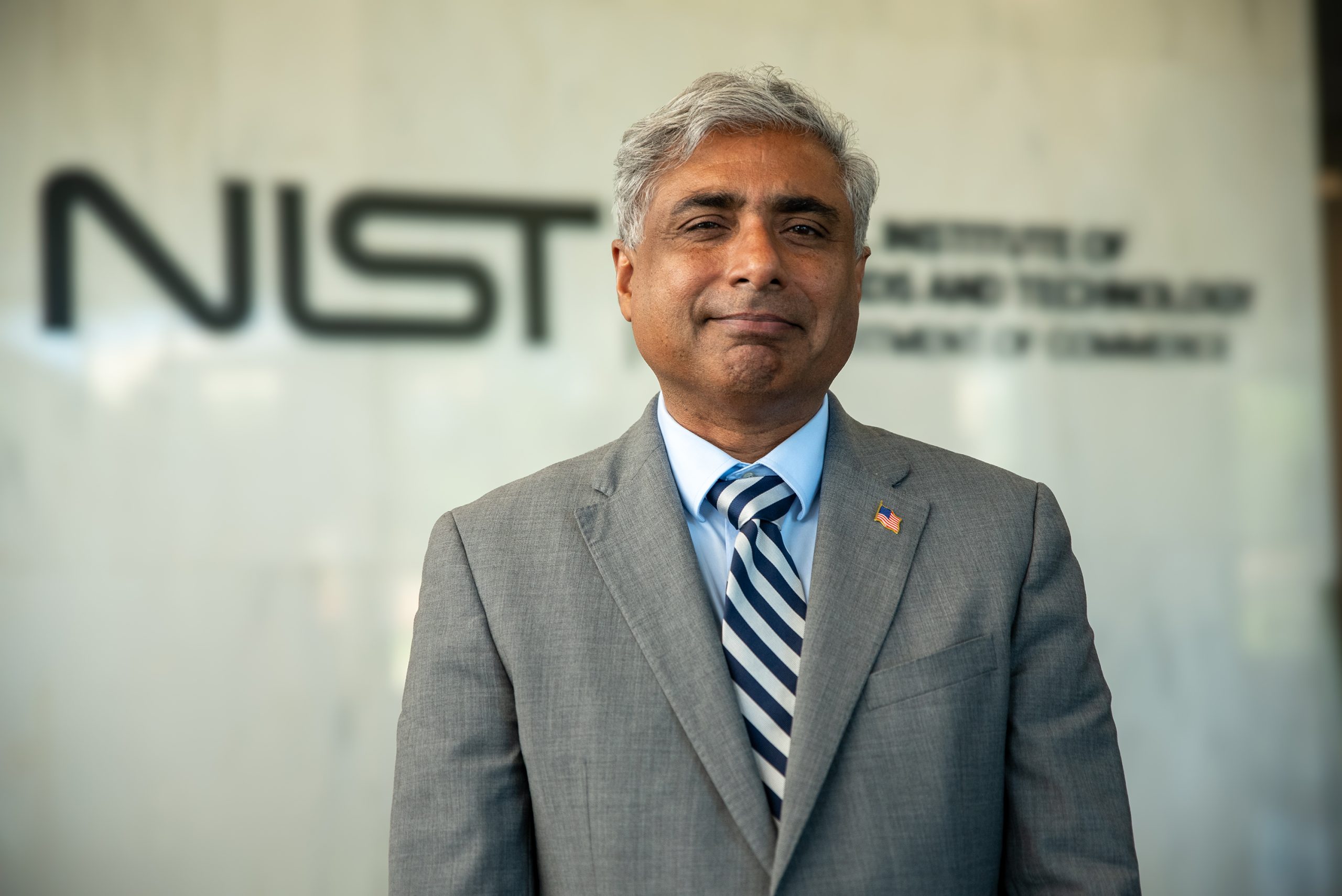
Chris Fall, director of the U.S. Center for AI Standards and Innovation, has resigned just three months after taking charge of the federal AI testing institute at the Department of Commerce. This marks another leadership change as the Trump administration continues to shape its approach to artificial intelligence safety and oversight.
The Commerce Department confirmed Fall’s departure but did not provide a reason for his resignation. Arvind Raman, who leads the Commerce Department office overseeing the AI testing institute, will serve as acting director while the administration searches for a permanent replacement. Raman is a former dean of engineering at Purdue University.
Fall was appointed to lead CAISI in April 2026. Before joining the Commerce Department, he served in the Department of Energy during President Donald Trump’s first administration.
READ: Melania Trump honors Indian American students for White House AI challenge (June 10, 2026)
The Center for AI Standards and Innovation, formerly known as the U.S. AI Safety Institute, works with leading artificial intelligence developers to evaluate advanced AI models and identify potential risks. Its work includes testing models from companies such as Anthropic, Google’s DeepMind, OpenAI, Microsoft and Elon Musk’s xAI.
The institute’s researchers focus on assessing risks associated with increasingly capable AI systems, including potential misuse by adversaries to develop chemical or biological weapons and attempts to compromise data used to train AI models.
Fall’s resignation comes as the Trump administration’s AI policy continues to evolve. President Donald Trump initially emphasized a relatively hands-off approach to the technology industry after returning to office, while the administration has also taken steps involving AI safety, model testing and national security concerns.
The administration has also faced disagreements with major AI companies over the use and oversight of their technology. In June, the Commerce Department temporarily imposed export restrictions affecting Anthropic after a dispute involving the company’s AI models and the Pentagon, according to UPI.
The leadership change at CAISI comes at a critical moment for the U.S. AI industry, as lawmakers, technology companies and government agencies debate how to balance rapid innovation with safeguards against potential risks.
READ: Trump order sets AI security benchmarks (June 3, 2026)
Fall’s short tenure also adds uncertainty over the direction of the federal government’s AI testing and safety efforts. With Raman now serving in an acting capacity, the administration will have to identify a permanent leader while continuing the institute’s work with AI developers and other government agencies.
The Commerce Department has not indicated when a permanent director is expected to be appointed. A spokesperson for President Donald Trump declined to comment on Fall’s departure, while Reuters reported it could not immediately reach Fall for comment.