



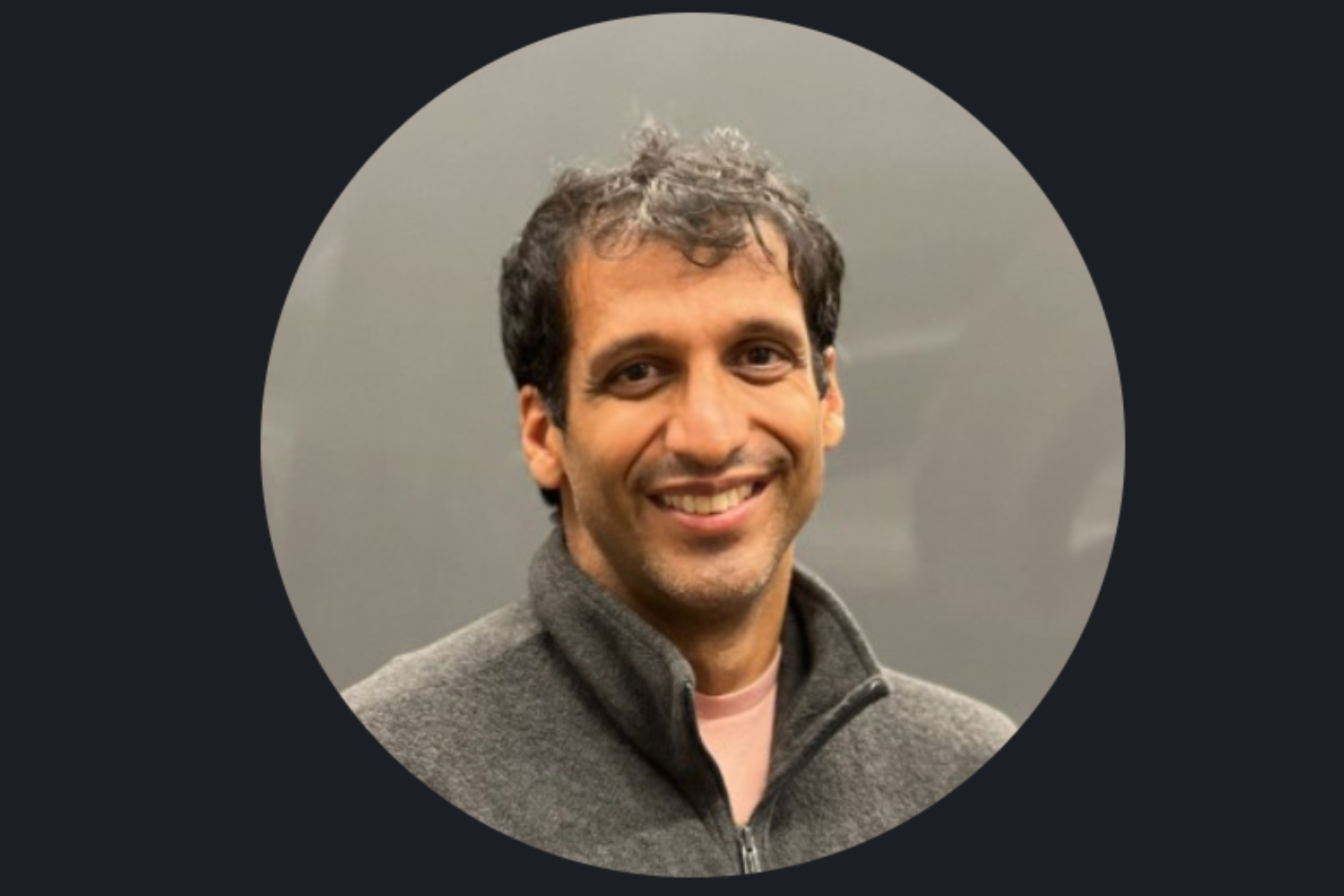
Cellular Intelligence, the AI company building a universal foundation model of cell signaling, has appointed Indian American single-cell biology pioneer Arjun Raj, chief scientific officer and scientific co-founder, to scale its closed-loop cell signaling platform.
Renowned University of Pennsylvania professor Raj joined the company full-time in 2025 as head of computational biology while on leave from the university. Combining a background in mathematics and systems biology, Raj spent his first year architecting Cellular Intelligence’s data engine and scientific program. He has now extended his leave and expanded his mandate to lead overall scientific strategy.
Naming Raj scientific co-founder recognizes the foundational role he has played at the company, from the design of its experiments and data generation methodologies to the development and validation of its models, the Boston-based company announced.
As chief scientific officer, he will lead the integration of experimental biology, computational biology, machine learning, and translational science into a closed-loop system built to understand, predict, and ultimately control cell behavior.
Read: Indian American researcher joins American Heart Association journal editorial board (August 13, 2026)
“Arjun joined us because he saw the possibility of building something biology has never had: massive, context-rich, time-resolved perturbation datasets, and models purpose-built to learn from them. In his first year at the company, he helped turn that possibility into reality,” said Micha Breakstone, co-founder and chief executive officer of Cellular Intelligence.
Cellular Intelligence has developed a proprietary capsule-based platform that runs time-varying, sequential signaling combinations in parallel within a single experiment, expanding the scale of controlled perturbation experimentation by orders of magnitude. Rather than relying on static observations collected for other purposes, the company designs controlled, intervention-rich experiments that reveal how cells respond as signals, timing, and context change. The resulting data train models that identify gaps in their own understanding, guide the next generation of experiments, and improve with every cycle.
“I have spent my career trying to understand how individual cells make decisions, and what has always limited the field is the data,” said Raj. “Cellular Intelligence is building high-fidelity, time-resolved perturbation data generated expressly for learning. For the first time, I can see a path from observing cellular decisions to predicting and eventually controlling them.”
Raj is the Richard K. Lubin Professor of Bioengineering and Professor of Genetics at the University of Pennsylvania. A mathematician turned experimental systems biologist, he co-developed a foundational method for visualizing and counting individual RNA molecules inside single cells.
His lab has since made influential contributions to understanding stochastic gene expression, cell identity, rare non-genetic states in cancer therapy resistance, and cellular memory.
Read: Indian American scholar Pratim Biswas to lead Vanderbilt Engineering Innovation (July 31, 2026)
He received his bachelor’s degree in physics and mathematics from the University of California, Berkeley, and his doctorate in mathematics from the Courant Institute at New York University. He completed postdoctoral training at the Massachusetts Institute of Technology and joined Penn’s faculty in 2010.
Raj’s expanded role comes as Cellular Intelligence connects its foundation-model platform to a direct path to patients. In May, the company acquired STEM-PD, an investigational Phase 2-ready Parkinson’s disease cell therapy program, from Novo Nordisk.
STEM-PD is both a therapy the company is working to advance for patients and a proving ground for the company’s technology, in which models help sharpen protocol optimization, manufacturing scalability, comparability, potency, and dosing, and in which clinical and manufacturing insights flow back into those models.
The result is a continuous learning system—described in a recent white paper, “From Model to Medicine – and Back”—in which better science aims to yield a better therapy, and the therapy in turn strengthens the science.
Cellular Intelligence has raised over $70 million from Khosla Ventures, the Chan Zuckerberg Initiative, Novo Nordisk, AMD Ventures, and others.