



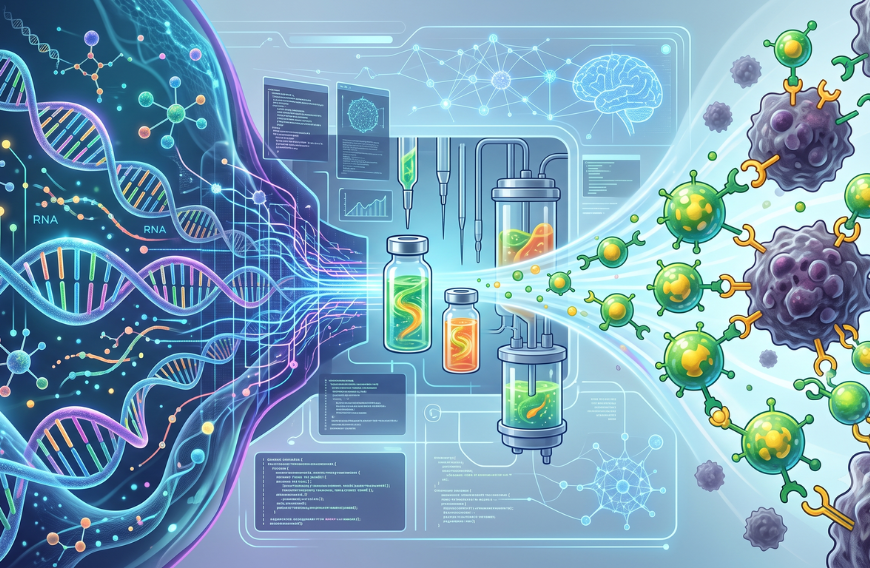
A Phase 3 clinical trial evaluating an artificial intelligence-assisted personalized cancer vaccine has yielded positive results for patients with late-stage skin cancer.
Developed jointly by biotechnology companies Moderna and Merck, the experimental mRNA-based therapy uses AI algorithms to analyze individual tumor profiles and help construct treatments tailored to a patient’s unique genetic mutations.
The trial tested the vaccine, known as intismeran autogene, in combination with Merck’s immunotherapy drug Keytruda.
Involving more than 1,000 high-risk melanoma patients who had previously undergone tumor removal surgery, the study evaluated whether the combination could prevent the cancer from returning or spreading.
READ: Chinmay Jani wins $50,000 Binaytara lung cancer research award (August 19, 2026)
Researchers found that the paired treatment reduced the risk of recurrence or death compared to using Keytruda alone.
Unlike traditional chemotherapy, which can damage healthy cells along with cancerous ones, personalized mRNA vaccines aim to direct the immune system exclusively toward mutations within a patient’s tumor.
After a tumor is surgically removed and its DNA is sequenced, AI models then scan hundreds of identified mutations and rank up to 34 that are most likely to stimulate an immune response.
Automated software then translates those selected genetic markers into mRNA instructions, which are manufactured into a vaccine that teaches the patient’s immune system to attack matching cancer cells.
It is basically a personalized treatment created by AI based on each individual’s mutation rather than one “fit for all” treatment.
Tech executive Elon Musk reacted on X, stating that artificial RNA essentially turns curing diseases into a software problem.
READ: Moderna wins FDA approval for first mRNA-based flu shot (August 6, 2026)
“Despite its obvious misuse during Covid, mRNA has tremendous promise for curing diseases. Artificial RNA essentially makes curing diseases a software problem,” he wrote.
President Donald Trump also praised the milestone, emphasizing the emergence of medical answers to conditions previously thought untreatable. “They came out with something today that I looked at I won’t go into the details, but having to do with a pretty unstoppable disease,” he said.
Dr. Dean Y. Li, president of Merck Research Laboratories, explained that intervening right after surgery aims to increase the possibility of a cure when cancers are most treatable.
Moderna CEO Stéphane Bancel added that the results bring the industry closer to the goal of custom-designed cancer therapies.
The companies plan to present the detailed trial data at an upcoming international medical meeting and engage with regulatory bodies regarding potential approval submissions.