



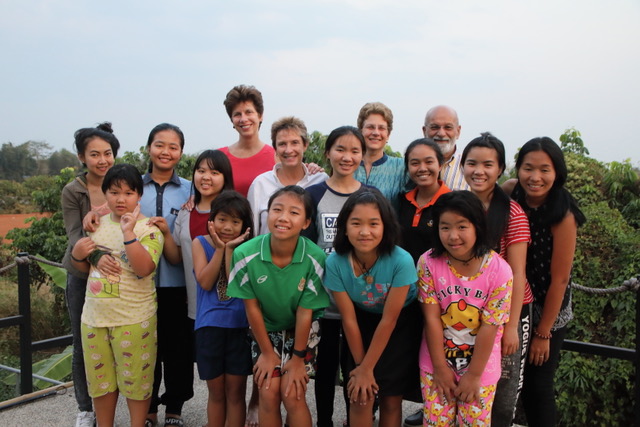
By Pragya Raj Singh and Venkatesh Raghavendra
For Dr. Shashikant Gupta, philanthropy was never meant to be something that came after success. It grew alongside it. Long before he co-founded Apex CoVantage with his wife Margaret in 1988, Gupta had begun thinking about what it meant to create opportunity for others. That instinct would eventually become part of the philosophy behind Apex itself: that business should be a force for good, not greed, and that integrity, human dignity, and excellence should matter as much as commercial success.
Over more than three decades, Gupta helped build Apex into a global technology services company before its sale in 2021. At the same time, he and Margaret built the Gupta Family Foundation around an equally clear principle: helping people who have been disadvantaged become self-reliant. Today, the Foundation supports organizations around the world working across education, livelihoods, social inclusion, and humanitarian relief, with a particular emphasis on grassroots organizations and the leaders behind them.
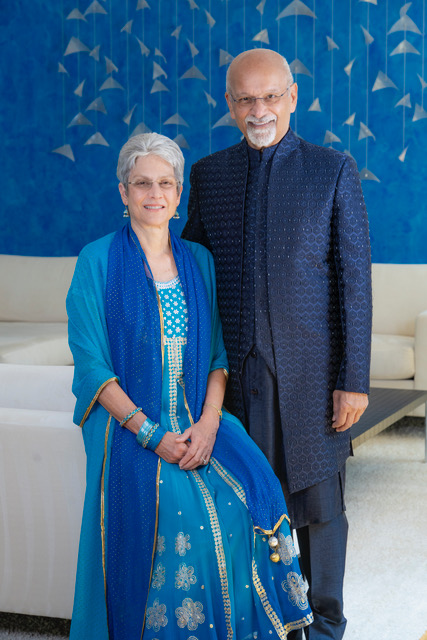
What is striking about Gupta’s approach is how personal it remains. He and Margaret visit organizations they support, build long-term relationships with their leaders, and have even created opportunities for grantees across countries to learn directly from one another. For Gupta, money is a facilitator; the people doing the work on the ground are the real agents of change.
His commitment to public life has also extended beyond business and philanthropy into civic engagement and education. Across these different chapters runs a remarkably consistent philosophy: leadership is ultimately about creating the conditions for other people to rise.
In this conversation, Gupta reflects on where that philosophy began, why self-reliance sits at the heart of his philanthropy, what decades of meeting grassroots leaders have taught him, and the advice he hopes the next generation of entrepreneurs and philanthropists will carry forward.
After building and leading Apex CoVantage for more than three decades, what motivated you and Margaret to dedicate so much of your time and energy to philanthropy?
Actually, it wasn’t a switch that flipped after decades of running Apex. Giving was there from the very beginning.
I like to tell people this story: imagine you’re thirsty and ask me for a glass of water, and I bring it to you. Convention says you should thank me. But I’ve always looked at it the other way. You gave me the opportunity to do something good, so I should be the one thanking you. That’s the true spirit of philanthropy as I understand it: gratitude for being given the chance to help.
I learned this early. When I joined my family business at nineteen, I found out that the sons of our building’s liftman, janitor, and security guard had just finished high school with good marks but could not afford to go to college. So, I hired all three. They studied in the mornings and worked in the afternoons. All three went on to earn their bachelor’s degrees, and one became a Chartered Accountant. I knew right then that giving would always be part of my life, like the sidecar of a motorcycle.
READ: 3 Indian Americans in 2026 TIME100 Philanthropy list (May 20, 2026)
So, when Margaret and I started Apex in 1988, it was never just about building a business. It was built on the idea that business should be a force for good, not greed. In the words of Henry Ford, the quintessential capitalist, “A business that makes nothing but money is a poor business.”
The foundation grew out of that conviction. From the beginning, we imposed a 20 percent “tax” on ourselves, which funded our philanthropy.
The Gupta Family Foundation focuses on helping disadvantaged individuals build sustainable livelihoods and greater self-reliance. What drew you to that approach, and why do you think it is important?
Our mission is simple, and I mean that literally. We exist to help people who have been disadvantaged, whether physically, emotionally, socially, or financially, become self-reliant. That word matters to me more than almost any other in this work.
Part of where that came from is how Margaret and I came to think about money itself. We realized that to build a company, and later a foundation, on real values, we had to fundamentally redefine our own relationship with money. We decided we would see ourselves as custodians of our wealth, not its owners. In Sanskrit, it is called Samvibhaga, meaning, “A portion of whatever I have belongs to others.”
Once you think that way, you stop asking, “How do I make someone dependent on my generosity?” and start asking, “How do I help someone stand on their own feet?” Self-reliance isn’t just a nice outcome. To me, it’s the only outcome that respects a person’s dignity.
Many of the organizations your Foundation supports are mission-driven nonprofits working at the grassroots level and directly engaging with communities. What do you look for when deciding to partner with an organization, and what have those partnerships taught you over the years?
We use four criteria to select our partners. First, mission alignment. The organization has to be genuinely dedicated to helping the disadvantaged become self-sufficient. Second, leadership. It needs to be run by the founder, or by a successor who truly embodies that founder’s original passion and commitment. Third, efficiency. At least 90 percent of revenue has to reach the actual beneficiaries, meaning overhead stays under 10 percent. And fourth, no proselytization of any religion.
We’ve built a fairly rigorous five-step vetting process that ends with a personal visit to every organization we support, because I’ve learned that you simply cannot confirm authenticity and effectiveness from a distance.
I’ll never forget visiting Andrew Goswami’s Child Aid Foundation in Vijayawada, a six-foot-four American who had adopted an Indian name, walked from Delhi to Kanyakumari on foot to understand India, and built a school for two hundred slum children with a sign that read, “Cleanliness is Godliness.” He challenged me to find a single piece of trash on campus. I couldn’t.
Sitting with him, I realized how small I was next to him, and I don’t mean that physically, although that was true as well! That feeling, humility in the face of people doing the real work, has repeated itself with founder after founder over the years.
It’s probably the biggest lesson these partnerships have taught me: money is just a facilitator. The real heroes are the people on the ground, giving of themselves every day in service of others.
You’ve worked across business, philanthropy, education, and civic engagement. How have these different experiences shaped your understanding of leadership and the responsibility that comes with it?
Our view of leadership starts with the fundamental belief that every human being is equal, each carrying the same divine spark. In business, that meant Margaret and I never saw ourselves as “bosses.” We saw ourselves as teammates, each with a different role to play, the way players take different positions on a football team.
That belief carried into philanthropy too. The money I give is only a facilitator. The real leadership is happening on the ground, in people like Andrew Goswami, who gave decades of his life to a school for slum children in Vijayawada. Every time I meet someone like him, I’m reminded how small my own contribution really is.
Leadership also means listening more than speaking. Some of the most sophisticated insights I’ve ever received came from a twelve-year-old in our SEEDS, Society for Ethics and Excellence in Delhi Schools, not from anyone with a fancy title.
So, if you ask me what leadership means after all these years, I’d say this: the more responsibility you carry, the more your job becomes making space for others to rise, rather than putting yourself at the center of the story.
Above all, leadership is service, not power. It means leading with vision from the front, creating vacuums for others to grow into. The stronger you become, the gentler you should be. Leadership, to me, is selflessness, conviction, humility, and gratitude.
One aspect of your philanthropy that stands out is your effort to bring together leaders from different grantee organizations so they can learn from one another. What prompted this approach, and what impact have you seen from fostering these connections?
Over the past 40 years, as we visited the 60-plus organizations we support worldwide, from Mexico to Cambodia, America to South Africa, we observed that many of them have a uniquely successful way of doing something that other organizations could benefit from adopting. We call it their “secret sauce,” because it is often siloed within that one organization.
So, we came up with the Cross-Learning concept. We invite these organizations to gather in Virginia and share their secret sauces with one another.
Organizations then identify and define cross-learning projects, which the Foundation supports. For example, compost toilet technology was perfected by our partner in Mexico. Through cross-learning programs, it has since been adopted by two partner schools in Kenya.
There are many such examples across countries and continents. The most recent occurred in India. Many of the 13 organizations we support there have vocational training programs for their clients, including computer training and sewing. We learned that the last organization we visited gets industry-recognized certifications for its graduates, from NIIT, the premier computer training institute, and from Singer, the sewing machine company.
READ: Connecting global resources to local impact: The evolution of Indian American giving (May 20, 2026)
We shared this information with the other organizations, which are now adopting this approach, significantly enhancing the employment prospects of their graduates.
While the Foundation supports many organizations in India, your philanthropy also extends across Africa, Latin America, and other regions. How did your giving evolve beyond India, and what principles guide your decisions as you support organizations across different parts of the world?
It wasn’t really a deliberate decision to “go global.” It was more a natural extension of our work in India. Once we knew what we were looking for, a founder-led organization committed to self-reliance, at least 90 percent of revenue reaching the people it serves, and no religious agenda attached, geography stopped mattering.
Forty years ago, when we started, we literally had to “find” the organizations. Leads came to us by word of mouth from family, friends, and colleagues. All of these were in India and the USA. Later, organizations found us on the internet.
A few years ago, we realized that we couldn’t continue expanding geographically. So now, we confine new organizations to countries where we are already present.
Finally, reflecting on your journey, what advice would you offer to the next generation of entrepreneurs and philanthropists who want to build successful careers while contributing meaningfully to society?
I’d boil it down to a few maxims I’ve come to live by.
Do it for yourself, because you find it genuinely rewarding, not for recognition. Chasing recognition is a good way to lose your footing.
Choose your mission with care, and make sure it aligns with your own life’s North Star, not someone else’s idea of what you should care about.
Remember that money is only a facilitator. The real heroes are the men and women working on the front lines, transforming lives every single day.
Find ways to share your life’s learnings as widely as you can. I call that “self-giving philanthropy,” and it costs you nothing but time.
Lastly, don’t wait for the “right” moment. Start early, start small, start right now.