



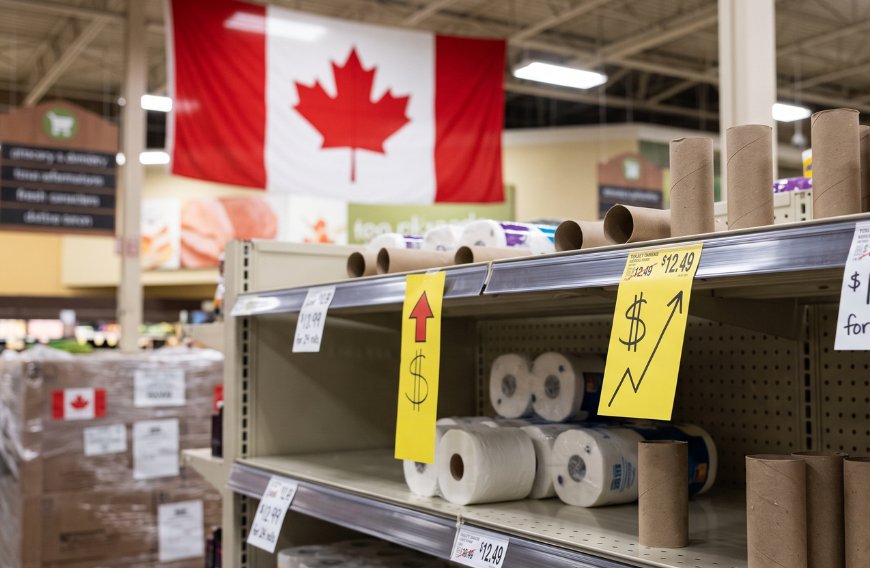
The U.S. and Canada are now in a full-fledged trade war following the breakdown of negotiations last weekend, and toilet paper has emerged as a casualty. Canada has threatened to impose tariffs of between 25% and 50% on “toilet paper or face tissue stock” from Sept. 8 in retaliation for a 50% hike from Washington, D.C.
Canada announced retaliatory tariffs after its previously good relations with the U.S. deteriorated. President Donald Trump told Canadian leaders to “fall in line” or face consequences “far WORSE” than existing tariffs on Monday, while Canadian Prime Minister Mark Carney accused Washington of trying to subordinate Canada.
While toilet paper and tissues are often made domestically in the U.S., they rely heavily on lumber-rich Canada for raw materials. Procter & Gamble, the owner of Charmin toilet paper, said last year that it would have to increase prices amid tariffs that were in place at the time.
READ: Canada to announce retaliatory tariffs against the US as Trump tells leaders to ‘fall in line’ (August 25, 2026)
According to the World Bank, the U.S. imported $328 million worth of toilet paper from Canada in 2024, making Canada the largest exporter of the product to the U.S.
According to a report by The Guardian, the U.S. accounts for more than 20% of global tissue consumption despite having only 4% of the world’s population. The average American uses 141 rolls of toilet paper per year, making the U.S. No. 1 globally for toilet paper consumption, just ahead of Germany, where people use an average of 134 rolls annually.
Toilet paper isn’t the only product affected by the trade tensions. U.S. tariffs have also affected Canadian liquor, including popular whiskey brands Crown Royal and Canadian Club, which are currently subject to a 50% tariff.
READ: Trump floats ‘Lake America’ title for Canada’s Lake Ontario (August 25, 2026)
While Canada has not introduced a tariff on American liquor, most Canadian provinces have imposed their own bans on American alcohol in retaliation for earlier tariffs on Canadian products. Trump had cited province-wide bans on American alcohol as justification for new tariffs against Canada. Carney has asked provincial leaders to consider putting American liquor back on the shelves.
The auto industry could also be affected, though cars and auto parts have been exempt from U.S. tariffs. Canada is the largest purchaser of U.S.-made cars, which could put pressure on American automakers that rely on Canadian demand.
According to Al Jazeera, U.S. households could face higher prices on 550 consumer goods imported from Canada because of Trump’s 50% tariff. This could significantly affect Americans, according to a report from the Kiel Institute for the World Economy, an economic think tank, which found that U.S. importers and consumers absorb 96% of the tariff burden.