



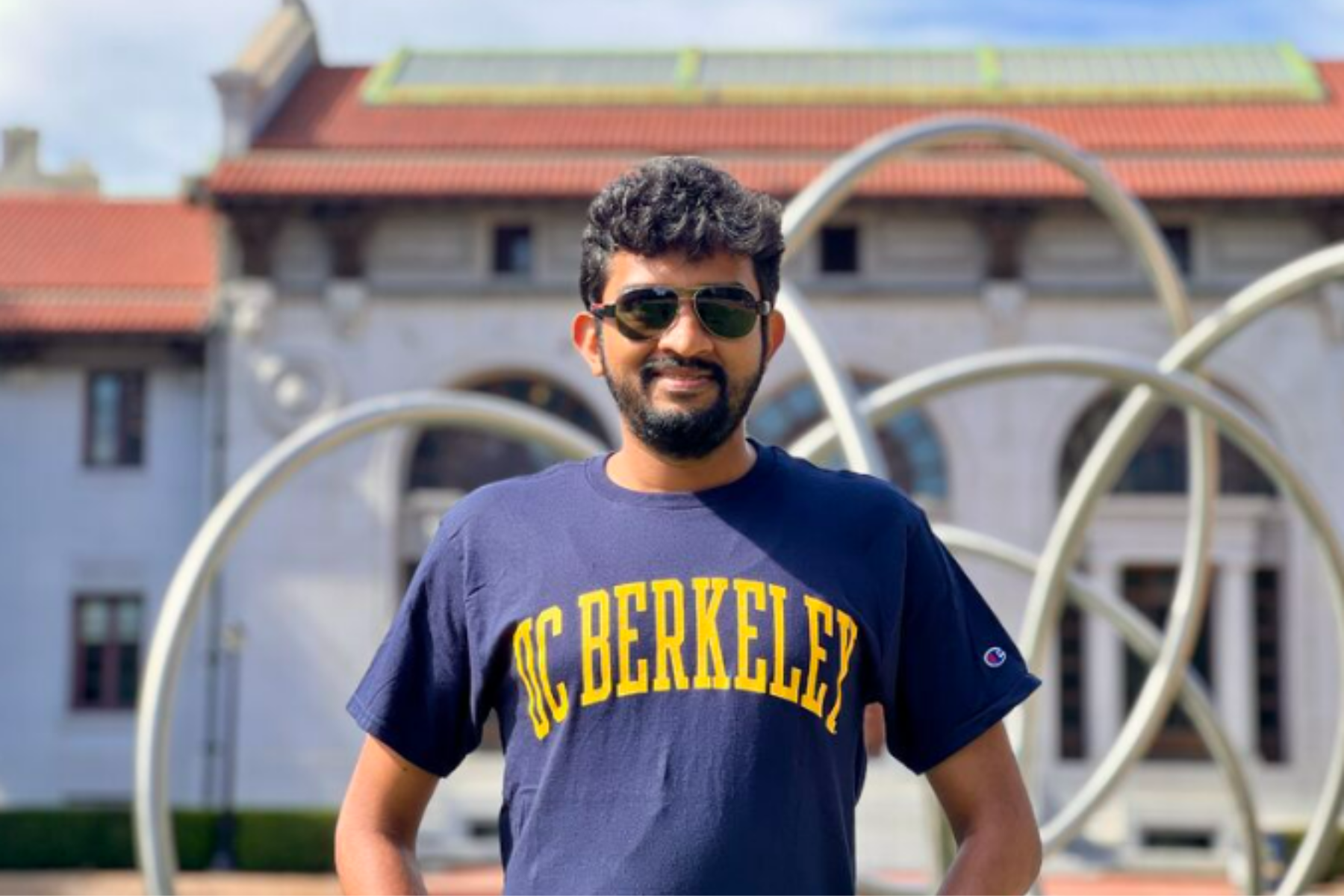
Biophysicist Deepak Krishnamurthy will join the Department of Mechanical Engineering at the University of California, Berkeley, as an assistant professor in January 2027. The appointment marks the launch of his new research space, the Deep Lab for Microbial Biomechanics.
Krishnamurthy’s upcoming lab will explore how microscopic interactions among single-celled organisms, biomaterials, and fluid dynamics aggregate to influence planetary processes and marine ecosystems.
A primary focus of the research center will involve loricate choanoflagellates, utilizing the single-celled organisms as model systems to study cell adhesion, biomineralization, and bio-inspired manufacturing.
Additionally, his research team will examine the biophysical behaviors of oceanic microbes to understand how tiny biological movements dictate the formation and descent of carbon-rich particles through ocean depths, a key mechanism in global carbon regulation.
Read: Dr. Neel Shah named new president of Healthy Moms, Healthy Babies America (August 31, 2026)
To facilitate these measurements, the lab intends to design high-throughput force-manipulation systems, molecular biophysics methods, and custom automated multi-scale microscopes.
The interdisciplinary initiative will bridge physical biology, engineering, and oceanography. Recruitment for the laboratory’s research staff, including postdoctoral scholars and research technicians, is slated to begin ahead of a planned Spring 2027 launch.
Krishnamurthy traces his roots to Chennai, India. He completed his Bachelor of Engineering (Honors) in Mechanical Engineering at the Birla Institute of Technology and Science (BITS), Pilani.
He earned his Master of Science in Engineering Mechanics with a focus on fluid dynamics from the Jawaharlal Nehru Centre for Advanced Scientific Research (JNCASR) in Bengaluru, India.
Read: Anupa Shantaram named to Michigan Board of Pharmacy (August 31, 2026)
He later moved to the United States for doctoral studies, receiving his PhD in Mechanical Engineering from Stanford University under the mentorship of bioengineer Manu Prakash.
During his doctoral research, he co-invented Scale-free Vertical Tracking Microscopy commonly called the “Gravity Machine” to track the vertical movements of plankton and marine particles.
Supported by a Schmidt Science Fellowship and a Burroughs Wellcome Fund CASI award, he pursued postdoctoral research at UC Berkeley in the laboratories of Daniel Fletcher and Nicole King.
Crediting his family, mentors, and international support network, Krishnamurthy aims to combine computational modeling, physical theory, and experimental biophysics at UC Berkeley to advance material self-assembly and ocean science.