



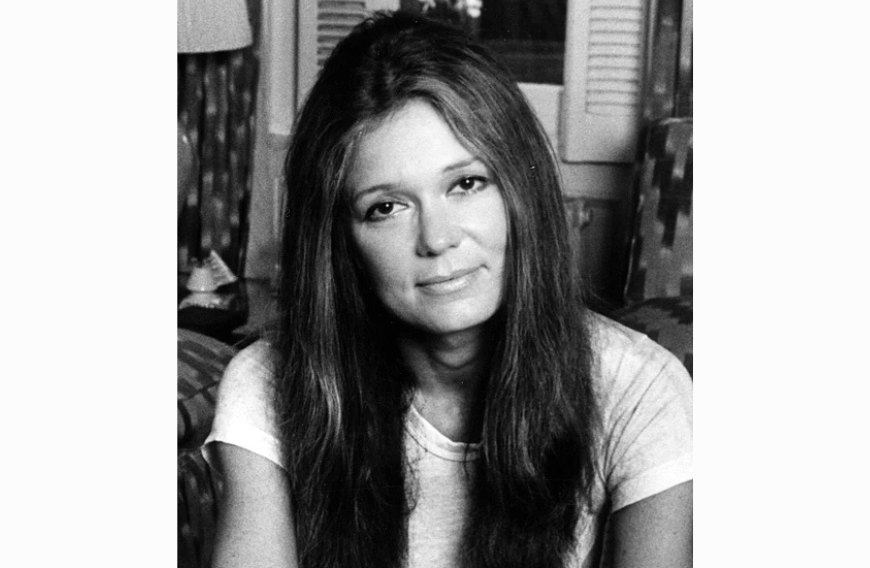
Gloria Steinem, the pioneering writer, organizer, and political activist whose steady leadership reshaped the American movement for gender equality, died Wednesday at the age of 92 in her New York City home.
Her death was announced a day later through her official social media channels, where loved ones noted she passed away peacefully surrounded by close friends and family.
In her signature oversized aviator glasses and blonde-highlighted hair, Steinem emerged in the late 1960s as the defining public face of second-wave feminism. Yet her public presence masked a deeply personal history that shaped her worldview.
Born in Toledo, Ohio, in 1934, Steinem grew up in an unstable household, traveling in a trailer for much of her early childhood.
Following her parents’ separation, she spent years as the primary caregiver for her mother, who suffered from severe depression.
Steinem often reflected that witnessing her mother’s loss of independence gave her a fundamental understanding of how societal expectations and financial vulnerability could trap women.
READ: Indian student from Hyderabad dies in U.S. amid job search struggles (August 27, 2026)
After graduating from Smith College in 1956, Steinem spent two years traveling in India on a fellowship, where she observed local community organizers and took part in nonviolent grassroots resistance.
She returned to New York to pursue a career as a freelance journalist, initially struggling to be assigned serious political stories as a young women in a male-dominated industry often being sexualized.
In 1963, Steinem gained national notoriety by going undercover as a Playboy Bunny at Hugh Hefner’s Manhattan club.
Her two-part exposé detailed low wages, strict physical demands, and persistent harassment, women had to go through exposing the realities behind the glamour.
Her transition from reporter to full-time activist crystallized in 1969, when she covered an abortion rights speak-out for New York Magazine.
Hearing women publicly share their secret healthcare decisions inspired her to speak openly about her own youth abortion in India and commit her life to organizing.
In 1971, Steinem co-founded the National Women’s Political Caucus alongside civil rights leaders including Bella Abzug, Shirley Chisholm, and Betty Friedan.
Recognizing that women needed an independent media platform, she launched Ms. magazine as a full issue in 1972.
The debut edition featured a bold petition of prominent American women declaring they had undergone abortions, challenging laws and taboos a year before the U.S. Supreme Court decided Roe v. Wade.
Steinem routinely credited Black feminists including Dorothy Pitman Hughes and Florynce Kennedy, with whom she toured the country for teaching her how to organize and speak in public.
Despite a lifelong fear of public address, Steinem traveled globally for decades to speak at rallies, college campuses, and community circles.
Though she spent decades critiquing marriage as an inherently patriarchal institution, Steinem surprised many in September 2000 by marrying South African-born entrepreneur and environmentalist David Bale.
READ: CNN founder Ted Turner dies at 87 (May 6, 2026)
She was 66, and she candidly noted that years of legal reform had finally turned marriage into an equal partnership rather than a surrender of women’s rights. The union was short-lived; Bale died of brain lymphoma just three years later, in December 2003.
Steinem had no biological children of her own, a deliberate life choice she spoke about openly and without regret.
However, through her marriage to David Bale, she became a stepmother to his four adult children: software specialist Erin Kreunen, drama therapist Louise Bale, musician Sharon Bale, and Oscar-winning actor Christian Bale.
Steinem poured her energy back into movement-building, proving that her commitment to justice was a lifelong vocation rather than a temporary era.
Her decades of grassroots organizing and cultural influence were formally recognized in 2013, when President Barack Obama awarded her the Presidential Medal of Freedom, the nation’s highest civilian honor.
Even into her nineties, Steinem remained a fixture on television and at rallies, fiercely defending reproductive autonomy as new legal challenges surfaced across the country.
She published her final memoir, continuing to write, mentor young activists, and insist that equality was an ongoing, collective effort, until her last breath.