



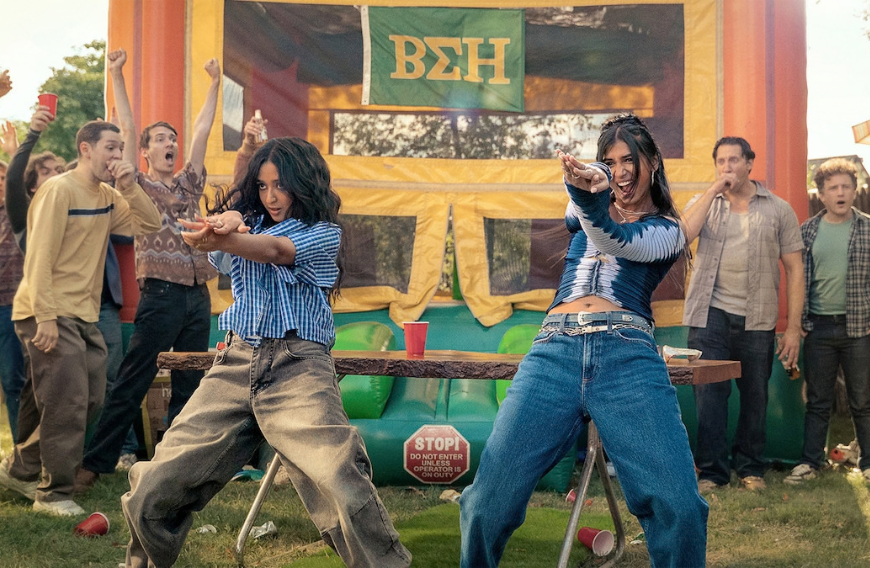
A UK-based influencer has sparked a conversation about South Asian representation and diaspora identity following the release of Netflix’s “Best of the Best,” arguing that one film cannot be expected to represent the experiences of an entire region.
Shilpa, a Malayali influencer who uses the Instagram handle @lateafternoonthoughts, addressed the criticism surrounding the film and the broader debate over what qualifies as authentic South Asian representation.
She acknowledged that she has also grappled with some of the concerns raised about the way South Asian culture is presented in Western spaces. Referring to conversations around South Asian fashion at Coachella, Shilpa said she understood criticism of the way some cultural elements can be selected for their visual appeal and popularity online.
“I do think that Western deity influencers sometimes handpick the most aesthetic and appealing parts of our culture and use it for their own virality,” she said.
However, she argued that a portrayal does not have to represent every South Asian experience to be meaningful or valid for the people who identify with it.
“I don’t have to like it for it to be a valid representation of millions of people,” Shilpa said.
She also pushed back against the idea that South Asian culture can be treated as synonymous with Indian culture.
“South Asian culture is not monopolized by Indians,” she said. “It is extremely self-centered and narcissistic to think that anytime someone is talking about South Asian culture, they are talking about Indian culture.”
READ: “I am Tamil as fuck”: Maitreyi Ramakrishnan gets candid about her roots in Best of the Best (September 19, 2026)
Shilpa pointed to the diversity within South Asia, noting that the region includes multiple countries and communities with their own identities and traditions.
“South Asia includes nine different countries. That’s nine different homes, nine different identities, all with different subcultures and some common themes within them,” she said.
She argued that even within India, cultural identity cannot be reduced to a single set of experiences, pointing to the country’s regional, linguistic and cultural diversity.
The influencer also addressed criticism directed at diaspora Indians for allegedly being disconnected from their culture. She argued that migration naturally creates diaspora communities and new generations who may develop their own ways of connecting with their heritage.
“You do realize that your migration will also result in a diaspora population who will then be a generation of kids trying to connect to a culture that you’ve actively moved away from,” she said.
Shilpa specifically cited the Bollywood-fusion dance culture that has developed on American college campuses. While some people may see intercollegiate Bollywood dance as an imperfect attempt by diaspora students to reconnect with South Asian culture, she said the effort itself has meaning.
“As much as you think the highs and lows of intercollegiate Bollywood dance in the USA is a desperate attempt at connecting the South Asian culture, it’s still an attempt,” she said.
At the same time, Shilpa made clear that she does not believe “Best of the Best” represents every South Asian or South Indian experience.
“No, ‘Best of the Best’ is not a good representation of all South Indians,” she said.
But she questioned whether any single movie should be expected to accurately portray the experiences of billions of people across different cultures, religions and communities.
“I think it’s quite obtuse to think that any single piece of media can accurately represent two billion different people across religions, communities, interests,” Shilpa said.
Instead, she views the film as one example of diaspora representation reaching a mainstream audience.
“The fact is, it did represent thousands of South Asian diaspora kids across the world,” she said. “Representation happens step by step.”
Shilpa said the presence of one kind of South Asian story could eventually create space for other communities to see their experiences represented on screen, including immigrant students and queer South Asian communities.
READ: Maitreyi Ramakrishnan’s Best of the Best puts South Asian American life on the dance floor (September 19, 2026)
“If we have this, we can down the line have movies about immigrant students, queer desi communities, some Morgana competitions. And we should have it all,” she said.
Her broader argument is that South Asian representation does not have to be an all-or-nothing conversation. A film can speak to one section of the diaspora without claiming to represent everyone.
“We should want it all,” Shilpa said. “Honestly, I just feel like some of you need to learn to clap for other communities just as loudly as you’d want them to clap for you.”
That discussion comes as “Best of the Best” brings a South Asian American coming-of-age story to a mainstream Netflix audience. The 2026 comedy, directed by Lena Khan, follows childhood best friends Maya, played by Maitreyi Ramakrishnan, and Anjali, played by Kedia, as they join UCLA’s competitive Bollywood-fusion dance team with hopes of winning a U.S. championship.
The dance competition is only part of the story. The film also explores what it means to grow up between cultures, with Bollywood songs, wedding choreography, the South Asian Students Association, Indian American names and references to the Kohinoor woven into the characters’ lives.
For many South Asian immigrants and children of immigrants, that familiarity is central to the film’s appeal. Rather than constantly explaining desi culture to a mainstream audience, “Best of the Best” presents a version of diaspora life in which those cultural references are already part of everyday life.
The conversation surrounding the film ultimately reflects the diversity within the South Asian diaspora itself, with different communities bringing their own experiences, expectations and definitions of representation to the screen.