



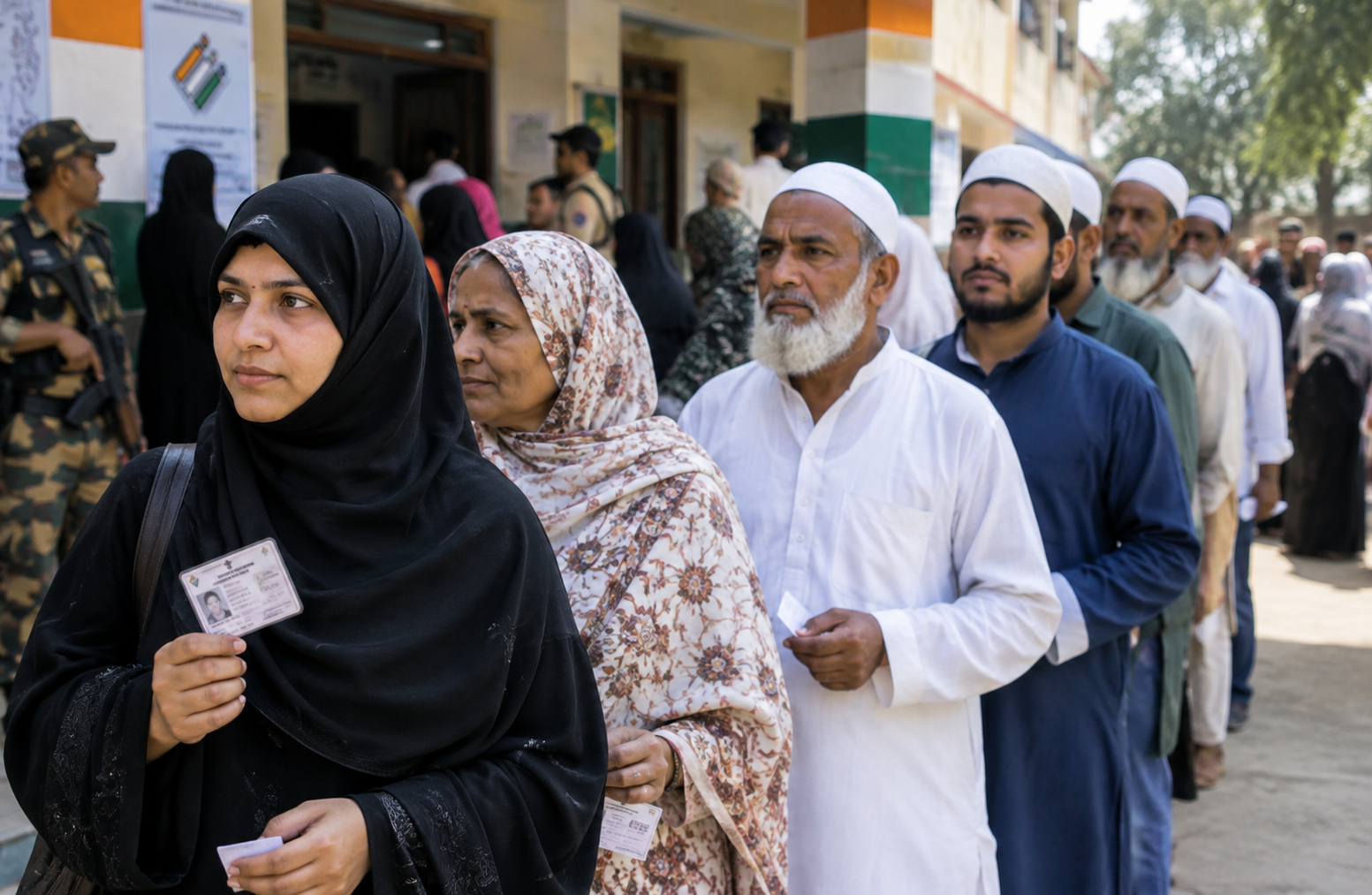
For three decades, Uttar Pradesh’s Muslims, roughly one in five of the state’s people, have been asked to defend the idea of India: a republic where citizenship does not depend on faith. They have done so with unusual discipline, voting tactically and consolidating behind whichever party seemed best placed to stop the BJP. The question this column asks is what they received in return.
The first betrayal was Congress. Muslims began as Congress loyalists, but the bond frayed in 1977 over the Emergency and forced sterilizations. It broke between 1986 and 1992: the Shah Bano reversal, the opening of the Babri locks, and a Prime Minister who could not or would not stop the demolition. The party that claimed to be the guardian of pluralism left the community exposed when it mattered most.
READ: How Indian mangoes won America, but not yet the market (June 27, 2026)
Then came the leaders who offered shelter. Charan Singh’s coalition was built on peasant castes, with Muslims as junior partners. Mulayam Singh Yadav went further. The 1990 firing on kar sevaks earned him the nickname “Maulana,” a label his opponents turned into the pejorative “Mullah Mulayam.” But the label misread his politics. He was Yadav first. Party posts, tickets and patronage flowed to the Yadav-OBC core and eventually to his family, while Muslims were the multiplier on election day. The 2009 embrace of Kalyan Singh, the chief minister during the Babri demolition, showed where Muslim concerns ranked once calculation demanded otherwise. The 2013 Muzaffarnagar riots, under his son’s government, showed the limits of protection.
Mulayam also cultivated strongmen, among them Atiq Ahmad and, in the Ansari family’s case, Afzal Ansari. They delivered votes and local control. That was never empowerment of a community. It was the outsourcing of influence to individuals who depended on the party.
Akhilesh Yadav inverted the method but kept the logic. Having watched Mulayam’s image feed Hindu consolidation, he went quiet. The “A” in PDA nominally stands for Alpsankhyak, but in 2024 the SP fielded only about four Muslim candidates in UP, and Gyanvapi, Mathura and Azam Khan’s long imprisonment were largely absent from the campaign. He blocked the Ansari merger in 2017, kept Atiq at a distance in the later years, and in Rampur backed a candidate other than Azam Khan’s choice, weakening a veteran in his own stronghold. Distancing from criminal cases is defensible. But Azam’s cases are widely viewed as politically driven, and the pattern left the community with fewer powerful voices of its own.
READ: Satyameva Jayate. So let us have all of it. (June 10, 2026)
The quiet strategy worked, and that is the real indictment. Muslims still voted for the SP in overwhelming numbers in 2024, and every Muslim SP candidate won. Because they have nowhere else to go, they can be taken for granted at no electoral cost. Here is the structural trap. At about 20%, spread thin across constituencies, Muslims cannot win alone, and Muslim-only parties have gone nowhere in UP. So they follow non-Muslim leaders, and dependence hands those leaders the upper hand in every bargain.
What would the idea of India demand instead? A partnership: proportionate tickets, real positions in party and government, and a willingness to name the community’s concerns, on education, jobs and security, as national concerns. The Sachar report documented decades ago what loyalty had bought. The 2027 assembly election will test whether any party is willing to change that.
A fair counterpoint: Defenders of Akhilesh argue that silence is a strategy to win, because only a victory over the BJP can protect Muslims, and that open appeals would hand the BJP its best weapon. I take that argument seriously. But it leaves one question unanswered: can protection through electoral victory ever substitute for a voice? After three decades of loyalty without partnership, I believe Muslims must give a different politics a chance, and the choice is between mind and heart. The heart says stay with the familiar leader who offered shelter in 1990. The mind asks what that shelter has actually delivered. It is a choice between national leadership and local hunger for power, and between the idea of India and a politics of “Muslims plus other jatis” that counts the community as a vote bank rather than as citizens.