



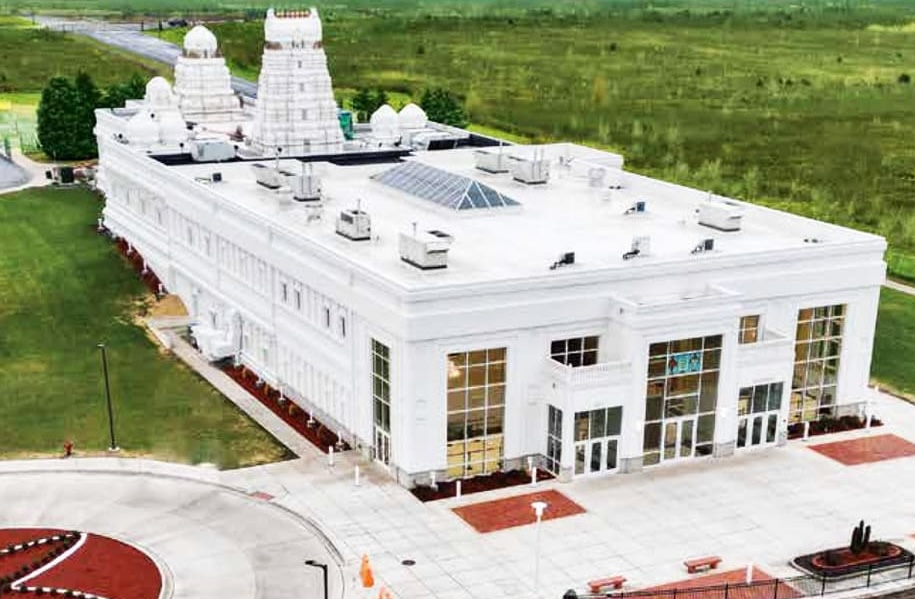
The alleged plot to carry out a mass shooting at a Hindu temple in Aurora, Illinois, should force the Indian American community to confront an uncomfortable question. Are we doing enough to protect the places where our families gather to worship, celebrate our traditions and pass our cultural heritage to the next generation?
A 19-year-old man planned a mass shooting targeting Indian people at a Hindu temple in the Chicago suburbs. Investigators say the suspect attempted to use a rifle, but the weapon malfunctioned. (PS never test the power of Balaji)
A co-worker subsequently alerted police, helping authorities intervene before the alleged plan could progress further.
The community was fortunate. The weapon’s malfunction and the decision of a co-worker to report what he knew may have prevented a horrific loss of life. But neither a malfunctioning firearm nor the vigilance of someone outside the temple can constitute a security strategy. If the outcome of a potential mass casualty event depends on luck, we have already failed to think seriously enough about prevention.
The more difficult question is whether Hindu temples across America are adequately prepared for a threat that is no longer theoretical.
READ: 19-year-old arrested over alleged mass shooting plot targeting Chicago-area Hindu temple (October 14, 2026)
Hindu temples are not simply places of religious observance. They are cultural institutions, community centers and gathering places for families spanning several generations. And they are exploding in number. When we grew up in DC in the sixties there were none.
On any given weekend, a temple can bring together hundreds or even thousands of people, including young children, elderly devotees and visitors unfamiliar with their surroundings. Major religious festivals and cultural events can attract considerably larger crowds.
That openness is central to the Hindu tradition of welcoming devotees and visitors. Yet it also creates a security challenge that temple administrators cannot afford to ignore. A building that welcomes everyone without adequate precautions can become vulnerable to someone who arrives with the intention of harming the community.
Hindu temples have been established across the United States for decades. Generations of Indian immigrants have invested their savings, time and effort in building institutions that preserve their faith and culture.
Many temples now occupy expansive properties with elaborate architecture, large prayer halls, community kitchens, classrooms and facilities for major public celebrations. Unfortunately, because land is expensive many temples exist in lower income areas that are vilified crime.
A typical Indian gathering is replete with valuable gold jewelry, ceremonial ornaments and precious decorations used to adorn deities and women. There are reasons to recognize that security must evolve alongside the institutions themselves.
Consider the security arrangements at prominent temples in India. At Tirumala’s Sri Venkateswara Temple security is an integral part of managing the enormous volume of pilgrims. Visitors encounter security personnel, screening procedures and controlled access arrangements. The precise measures vary by location and circumstances, but the principle is clear: protecting a major religious institution and managing large crowds require sustained attention, trained personnel and coordinated operations.
American temples operate in a different environment, with different laws, resources and expectations of public access. Nevertheless, the underlying responsibility is the same. The sanctity of a place of worship does not exempt it from the need for physical security.
The Indian American community has demonstrated that it can mobilize substantial resources to build magnificent temples, organize elaborate celebrations and support charitable activities. Security must become part of that same institutional commitment. It should not be treated as an optional expense that is considered only after a threat emerges.
Every temple should undertake a professional security assessment that examines its property, entrances, parking areas, gathering spaces and the movement of people during major events. Security cameras, adequate lighting, controlled access where appropriate, trained security personnel and clear emergency procedures should be considered according to the risks facing each institution.
READ: Ohio Hindu temple hit by brick attack while priests, devotees were inside (October 3, 2026)
Temple leadership should establish working relationships with local police and emergency responders, conduct periodic reviews of security plans and ensure that staff and volunteers know how to respond when something appears wrong.
The objective is not to create an atmosphere of fear. It is to make prevention routine rather than reactive especially in the midst of growing Indian hate.
The Security infrastructure costs money, and smaller temples may struggle to meet those expenses. This is precisely why community organizations, philanthropic donors and larger temple networks should consider supporting security improvements at institutions with limited resources. A shared approach to security assessments, training and emergency preparedness could help smaller congregations avoid having to develop every capability independently.
The alleged Aurora plot also illustrates the importance of community awareness. The information provided by a co-worker helped bring the matter to law enforcement’s attention. Security is therefore not exclusively about fences, cameras or guards. It also depends on people recognizing warning signs and having the confidence to report them. At the same time, vigilance must be grounded in credible behavior and evidence, not stereotypes or assumptions about a person’s background.
The Indian American community has the resources, organizational capacity and collective commitment to do better. It should begin by asking every temple board a straightforward question: When our congregation gathers for prayer or celebration, what have we done to protect the people who entrust us with their safety?
A place of worship should be a sanctuary, not a sitting duck. The responsibility for keeping it that way begins long before the next threat arrives.