



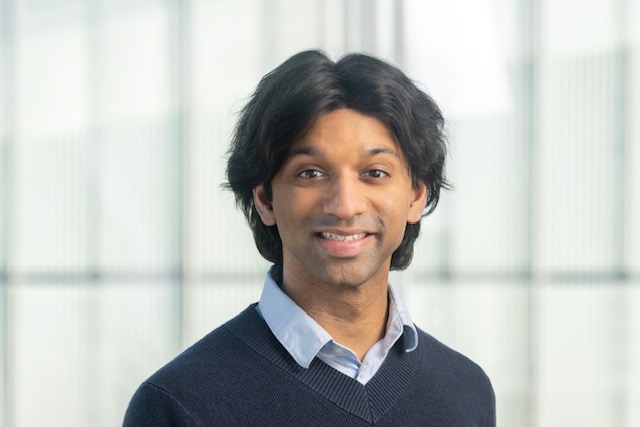
Pranam Chatterjee, an Indian American researcher at the University of Pennsylvania and Roy Ben-Shalom from UC Davis Health have received a $770,000 award to identify precision therapies for children with neurodevelopmental disabilities caused by ion-channel disorders.
Their research will be supported by the Biomedical Research Collaboration Award from the Hartwell Foundation covering direct cost over two years, according to a UC Davis Health news release.
Chatterjee, assistant professor of bioengineering and computer science at Penn Engineering and Ben-Shalom, assistant professor of neurology at UC Davis Health and the UC Davis MIND Institute, previously received a 2022 Hartwell Individual Biomedical Research Award.
Ion channels are proteins that act as tiny gates in brain cells. Each one forms a pore that can open and close in a fraction of a millisecond. These channels control the movement of charged ions (such as sodium and potassium) in and out of neurons.
The movement of those ions generates the electrical signal a neuron uses to fire, and how quickly the channels open and close sets how readily it fires. This neural activity affects the brain’s circuitry and functioning.
READ: Indian American scientist decoding chronic gastrointestinal issues (September 30, 2026)
Ion-channel disorders, known as channelopathies, occur when genetic changes affect how ion channels work. A mutation can leave a channel opening too easily, closing too slowly or barely opening at all. Neurons then fire too much, too little or at the wrong moments, and the circuits they form develop differently. The result can be a neurodevelopmental disability, such as autism or childhood epilepsy.
Ben-Shalom who works on predicting the excitability of brain neuronal circuits in neurodevelopmental conditions, says there are far more variants and candidate treatments than any lab can work through. Today, each variant must first be measured in months of laboratory recordings. That is why only a small fraction of the thousands of known variants have been studied this way.
To speed up the process, the Ben-Shalom and Chatterjee Labs will use simulations to predict those measurements. Then, they will rank which approved medications are most likely to correct each variant and design new molecules for the variants that no existing drug fits.
The collaboration combines Chatterjee’s AI-driven molecular design with Ben-Shalom’s expertise in how genetic changes affect brain function.
With the Chatterjee Lab’s ability to design a molecule aimed at one specific variant, the collaboration could mean a family gets a treatment matched to their child’s mutation rather than to a diagnosis. This synergy in the researchers’ expertise will expedite unlocking
READ: Two Indian American scientists receive NIH innovative research awards (October 12, 2026)
“We are determined to develop potential treatments tailored to the biology of childhood neurodevelopmental disabilities,” Chatterjee, the Africk-Lesley Distinguished Scholar of Innovation in Engineering, said.
Chatterjee, will use computational methods to develop models that can predict how gene mutations alter the three-dimensional shape of a channel and the way it opens and closes. These models will inform the design of molecules that can correct how these channels behave.
Chatterjee thanked the Hartwell Foundation for “giving us this unique opportunity to turn our complementary strengths into new therapeutic possibilities for children and their families.”
“Together, the two groups will create a variant-to-therapy framework that connects molecular mechanism to treatment selection and therapeutic design,” said Fred Dombrose, president of The Hartwell Foundation. “Each laboratory will address complementary components of the same challenge by contributing technologies that solve a critical part of the problem.”