



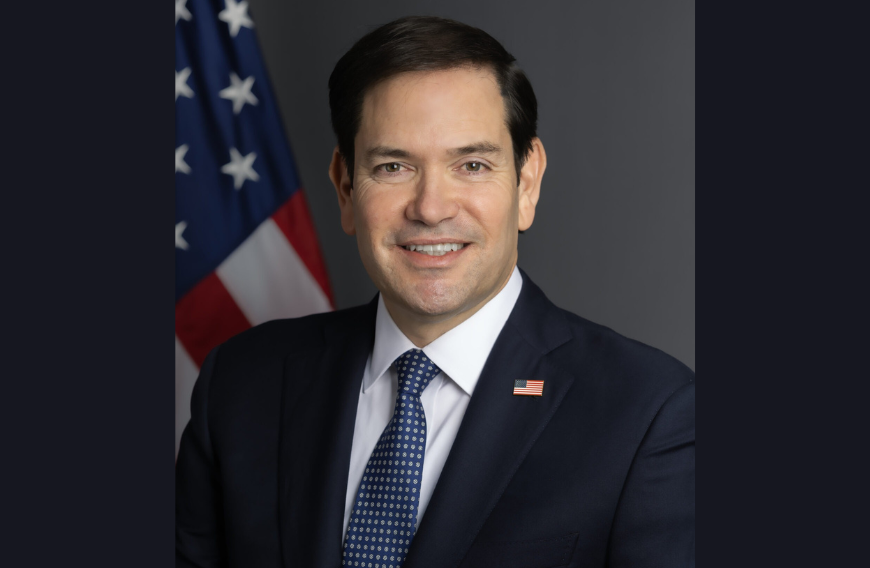
The United States is “very close” to finalizing a trade agreement with India, Secretary of State Marco Rubio told reporters in Samarkand, Uzbekistan, on Oct. 19. Bilateral tensions could ease after President Donald Trump temporarily waived certain Russia-related sanctions and tariff measures that could have affected India.
Rubio said ongoing trade negotiations with India were among the factors the Trump administration considered when making decisions about national security waivers. His remarks came ahead of a scheduled visit to India, where he will meet External Affairs Minister S. Jaishankar in Mumbai on Tuesday. Rubio is expected to discuss trade, energy investment and defense cooperation, among other issues.
READ: 40-year-old Indian national pleads guilty in US visa fraud scheme (June 26, 2026)
“We are trying to finalize a trade deal with India right now and we are very close to doing that. So, that’s one of the things we take into consideration when the President makes a decision about national security waivers and things of that nature. Every country has a complex set of factors that it has to take into account. Geography is real. For some countries, it’s very difficult to acquire energy from alternative sources. That’s not an excuse, but all of that has to be balanced when making foreign policy,” Rubio said.
Trump signed an executive order on Friday suspending a sanctions measure under the Graham Act. The measure could have imposed tariffs of up to 100% on goods from countries that purchase Russian oil and gas and was initially scheduled to take effect this week. Countries such as India and China could have been affected.
Rubio said the administration had to consider the availability of alternative energy supplies and the potential effects of sanctions on global energy prices. He noted that some countries would find it difficult to obtain energy from alternative sources.
India is one of the world’s largest importers of Russian oil. Russia is one of three countries that together account for about two-thirds of India’s oil imports. India imported 2.8 million barrels per day of Russian crude in July 2026, accounting for 55.5% of its total crude oil imports. Imports subsequently declined in August, amid potential U.S. tariff pressures and shifting market dynamics.
The threat of U.S. sanctions and tariffs had added uncertainty to bilateral trade negotiations. Indian officials had warned that the measures could strain relations between the two countries if implemented.
India’s Commerce and Industry Minister Piyush Goyal said last week that the first phase of the trade agreement had been finalized.
“The US bilateral trade agreement’s first tranche has been finalized and it is going through final contours, the legal drafting and we hope to be able to finalize that soon and operationalize that once we get the competitive advantage over our peer countries,” Goyal said.
Rubio added that a 60-day period would be used to assess how the sanctions and tariffs could affect the U.S. and global economies.
READ: DOL Inspector General intensifies H-1B fraud probe (September 17, 2026)
During his visit to India, Rubio is also scheduled to travel to Jamnagar, home to one of the world’s largest oil-refining complexes.
New Delhi has repeatedly defended its purchases of Russian oil, citing its sovereign right to choose its energy suppliers and the need to keep domestic energy prices affordable. Russian crude has also provided Indian refiners with access to supplies during periods of geopolitical tension. Although India no longer receives the steep discounts it once obtained on Russian oil and could diversify its imports, a large-scale shift away from Russian supplies may not be possible in the short term.