



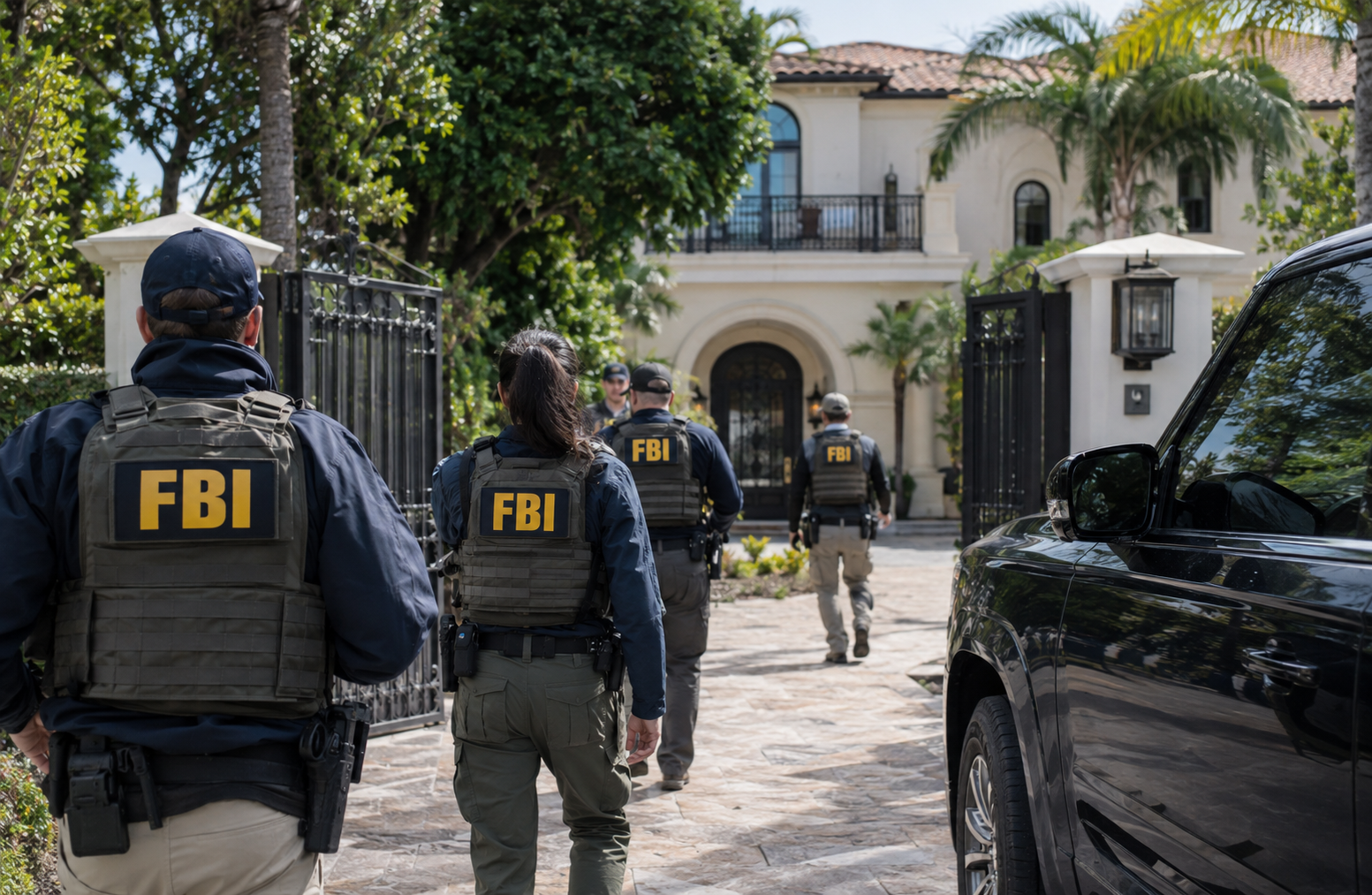
Federal agents raided a multimillion-dollar mansion in Los Angeles on Oct. 22 as part of a sweeping health care fraud investigation involving nearly $2 billion in alleged fraudulent claims, with federal prosecutors charging 15 people in cases involving substance abuse treatment centers, unnecessary medical procedures and hospice services.
The U.S. Department of Justice announced the charges Thursday, saying eight defendants had been arrested. The cases collectively involve alleged fraudulent claims submitted to government and private health insurance programs, including Medicare and California’s Medicaid program, known as Medi-Cal.
According to the Justice Department, the alleged schemes involved more than $1.6 billion in claims tied to sham substance abuse treatment programs, approximately $134 million in claims for unnecessary artery procedures and more than $138 million in claims involving hospice services for patients who allegedly were not terminally ill.
The investigation is part of the Trump administration’s broader effort to combat fraud involving government-funded benefit and health care programs.
Mansion raid leads to chiropractor’s arrest
Federal authorities raided a large gated residence in Tarzana, an upscale neighborhood in Los Angeles, in the early hours of Oct. 22. Agents arrested Hany Malek, 61, a chiropractor accused of participating in a scheme involving medically unnecessary artery procedures.
Prosecutors allege that Malek posed as a medical doctor to diagnose patients with arterial disease and refer them to his business partner, Dr. Harold Tabaie, a 78-year-old cardiothoracic surgeon from Anaheim.
The two allegedly billed Medicare for atherectomies, invasive procedures that use a catheter to remove plaque from arteries, even when patients did not need the treatment.
READ: Rep. Raja Krishnamoorthi leads 105 lawmakers seeking FBI probe into Hindu temple attack (October 21, 2026)
According to the indictment, Tabaie also performed repeat procedures on some patients after allegedly claiming that earlier surgeries had been unsuccessful. Some patients experienced significant pain and discomfort, prosecutors said. The alleged scheme generated approximately $134 million in fraudulent claims, according to the Justice Department. The agency’s announcement put the amount at about $135 million in its detailed account of the case.
Malek and Tabaie each face four counts of health care fraud. Malek also faces two counts of bank fraud over allegations involving fraudulent applications for Paycheck Protection Program loans. The allegations have not been proven in court.
Alleged addiction treatment scheme accounted for bulk of claims
The largest case involved a network of purported substance abuse treatment centers that allegedly billed insurance companies more than $1.6 billion for services that were not provided as claimed.
According to federal prosecutors, David Young, 71, and his son Nathan Young, 39, allegedly controlled dozens of treatment companies in the Los Angeles area and elsewhere. They were accused of working with patient recruiters to bring vulnerable people, including homeless individuals and people living in poverty, to treatment facilities. The alleged scheme targeted individuals with insurance policies offering high reimbursement rates. Prosecutors said recruiters offered incentives such as free flights, accommodation, cash, gift cards and other benefits to persuade people to enroll.
Once patients arrived, the treatment they received often did not match what had been promised, according to the indictment. Prosecutors allege that some facilities billed insurers for treatment that was unnecessary or never provided.
The Justice Department also alleged that patients were repeatedly moved through facilities to keep insurance claims flowing. In some instances, patients were allegedly drugged or prevented from leaving, while employees were instructed to coach them to fabricate symptoms to qualify for treatment.
The case includes allegations of serious exploitation of people seeking help for substance abuse. The charges remain allegations unless established in court.
Hospice services and other alleged schemes
Federal prosecutors also announced charges in several hospice fraud investigations involving more than $138 million in alleged fraudulent Medicare claims.
In these cases, defendants allegedly enrolled people who were not terminally ill in hospice programs and billed Medicare for services that were unnecessary or not provided. The Justice Department said some beneficiaries were unaware they had been enrolled in hospice care or had not received the services claimed on their behalf.
Another case involved an alleged scheme to defraud Medi-Cal through false pharmacy claims. Prosecutors said the scheme resulted in approximately $269.1 million in fraudulent claims, of which the program paid at least $178.7 million.
The department also announced separate charges involving alleged illegal kickbacks connected to genetic testing orders and prescription drug sales. Together, the cases illustrate the range of alleged conduct under investigation, from billing for services that were never delivered to procedures that prosecutors say exposed patients to unnecessary medical risks.
Federal agencies step up fraud enforcement
The Oct. 22 announcement involved several federal agencies, including the FBI, the Department of Health and Human Services Office of Inspector General and the Internal Revenue Service’s Criminal Investigation division.
READ: FBI Director Kash Patel engaged to country singer Alexis Wilkins (October 5, 2026)
Assistant Attorney General Colin M. McDonald of the Justice Department’s National Fraud Enforcement Division said investigators were pursuing cases involving the alleged misuse of health care funds and harm to patients.
FBI Director Kash Patel said the defendants were accused of exploiting taxpayer-funded health care and insurance programs. The department said investigators used data analytics in the artery-procedure case to identify unusually high billing activity.
The announcement comes as the Trump administration increases its focus on alleged fraud involving public assistance and government-funded programs.
For patients, insurers and taxpayers, the cases raise questions about safeguards against fraudulent billing and the oversight of health care providers. The investigations will now proceed through the federal criminal justice system, where prosecutors must establish the allegations against the defendants.