



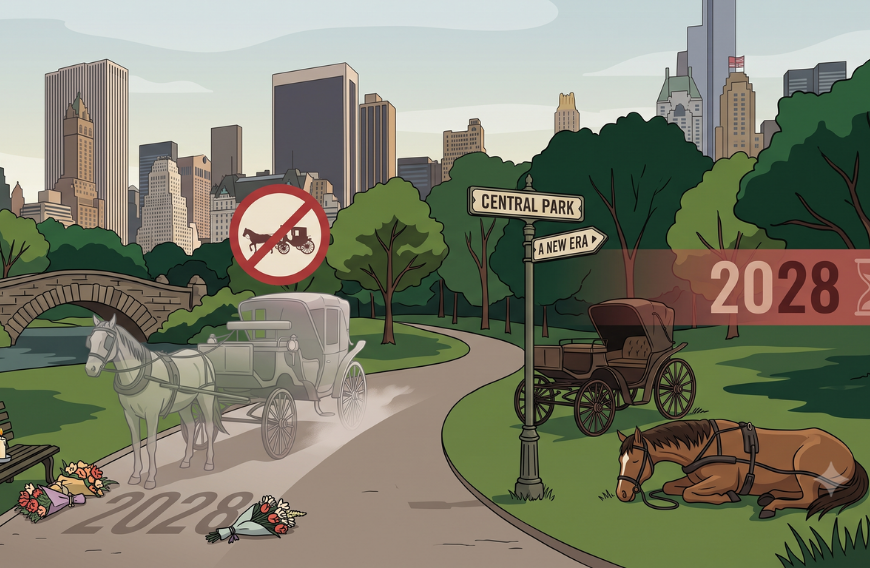
New York City has voted to ban horse-drawn carriages from its streets and Central Park by June 2028, ending a tradition that has been part of the city’s tourism industry for more than 150 years.
The plan follows renewed public attention after an incident involving a horse and Romanch Mahajan, an 18-year-old Indian tourist, during the summer. Mahajan died on June 17 after jumping from a carriage in an attempt to save his mother, who had been thrown from the buggy when the horse suddenly galloped. The driver had stepped away to photograph the family when the incident occurred. The incident intensified calls from animal welfare advocates and other campaigners to end the practice.
The New York City Council voted 40-7, with two abstentions, on Oct. 22 to approve “Romanch’s Law,” named after Mahajan. The bill is backed by Mayor Zohran Mamdani. The ban would affect carriage drivers, owners and stable workers and raise questions about the future of nearly 200 horses used in the industry. The Central Park Conservancy, the nonprofit organization that manages Central Park, welcomed the ban.
READ: NYC moves to ban Central Park horse-drawn carriages by 2028 after Indian tourist’s death (October 14, 2026)
Horse-drawn carriages have operated in Central Park for generations. However, animal rights groups have long argued that the work exposes horses to exhaustion because of their exposure to traffic, extreme weather and the physical demands of pulling carriages. Reports of horses collapsing or running loose have also raised concerns about risks to pedestrians.
To support workers who would lose their jobs, the updated bill requires the city, if the measure is signed into law, to establish a workforce transition program by April. The program would provide carriage drivers with career counseling and referrals to employment opportunities in the public and private sectors, including positions with the Metropolitan Transportation Authority, the Port Authority of New York and New Jersey, local sightseeing bus companies and pedicab operators.
The bill also calls on the city to consider compensating carriage owners for their businesses, horses, equipment and operating licenses. This provision marks a significant change from previous bills that sought to end the industry.
READ: Mamdani urges New Yorkers to report subscription traps (October 11, 2026)
Meanwhile, the Transport Workers Union (TWU), which represents carriage drivers, opposes the ban and has argued that stricter safety regulations would be a better way to preserve the industry. The union said it would seek a temporary restraining order from a court.
“This may be the first time in city history that a previously licensed profession was banned. The proposed bill deprives the owner of all economically beneficial or productive use of their property,” principal attorney Arthur Schwartz, who signed the letter, said.
The bill prohibits owners from selling or transferring licensed carriage horses for slaughter or for use in another horse-drawn carriage business.
President Donald Trump also criticized the ban in a post on Truth Social.
“When there is a car accident in the area, of which there are many, they don’t stop cars from entering the Park. So why would they stop the Carriages? It was a Great Tradition. Another piece of History that’s gone. It will be missed!” he wrote.