



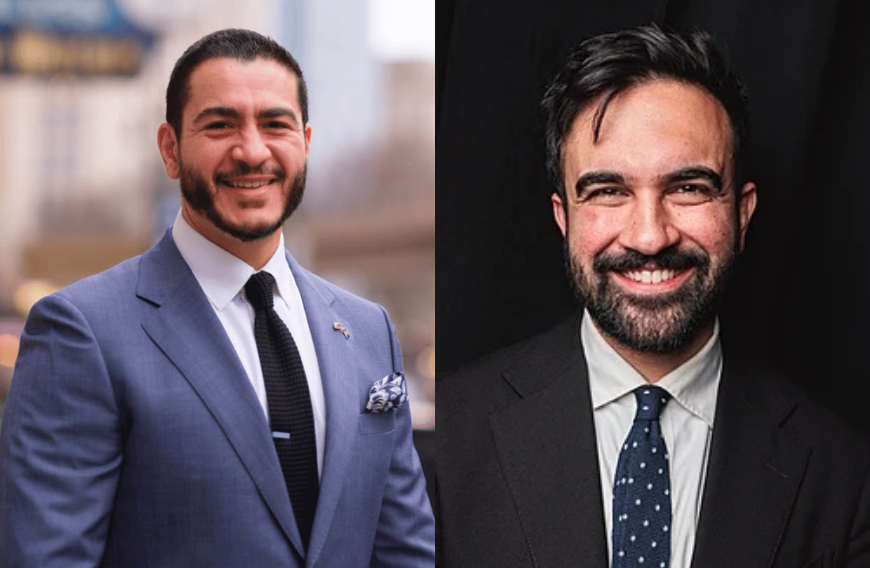
Abdul El-Sayed, the Democratic candidate for the U.S. Senate from Michigan, has found himself with an unusual political nickname: “mean Mamdani.” The label draws a comparison with New York City Mayor Zohran Mamdani, a fellow Muslim politician whose public image is often associated with warmth, optimism and an ability to connect with voters. El-Sayed, however, has developed a different style, one that relies more on direct confrontations with critics, political opponents and the Democratic establishment.
Although the two politicians share several political similarities, including their criticism of establishment politics and the influence of wealthy donors, their approaches to public engagement are noticeably different. While Mamdani often uses an approachable and conversational style to build support, El-Sayed is more willing to challenge his opponents openly and take on uncomfortable political arguments.
That difference appears to be at the heart of the “mean Mamdani” nickname. It is not necessarily a description of El-Sayed’s political positions but rather a reference to his more confrontational way of expressing them.
The Michigan Democrat has made challenging the political establishment a central part of his political identity. His approach became particularly visible during the Democratic Senate primary, where he faced opposition from several prominent party figures, including Michigan Gov. Gretchen Whitmer and Sen. Gary Peters, who backed his rival, Rep. Haley Stevens.
READ: ‘Encouraging illegal immigration’: Republicans slam Mamdani over video on how to deal with ICE (October 27, 2026)
The primary also became a major battleground over the influence of outside political spending. Groups aligned with the American Israel Public Affairs Committee (AIPAC) and other organizations poured more than $60 million into advertising supporting Stevens or opposing El-Sayed. Rather than avoid the controversy, El-Sayed directly challenged the spending and called out AIPAC, even daring the organization to “come for me.”
He ultimately defeated Stevens by a narrow margin, winning approximately 48.5% of the vote against her 47.5%. The result became a significant moment for the Democratic Party’s progressive wing, particularly because El-Sayed had faced opposition from prominent Democratic figures and a substantial financial disadvantage.
His willingness to confront powerful political interests is also what separates his public persona from Mamdani’s. Both politicians have questioned the influence of established political networks, but El-Sayed often approaches those disagreements with a sharper, more combative tone. For him, confronting criticism is also a way to challenge what he considers an unfair political debate and expose the interests shaping it.
The nickname also came up during El-Sayed’s recent appearance on the podcast “Boy Problems,” hosted by journalist Liz Plank. In the Oct. 28 episode, the host brought up the comparison and the apparent political bromance between the two politicians.
When the nickname “mean Mamdani” was mentioned, El-Sayed admitted that it bothered him, responding, “Kind of hurts my feelings.”
He then spoke about his first meeting with Mamdani, explaining that they had crossed paths after his unsuccessful 2018 Michigan gubernatorial campaign, when Mamdani was only beginning to enter politics.
Reflecting on Mamdani’s political journey and communication skills, El-Sayed said:
READ: Michigan Senate candidate Abdul El-Sayed faces attacks over Muslim faith as polls show him leading (October 29, 2026)
“So actually him I met him after I ran for governor back in 2018 and he was just getting into politics. I had just run this governor’s race and wasn’t successful but got to see him and obviously ran. He’s an extremely gifted communicator and ran a race that really inspired people around things. It’s funny because I […] the thing that you get with me is like I try to be good faith in every interaction.”
His response offered a glimpse into how he views the comparison. Despite the nickname, El-Sayed appeared keen to distinguish his own approach from the image attached to it. He praised Mamdani’s ability to communicate with voters and acknowledged the inspiration his campaign generated, while emphasizing that he tries to approach every interaction in good faith.
The comparison between the two politicians also reflects a broader shift within the Democratic Party, where progressive candidates are increasingly challenging traditional party leadership, established donors and conventional campaign strategies. Both Mamdani and El-Sayed have become associated with that political movement, even as they bring different personalities and communication styles to it.
It also captures the contrast between two politicians who share an anti-establishment outlook while choosing very different ways to take on their critics.