



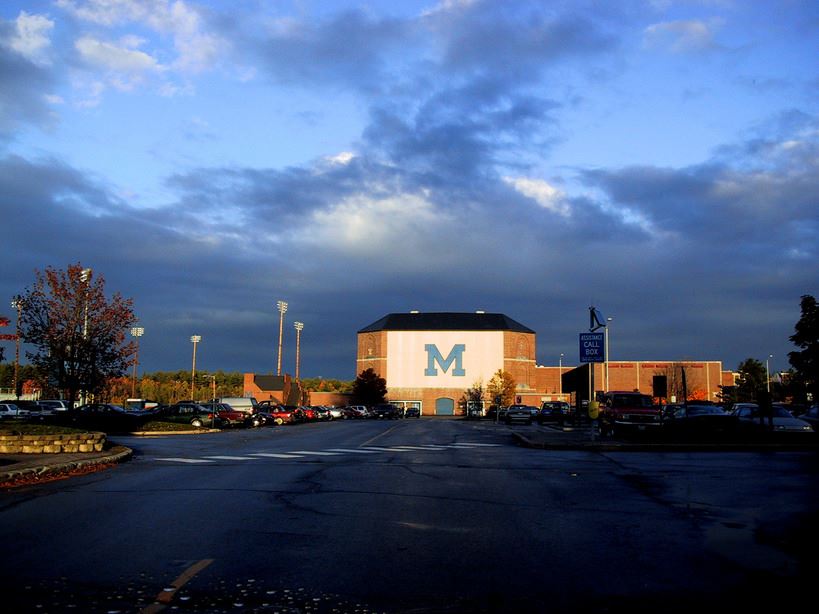
The University of Maine System filed 19 H-1B labor-condition applications in fiscal 2026 as its flagship campus prepares workforce reductions to address a projected $19 million budget deficit.
The University of Maine is preparing faculty and staff reductions as it confronts a projected $19 million budget deficit for fiscal year 2028, even as the broader university system continued filing applications under the H-1B visa program. The development has drawn attention to the university system’s employment and staffing decisions as administrators seek to reduce expenses, eliminate vacant positions and consolidate operations.
According to an Oct. 30 report by Campus Reform, federal employment records compiled by MyVisaJobs show that the University of Maine System filed 19 H-1B labor-condition applications (LCAs) during fiscal year 2026. The system also recorded 13 H-1B petitions approved by U.S. Citizenship and Immigration Services (USCIS) during the same period.
READ: ‘Benefit India and H1Bs’: Row erupts over Ramaswamy’s education vision (March 28, 2026)
The figures cover the broader University of Maine System and do not establish how many H-1B workers are employed at its flagship campus in Orono.
$19 million budget deficit prompts workforce reductions
The university is attempting to address a projected $19 million shortfall in its fiscal 2028 budget through spending cuts and additional revenue. In an Oct. 21 budget update, university President Joan Ferrini-Mundy and other senior administrators outlined plans to reduce expenses across academic and nonacademic departments. Academic Affairs has committed to cutting $10 million from its FY2028 base expenses. The remaining $9 million shortfall falls on nonacademic units. University leaders expect planned spending reductions and revenue increases to address approximately $6 million of that nonacademic gap, leaving another $3 million unresolved.
The proposed measures include employee layoffs, eliminating vacant positions, reducing reliance on external contractors, shortening certain annual appointments, and consolidating university units. The administration is also exploring additional revenue through expanded campus events, conferences and other activities.
In September, university leaders had warned that faculty retrenchments and staff layoffs would be necessary to address the financial pressures.
H-1B sponsorship figures raise questions
The H-1B figures reported by Campus Reform come as the university system faces pressure to reduce its operating expenses.
According to the report, the system filed 19 labor-condition applications and received approval for 13 H-1B petitions during fiscal 2026. However, the available records do not establish whether H-1B-sponsored employees work in departments facing potential layoffs or whether any sponsored workers will be affected by the planned reductions.
The university’s October 21 budget update did not identify the departments employing H-1B workers or specify whether the staffing changes would affect foreign employees.
Campus Reform said it contacted the university seeking information about the number of H-1B-sponsored employees at the Orono campus, their departmental distribution and whether the system intends to continue sponsorship during the cost-cutting process.
The university’s response was not included in the report.
University faces enrollment and funding pressures
The University of Maine has attributed its financial difficulties to rising operating costs, enrollment changes and uncertainty surrounding federal funding and policy.
Enrollment pressures have also affected the institution’s revenue projections. University administrators are pursuing improvements in student recruitment and retention while reviewing academic programs and operating expenses.
According to Maine Public, the university announced in September that it would pursue faculty and staff layoffs, eliminate a portion of vacant positions, consolidate course sections and consider closing programs with low enrollment.
The university is also working to identify additional revenue sources and reduce its reliance on one-time funding. University leaders are expected to provide further details during a Nov. 2 budget session as they prepare the FY2028 budget for consideration by the University of Maine System Board of Trustees.
READ: H-1B: Can visa holder work from outside the US? (April 4, 2026)
The available information does not establish a direct connection between H-1B sponsorship and the planned layoffs. The university has yet to publicly clarify how its foreign-worker sponsorship practices will be handled alongside its broader workforce reductions.
Important H-1B distinction
A labor-condition application is not the same as an approved H-1B visa petition. Employers must first obtain Department of Labor certification of an LCA before submitting the relevant H-1B petition to USCIS. Therefore, the 19 LCA filings and 13 approved petitions are separate measures and should not be interpreted as 32 workers or 32 visas.