



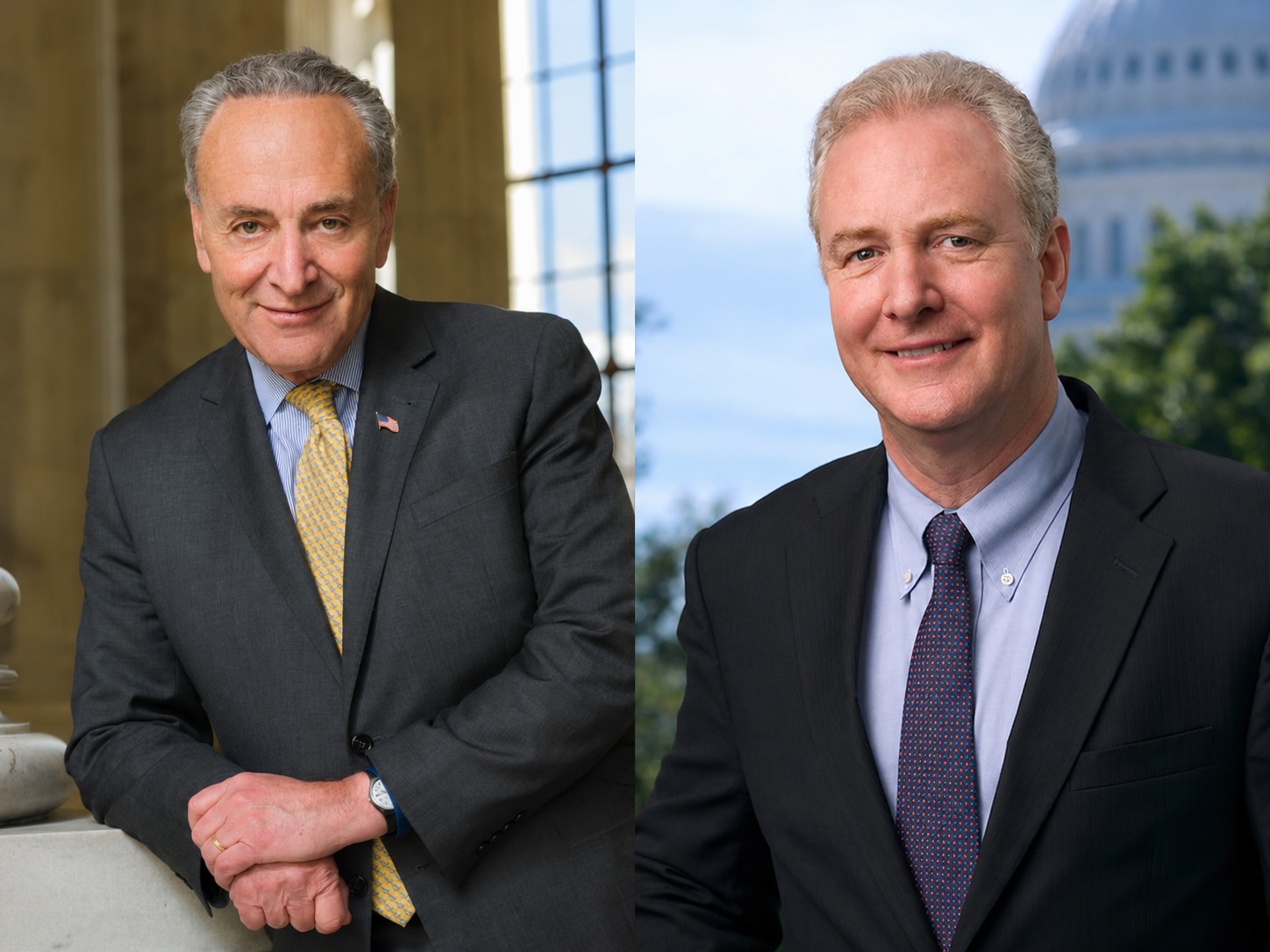
What began as two Democratic primary campaigns in Maryland has now grown into a broader effort to influence the future of the party’s leadership in Washington, with a former congressional candidate and an Indian American entrepreneur backing Senator Chris Van Hollen over Senate Minority Leader Chuck Schumer.
Quincy Bareebe, a Maryland healthcare entrepreneur and former congressional candidate, and Shukoor Ahmed, an Indian American technology entrepreneur, have launched an online initiative to encourage grassroots participation in the Senate Democratic leadership debate.
The initiative, promoted through NoSchumer.org and YesVanHollen.com, seeks to build public pressure on Democratic senators as they consider who should lead the party in the Senate. The organizers argue that the party needs a change in leadership and a stronger connection with voters, rather than continued reliance on established political networks and wealthy donors.
For Bareebe and Ahmed, the effort stems from their own experiences with Maryland’s Democratic primaries, where they say financial backing and political influence played an outsized role in determining the direction of campaigns.
Two Maryland campaigns, a common concern
Bareebe contested the 2026 Democratic primary in Maryland’s Fifth Congressional District, entering a crowded race against candidates with significant financial and political support.
According to the organizers, her campaign was outspent by roughly three to one. They estimate that outside spending supporting rival Adrian Boafo, including money from AIPAC-aligned organizations and cryptocurrency interests, approached $12 million.
Bareebe also joined fellow candidates Harry Dunn and former Prince George’s County Executive Rushern Baker in raising concerns about the influence of outside money in the race.
Ahmed faced a similar experience through his daughter, Raaheela Ahmed, who challenged an incumbent state senator in Maryland’s 23rd Legislative District.
Despite securing endorsements from several labor organizations, her campaign faced what Ahmed describes as a seven-to-one spending disadvantage. He has also questioned the Maryland Senate Democratic Caucus’s reported expenditure of approximately $325,000 in support of the incumbent.
Although the two campaigns involved different candidates and legislative offices, both experiences strengthened their concerns about the role of money and party establishments in Democratic politics.
READ: A new Democratic majority, but a new leader? Van Hollen takes on Schumer (
They believe grassroots candidates and voters need a greater voice in decisions that shape the party’s future.
Why they are backing Chris Van Hollen
Their latest campaign takes that argument to Capitol Hill, where they are advocating for Van Hollen to replace Schumer as the leader of Senate Democrats.
Bareebe and Ahmed believe the party needs leadership that is more responsive to grassroots organizers, willing to challenge established political interests and prepared to take a stronger stand against the Trump administration.
They point to Van Hollen’s engagement with Democratic candidates and activists across the country as evidence of the kind of leadership they want to see.\
READ: Shukoor Ahmed | Why I registered as ‘Uncommitted’ candidate for Democratic National Convention delegate (February 23, 2024)
Their initiative uses digital tools to take the campaign beyond traditional political advocacy. Through YesVanHollen.com, visitors can review publicly reported positions of Democratic senators, identify lawmakers who have not publicly announced their preferences and contact Senate offices directly through email.
The Senate Democratic leadership election is an internal party decision conducted through a secret ballot. The website does not determine the outcome but aims to encourage constituents to communicate their views to senators before the vote.
An Indian American entrepreneur’s long history of civic engagement
For Ahmed, a Bowie, Maryland, resident who immigrated to the United States from Hyderabad, India, the initiative builds on more than 25 years of involvement in electoral politics and civic technology.
His political engagement dates back to 1998, when he ran for the Maryland House of Delegates. Two years later, he founded V-Empower, Inc., a technology company focused on developing digital tools to connect voters with candidates and elected officials.
One of his early initiatives was StateDemocracy.com, a platform designed to help Americans identify and communicate with their elected representatives.
He later developed LobbyDelegates.com, which enabled voters to contact Democratic presidential superdelegates during the 2008 and 2016 nomination contests. Another project, PGCampaigns.com, focused on election information and voter engagement in Prince George’s County.
The common thread across these initiatives has been the use of technology to make political participation more accessible, particularly for people who lack the financial resources or institutional connections often associated with political influence.
NoSchumer.org and YesVanHollen.com extend that approach to a national debate over Democratic leadership.
A push for greater grassroots influence
For Bareebe and Ahmed, the initiative is about more than choosing between two senators. They see it as an opportunity to question how decisions are made within the Democratic Party and how much influence ordinary voters have over them.
While constituents do not directly elect Senate party leaders, the organizers want voters to have a greater say in the process by making their preferences known to lawmakers.
Their Maryland campaigns, they argue, demonstrated how difficult it can be for candidates without substantial financial backing to compete against established political interests.
Now, they are taking that frustration to the national stage, using technology to mobilize voters around a leadership contest that will ultimately be decided behind closed doors in the Senate.
Their broader message is that political influence should not be limited to wealthy donors, powerful organizations or longtime party insiders.