



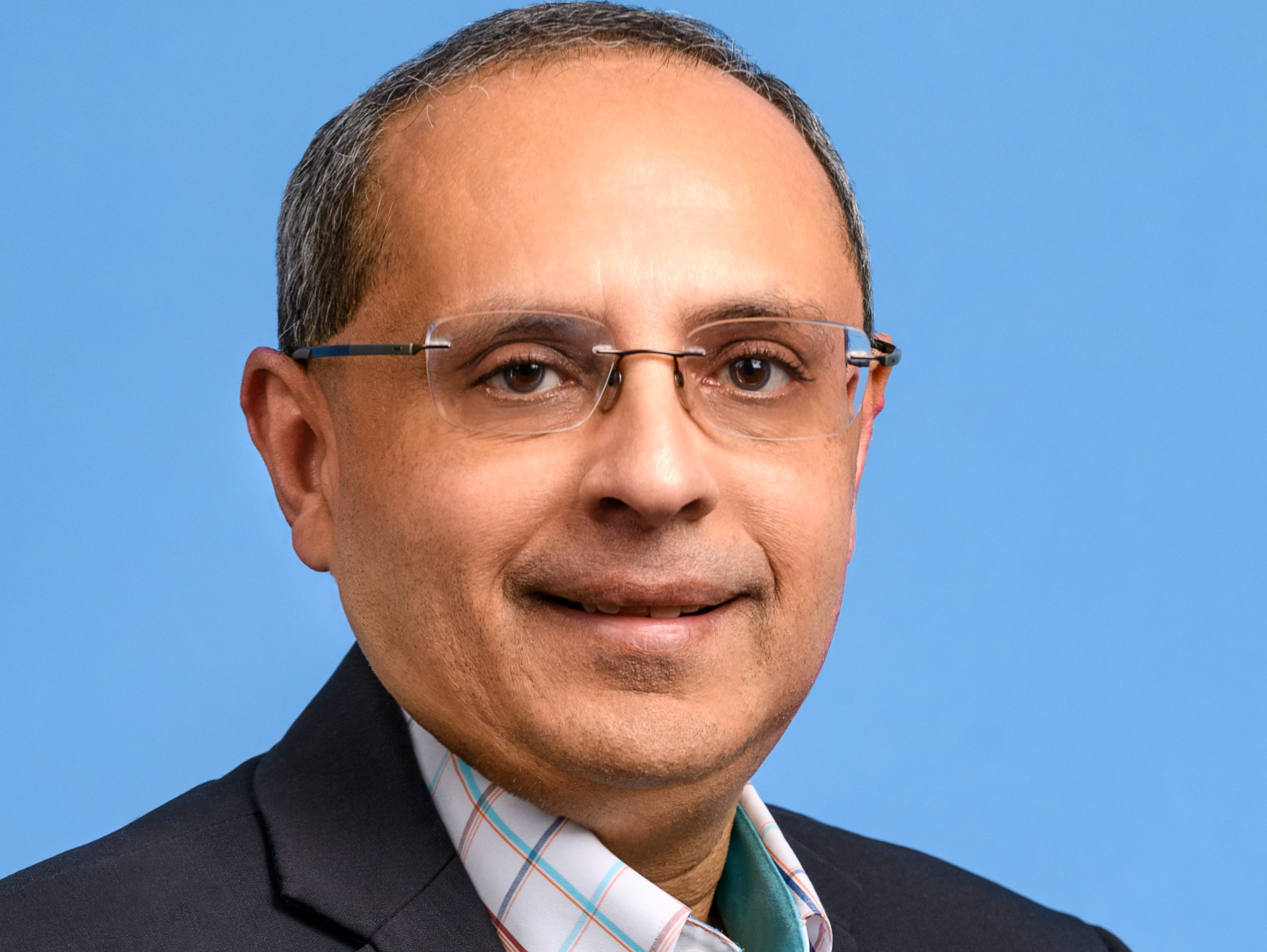
Fannin Innovation’s Managing Partner discusses strategies, challenges in biotech investment, and what sets Fannin’s model apart in the industry.
Dr. Atul Varadhachary, Managing Partner at Fannin Innovation in Houston, leads the charge in bridging early-stage scientific discoveries with successful biotech commercialization. A physician-scientist with an MD from the University of Mumbai and a PhD from the Johns Hopkins University School of Medicine, Varadhachary has been instrumental in launching over a dozen pioneering biotech companies at Fannin, including Procyrion, Pulmotect, and Radiomer Therapeutics. These ventures tackle a range of critical innovations, from cardiac devices to radiopharmaceutical treatments for cancer.
Apart from his role at Fannin, Varadhachary serves as CEO of several of Fannin’s early-stage programs and actively contributes to Texas’ biotech ecosystem. His leadership extends to board or advisory positions with numerous prestigious institutions, including the American Cancer Society, Cancer Prevention and Research Institute of Texas (CPRIT), MD Anderson Cancer Center, Texas Children’s Hospital, Rice University and the Harris Health System. With a unique blend of scientific acumen and entrepreneurial vision, Varadhachary has become a key leader in Houston’s burgeoning biotech scene.
Previously, Varadhachary held roles such as President of U.S. Operations at Reliance Life Sciences and President and COO at Agennix, Inc., where he guided a lead molecule from preclinical stages to Phase 3 trials. He also served as a Senior Engagement Manager at McKinsey & Co., as a management consultant across a range of industries, including the biotech sector.
An advocate for talent development, Varadhachary has mentored dozens of future leaders, both at Fannin and as an adjunct professor at Baylor College of Medicine, Rice University’s Jones Graduate School of Management, and the University of Texas School of Public Health. His non-profit leadership roles have included positions with BioHouston, TiE Houston, and the Indo-American Chamber of Commerce of Greater Houston, among others. His dedication to social impact is evident in his continued support for global education through Pratham USA, where he served as president.
In an interview with The American Bazaar, Dr. Varadhachary discusses Fannin’s unique strategies, the challenges of biotech investment, and the model that sets Fannin apart in the industry. Here are excerpts from the conversation.
Can you tell us about Fannin’s primary focus?
Our primary focus and about 75% of our programs right now are in drug development—pharma. We started off doing mainly medical devices and diagnostics, which still comprise 25% of what we but we pivoted to our pharma focus almost a decade ago. The challenge with pharma is that there’s a huge amount of innovation happening all over the country. But when you look at the biotech clusters that successfully turn that innovation into products, it’s mainly Boston. The bulk of it is concentrated there. The question is why, and the answer is that product development is a skill—just like journalism or anything else complex —it’s something you learn by doing.
Why is early product development such a critical component in biotech?
People who understand product development are essential, especially in the biotech space. You can’t just take a class in product development and expect to be great at it. It’s a complex process, and at the early stages, you don’t necessarily need a dedicated management team. That’s why we’ve created a group at Fannin that focuses on early-stage product development, with a heavy emphasis on grant funding in the beginning because the failure rate at this stage in biotech is so high, that we feel that grant funding is a more appropriate source of capital for the early de-risking of the technology.
How has Fannin adapted to these challenges?
We’ve grown from bringing in about 30 programs to now having a dozen active ones, with over $260 million raised across these programs. We maintain a low profile — we like to say we’re the largest company that nobody has heard of — but we are making significant progress. Our model focuses on early-stage development, raising money through grants initially, and de-risking programs before bringing in investors.
Fannin has had several successful spin-offs. Can you tell us about some of them?
One of our most advanced companies is Procyrion, which is developing an ambulatory heart pump. It’s currently in pivotal trials in patients with cardiorenal syndrome, and we expect to seek FDA approval next year. It is a medical device addressing one of the largest markets in the last decade. We also recently spun off a “radiopharmaceutical” company— Radiomer Therapeutics. Radiopharma is a particularly hot space right now, especially for cancer treatments.
Radiation is an effective anti-cancer modality, mainly using external beam radiation. Radiopharmaceuticals are incredibly exciting because they combine radiation with a targeting molecule, which has the potential to transform the way we treat cancer. We’re seeing a lot of interest in this space, and the potential to develop more precise, effective treatments is huge.
Fannin is known for developing talent. Can you tell us about your talent development program?
One of the things we’re most proud of at Fannin is our talent development program. When we started, we realized that Houston didn’t have enough experienced product developers—people who know how to take an idea from the lab and turn it into a product. So we created an internship, fellowship and associate programs to give people hands-on experience. To date, we’ve had about 350 people go through it. Half of our alumni are still in Texas, while the other half are scattered across the country including in major pharma companies, investment groups, and biotech firms.
Fannin is still relatively young, but you’ve mentioned exits on the horizon. Can you tell us about some of the companies that are close to exiting?
Ours is a long-lifecycle business. Biotech takes time. We haven’t had any major exits yet, but we’re poised for a few in the next couple of years. Procyrion, with its ambulatory heart pump, maybe the closest, with an application for FDA approval likely to happen next year. Pulmotect, which is developing an inhaled drug, is also approaching significant milestones in the next 18 months.
What makes Fannin’s approach to biotech investment different from, say, an investor focused on AI or clean energy?
Biotech investments are much harder because of their high failure rate and long life cycle. However, the biomedical health industry is one that’s going to keep growing, as we all age and demand for medical innovation increases, so wealthy individuals would like to allocate some portion of their assets to this space. The challenge is that investing in biotech is hard because public markets are focused on cash-flow-positive companies, and most of biotech is in the early stages where the risks are higher. The typical approach is either investing as an LP in a VC fund or directly in a startup, but both have their limitations.
Why is it difficult for angel investors to succeed in biotech?
Angel investing in biotech is tough. The failure rate is high, and the capital needs are massive. When capital needs increase exponentially as programs advance, most angel investors are not in a position to keep investing at the levels required to prevent dilution. That’s why Fannin provides a different model. We serve as a pooled management team, which is much more capital-efficient. This allows us to bring in experienced developers much earlier in the process, build synergies across our programs, and give our investors a diversified portfolio of biotech innovations.
Can you explain how Fannin’s investment model works?
Fannin investors own a piece of Fannin but also have the option to invest directly in financings of our spun-out companies with no fee or carry. We have about 65 investors, many of whom do what we call “programmatic investment,” where they pre-allocate capital to invest in each of our fundraises, though it remains optional. The idea is that over five or six years, they end up with a highly diversified portfolio of curated biotech companies without having to pay a few or carry. This gives them access to the biotech space without the high risk that comes with investing in a single startup or the costs associated with investing in a VC fund. It’s a more efficient way to participate in the innovation happening in the biotech sector.”
Earlier, you mentioned that Fannin’s focus has shifted more towards pharmaceuticals. What’s the reasoning behind that?
We started with a broader focus that included medical devices and diagnostics, but about five or six years ago, we made the decision to focus primarily on “drug development.” While drugs carry more research risk because experiments in animals often don’t translate to humans, once a drug reaches Phase 2 trials and has clinical proof of concept, the regulatory and commercial risks decrease dramatically.”
What are the risks associated with medical devices compared to drugs?
Medical devices carry lower research risk but higher commercial risk. For example, with a drug, if it works, doctors can prescribe it. But with a medical device, hospitals may need to change their entire workflow to integrate it, which is a significant hurdle. Plus, the number of potential acquirers in the medical device space is much smaller than in pharmaceuticals.”
How does the global biotech investment landscape compare to the U.S., particularly in places like India or China?
The U.S., and specifically Boston, really leads the world in biotech. Boston has a combination of investors, innovators, researchers, and product developers, all working together. Outside of Boston, countries like India and China excel in basic research and clinical trials, but they have historically struggled with the product development part, which is key to taking a scientific breakthrough and turning it into a marketable product. This appears to be changing in China since there have now been a number of successful biotech startups coming out of China, especially in the antibody-drug conjugate space.
What about India specifically? Could Fannin’s model be replicated there?
India is great for basic research — all the big pharma companies have large R&D centers there — but India hasn’t yet mastered the product development side. I’ve had delegations from India visit Fannin to learn about our model, and I believe it could easily be implemented there. A model such as Fannin’s could help bridge the gap between innovation and development, but it requires taking a long-term view and being willing to consider a different approach from the standard VC-funded model.
Given the large patient pool in India, is there potential for drug development in that market?
There’s definitely potential. A decade ago, India was on track to become one of the largest centers for clinical trial development, but tighter regulations slowed that momentum. Clinical trials are important for evaluating the safety and effectiveness of a drug in a large population, and India has the scale to play a significant role. However, product development is still lacking, and without that, it’s difficult to move innovations forward.
What advice would you give to someone looking to invest in biotech?
My advice is simple: “Don’t invest in single-asset, early-stage preclinical companies,” unless you’re willing to accept a very high failure rate. Biotech is risky. It may be better to invest in a diversified portfolio like what we offer at Fannin, where you’re not putting all your eggs in one basket. That way, even if one or two companies fail, you still have the potential for significant returns from others.