



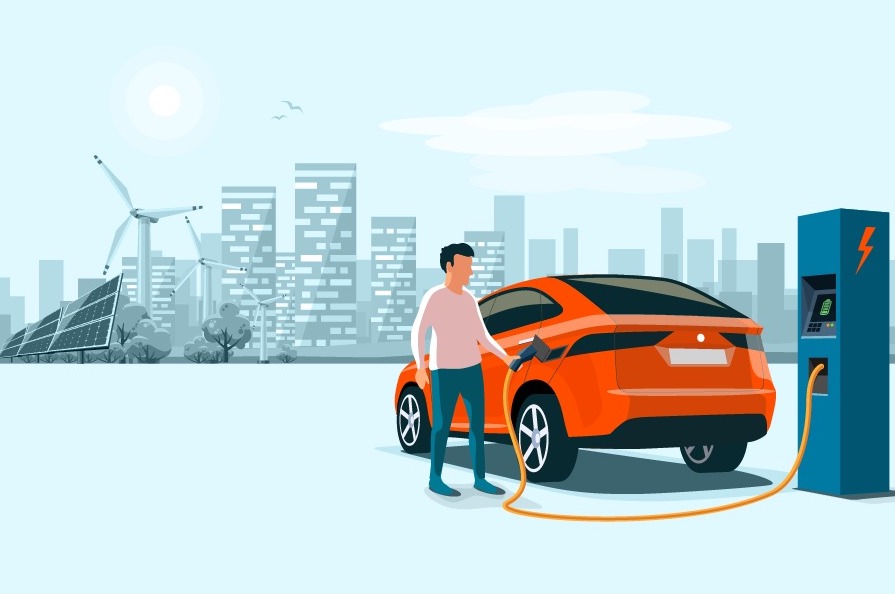
Chargerzilla connects EV charging networks, property owners, and businesses with EV drivers, expanding charging infrastructure, accelerating EV adoption, and driving decarbonization.
By AB Wire
Beneath the gleaming promise of electric vehicles lies a pressing question: where can EV owners reliably charge?
For Sajith Kumar, an EV owner and a U.S. Department of Transportation advisor, this question was not only personal but underscored an industry-wide challenge.
He saw a gap between the intended benefits of national EV policy and the on-the-ground reality for consumers. Motivated to bridge this gap, Kumar drew from his dual perspective — both as a policymaker and an EV owner — to create a solution that would empower drivers and foster trust in the EV ecosystem.

“On one hand, I contributed to the development of national policies that shape and guide the EV landscape; on the other, I witnessed the direct impact of these policies as a consumer, allowing me to understand both their advantages and limitations,” said Kumar, who holds a bachelor’s degree in mechanical engineering from the University of Calicut and an MBA from Devi Ahilya Vishwavidyalaya in India. He has also completed advanced management training from Wharton Business School and MIT, combined with his years of entrepreneurial experience.
To solve the challenges facing the EV industry, Kumar launched Chargerzilla, an AI-driven marketplace that aims to reshape how drivers and property owners interact with EV charging infrastructure. Positioning itself as “the Airbnb of charging stations,” it connects drivers with over 250,000 public charging stations across North America and enables property owners and businesses to monetize their EV chargers.
Two years in, with the support of Techstars powered by J.P. Morgan, the Los Angeles Cleantech Incubator, and a group of visionary investors, Chargerzilla is making charging “smarter, easier, and more accessible,” changing the way people view and use EV infrastructure.
Chargerzilla’s app and website allow EV owners to find nearby charging stations, make real-time reservations, and access route planning that optimizes their charging stops. It aggregates data from over 75 major charging networks, including Tesla Superchargers, Blink, EVgo, and ChargePoint, giving drivers an all-in-one solution.
READ: Oncovana: A new frontier in fertility support for cancer patients (November 2, 2024)
Through real-time station availability updates, advanced filtering options, user reviews, and secure payment systems, Chargerzilla addresses many of the pain points that previously hindered the EV driving experience. “We offer unique features that provide data on locations where EV owners can overcome charging anxiety by finding places to charge their vehicles near home, work, or while on a road trip,” Kumar explains
Chargerzilla also benefits property owners by enabling them to rent out personal or commercial chargers, creating new revenue streams from underutilized assets. For example, a hotel owner can rent their charger through the Chargerzilla platform, attracting EV owners whether they are staying at the hotel or just passing by. This generates additional daily revenue. Similarly, major EV charging networks can increase the utilization rates of their charging stations by attracting EV drivers through the Chargerzilla platform.
Kumar says he intentionally designed the platform to make it easy for property owners to onboard and start monetizing their chargers in just five simple steps. “Think of us as Airbnb++, offering a comprehensive suite of products and services to streamline the entire EV charging experience,” he explains.
Chargerzilla also offers small businesses an opportunity to increase foot traffic and cater to an expanding EV user base.
AI-driven features
The EV charging landscape has long been fragmented, with inconsistent accessibility and fluctuating pricing creating hurdles for EV adoption. Kumar says Chargerzilla addresses these issues by creating a unified platform that aligns the needs of EV drivers with the resources of charge point operators and property owners.
At the core of the platform’s offerings are its AI-driven Software as a Service (SasS) based features, which streamline and enhance the EV charging process in multiple ways.
“We want to ensure that every stakeholder, from EV owners to charge point operators, benefits from a more connected and efficient charging ecosystem,” Kumar says.
Through predictive analytics, Chargerzilla optimizes charging station allocation and pricing, ensuring that EV drivers have a seamless experience and that charging operators maximize station usage. It analyzes vast amounts of data — such as traffic patterns, weather, and station usage — to forecast peak demand times. This enables the platform to optimize station availability and pricing in real-time, ensuring that drivers can access chargers when they need them the most.
READ: From corporate narratives to children’s stories: Monica Saigal on crafting impactful tales (November 23, 2024)
Additionally, AI-powered routing algorithms help drivers find the most efficient charging routes, taking into account factors like battery range, charger availability, and real-time traffic. This “intelligent navigation” feature minimizes range anxiety and enhances charging efficiency, which Kumar describes as a vital tool for making EV ownership practical for more people.
The platform’s AI capabilities also include proactive maintenance diagnostics, which analyze sensor data from charging stations to identify potential issues before they become problems. This approach minimizes downtime for stations and ensures a reliable charging experience for drivers.
By detecting issues early, Chargerzilla helps charge point operators maintain high service standards, addressing a significant pain point for users. “AI is revolutionizing the way we charge and manage EVs,” Kumar notes, explaining that AI-driven innovation enables dynamic adjustments based on demand, much like airline pricing, and allows the platform to predict station outages before they happen.
Green mission
In Kumar’s vision, Chargerzilla isn’t just about making EV charging accessible; it’s about fostering a sustainable future for transportation. The company has plans to integrate renewable energy sources, such as solar and wind power, into its charging networks to reduce the environmental impact of EV charging.
Through demand response programs, Chargerzilla can help balance grid load by optimizing charging schedules to align with energy availability, the founder says. By managing charging loads during peak times, the platform supports grid stability and reduces strain on energy infrastructure, positioning itself as an essential player in the future of clean energy.
Through predictive energy management, the company contributes to a more scalable and environmentally friendly EV ecosystem. “AI is not just helping drivers find chargers faster; it’s also making the entire EV ecosystem greener,” Kumar says. By linking charging stations to renewable power sources, the platform aims to reduce its carbon footprint and offer drivers a cleaner, greener charging option.
As the EV industry continues to grow, so do the challenges it faces, such as inconsistent infrastructure, high costs, and lack of consumer trust.
Kumar acknowledges these hurdles but sees them as opportunities for Chargerzilla to innovate and lead. “The EV industry is at a pivotal moment,” he asserts. “We’re not just building a business; we’re building trust in an ecosystem that has to deliver on its promise of accessibility and reliability.”
By fostering partnerships across sectors and creating a marketplace that connects drivers, charge point operators, and property owners, Chargerzilla is taking meaningful steps to address these obstacles, he says
Partnerships
Looking ahead, Kumar sees Chargerzilla’s role in the EV landscape as pivotal to accelerating EV adoption across a wide range of sectors.
 The platform is making strides in the business-to-business (B2B) segment by forming partnerships with the hospitality industry, multi-family housing providers, and ride-hailing companies to expand the availability of EV chargers in urban and suburban areas.
“By bringing charging solutions to retail, hotels, and multi-family units, we’re helping these businesses attract and retain EV-driving customers,” he says. Collaboration with ride-hailing platforms also supports the electrification of fleets, bringing Chargerzilla’s infrastructure to a wider user base and expanding its reach.
Kumar’s vision future includes expanding the platform’s reach to underserved areas, both rural and urban, where access to EV infrastructure is limited. The company is exploring partnerships to install charging stations in low-income communities, recognizing that inclusive access to charging infrastructure is essential for widespread EV adoption. “We believe that EVs are for everyone,” Kumar says. “Our mission is to make charging infrastructure as inclusive as the vehicles themselves.”
Chargerzilla is also working on incorporating additional user-focused features to enhance the EV driving experience. These include loyalty programs for frequent users, tailored AI-driven recommendations based on driving habits, and additional services like Wi-Fi and lounge access for EV drivers at select locations. “Innovation doesn’t stop at convenience. It’s about creating value at every touchpoint of the EV journey,” Kumar explains.
As the company continues to grow, Kumar is confident that it will play a key role in shaping the future of sustainable mobility. “The future of transportation is electric,” he states. “But it’s not just about switching from gas to electric — it’s about creating a more sustainable and efficient ecosystem. This is more than just about charging cars; it’s about building a smarter, greener future where electric vehicles become the norm, not the exception.”
With a focus on renewable energy integration, expanding access, and optimizing the user experience, Kumar is positioning Chargerzilla as both a practical solution for today’s drivers and a model for a cleaner, smarter EV future.