



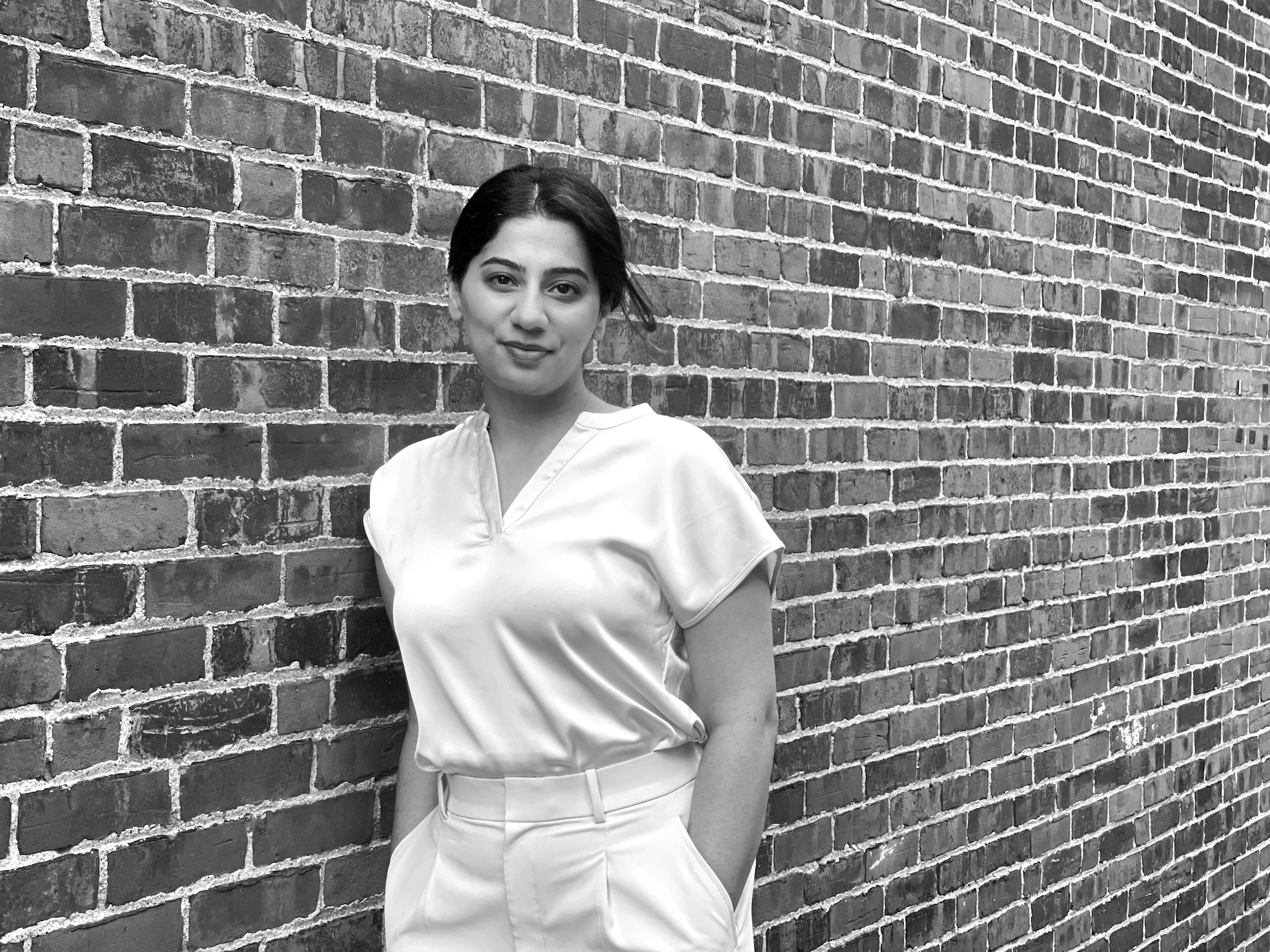
Innovation often emerges from the intersection of need, expertise, and a deeply personal drive to solve real problems. This combination lies at the heart of Oncovana, a digital platform cofounded by Indian American Bhakthi Sahgal and three other fellow Doctor of Public Health (DrPH) students at George Washington University (GWU).
The platform addresses an often overlooked but critical healthcare gap: providing accessible, quality fertility services for newly diagnosed cancer patients who wish to preserve their fertility.
The story of Oncovana began in 2023 when Sahgal and her co-founders — John Russell, Bridget Kelly, and Alvaro Rivera — entered their DrPH program at GWU’s Milken Institute School of Public Health.
Each brought unique expertise: Russell and Rivera had backgrounds in oncology, while Kelly and Sahgal had experience in reproductive health and public health policy. The team’s shared focus on healthcare inequalities naturally led them to explore the challenges facing cancer patients, particularly in the area of fertility preservation.
Cancer treatments like chemotherapy and radiation, while often lifesaving, can also render patients infertile, a fact that compounds the emotional toll of a diagnosis. “It’s something that affects all genders, yet there is little support or guidance for patients facing these risks,” Sahgal told The American Bazaar last week.
“We discovered that many patients are left to navigate the complexities of fertility preservation alone, often given only a sticky note with clinic names and little more than ten days to figure it all out before beginning treatment.”
READ: Indian American launches immigration startup Casium to revolutionize work visas (October 31, 2024)
The team’s early research highlighted the immense gap in fertility preservation services, especially for cancer patients.
Sahgal’s motivation was also fueled by personal experience: a friend, diagnosed with breast cancer at 32, struggled to find timely fertility options. “She was given her cancer diagnosis, a sticky note with three clinic names, and told to figure it out before starting treatment in 10 days,” Sahgal recalls. “The experience was traumatic, and sadly, she’s not alone. Every person we spoke with had a story like this.”
These conversations made it clear: there was an urgent need for a platform that could streamline this process and provide empathetic support to cancer patients facing fertility challenges. This shared realization among the founders became the cornerstone of Oncovana.
Building a platform for real impact
In February 2024, Oncovana’s vision began to take shape in an entrepreneurship course at GWU. The team, joined by cofounder Ornsiree Junchaya, applied their backgrounds in oncology, public health, and product design to create a digital platform that connects cancer centers, fertility clinics, and patients in a streamlined ecosystem. Through Oncovana, patients can access education, resources, and personalized support for fertility preservation.
The platform’s core philosophy is “for public health, by public health.” Sahgal, who is the Chief of Product and Innovation, explains: “We aim to build a product that isn’t just innovative but also accessible to everyone — especially those who are underserved. Healthcare is already complex and fragmented, and we hope that Oncovana will serve as a bridge between patients and the critical fertility services they need.”
READ: Rohit Bhargava on non-boring business talks, startup strategies, and why he hates cauliflower (October 21, 2024)
The founders’ commitment paid off when they entered GWU’s New Venture Competition, placing third out of 192 teams. Sahgal describes this experience as their “first brush with entrepreneurship.”
“Every phase of the competition taught us something new — creating a pitch deck, understanding value propositions, and crafting a go-to-market strategy,” she recalls. “We were lucky to have support from GWU’s Office of Innovation & Entrepreneurship, as well as some incredible mentors who guided us through the process.”
Navigating the market and refining the product
Oncovana exists within a growing fertility services market, projected to reach $16 billion globally by 2028. Yet, it occupies a niche, serving cancer patients whose fertility needs differ significantly from other groups. “We’re serving a specific type of patient with distinct requirements and a unique style of care that existing fertility services don’t fully address,” Sahgal notes. “Our platform is designed to fill this void, providing tailored, compassionate support.”
Currently in the pre-seed funding phase, the team is seeking an additional $150,000 to $500,000 to develop and refine the product. The funds will help them design a platform that doesn’t just meet clinical needs but offers a seamless, patient-centered experience. “We’re looking for investors who are aligned with our mission,” Sahgal says. “This isn’t just about building a product; it’s about creating something that genuinely improves lives.”
The Oncovana team is aiming to offer patients education and resources tailored to their unique medical histories, genetics, and risk profiles. However, they are committed to avoiding the pitfalls of indiscriminate data collection. “Our goal is to support patients, not exploit their data,” Sahgal says, adding that they are mindful of the ethical responsibilities that come with handling sensitive health data.
In an era where “femtech” and health apps often collect vast amounts of user data, sometimes at the expense of privacy, the startup is taking a cautious and intentional approach. “We’re not interested in creating a data landfill,” Sahgal says. “We’re focused on using AI to enhance personalized medicine, but in a way that respects patient privacy and prioritizes security.”
Support from the university
One of the unique aspects of Oncovana’s journey is the support its founders received from the GWU community. As DrPH students, the co-founders benefit from a program designed to accommodate professionals who work full-time, allowing them to manage both their studies and the development of Oncovana. GWU’s Office of Innovation & Entrepreneurship has also been instrumental in providing resources, mentorship, and a workspace where the team can collaborate in person.
Sahgal appreciates this supportive environment, noting that the structure and mentorship she and her colleagues received helped them sharpen their business acumen while also fostering an ethos of service.
Last week, during DC Startup and Tech Week, Oncovana participated in the pitch competition and won a cash prize in the university track.
“We’ve been able to represent GWU in the broader D.C. startup scene, and we’re proud to be the only team from the School of Public Health in these competitions,” Sahgal says. “Our classmates, professors, and mentors have shown up for us, and that’s been a huge morale boost.”
Looking ahead, Oncovana’s founders are driven by a bold vision: to make fertility preservation a natural part of cancer care, not an afterthought. In the United States alone, 2 million people are diagnosed with cancer each year, many of whom are young adults or even adolescents. For these patients, fertility preservation can be a lifeline, allowing them to envision a future beyond survival.
READ: Sapien raises $8.7 million to revolutionize finance with AI-powered coworkers for professionals (October 30, 2024)
“We want to ensure that people diagnosed with cancer can make informed decisions about their reproductive health, so they can look forward to the life they’ve dreamed of in survivorship,” says Sahgal. “This isn’t just a business for us — it’s about making a lasting impact in healthcare.”
With an ambitious roadmap, Sahgal and her co-founders envision expanding Oncovana’s reach beyond the United States, ultimately making it a global resource for cancer patients. They are also exploring potential partnerships with hospitals and cancer centers, hoping to integrate Oncovana into standard care protocols for cancer patients.
“There is a hunger for this kind of support from everyone we talk to. We believe we can make a dent in this problem and give patients the dignity and support they deserve during one of the most vulnerable times of their lives.”
Personal journey
For Sahgal, Oncovana is both a professional calling and a personal passion.
She was born and raised in Portland, Oregon, in what she describes as a close-knit and resilient community. “It was small but mighty, where our friends felt like chosen family,” she recalls. “Everyone, no matter their background, was part of a cohesive, inclusive group. That sense of community has always been core to my values.”
This early exposure to community solidarity and the immigrant experience influenced Sahgal’s interest in social issues and public health and made her aware of systemic healthcare inequities.
She pursued a degree in political science at Bryn Mawr College, one of the Seven Sisters women’s colleges in Philadelphia, where her interest in public health began to crystallize. “There was no real program in public health at my school at the time,” she says, “but there were conversations about the Affordable Care Act, and I used to volunteer in South Philadelphia, helping run a community clinic at night in the basement of the Penn Hospital.”
These experiences sparked big questions in her mind: “Why are people struggling to access healthcare? Why are the social determinants of health so profound?” Her desire to address these structural challenges drove her to Washington, D.C., to pursue a Master of Public Health (MPH) at GWU. Her journey in healthcare continued through roles at the D.C. Committee on Health, the White House during the Obama administration, and later on Capitol Hill, where she worked on legislation and policy impacting healthcare access.
“My mission is to innovate in a way that supports those who need it the most — not just those who can afford it,” she says. “That is the mission that drives me.”