



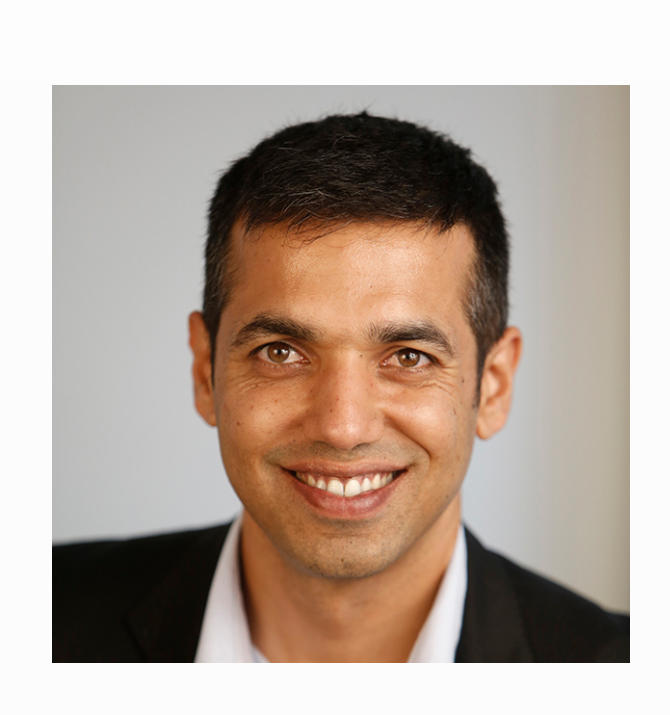
For the Indian American professor Neeraj Sood, the “marketplace of ideas” is more than an academic metaphor; it is a space that requires the same rigorous evidence and respectful inquiry he applies to global health policy.
As the founding director of the University of Southern California (USC) Open Dialogue Project, Sood is now applying his expertise in problem-solving to one of higher education’s most pressing challenges: the erosion of civil discourse.
A polymath with appointments at the USC Price School of Public Policy, the Keck School of Medicine, and the Marshall School of Business, Sood has built a career on challenging conventional wisdom.
Whether investigating pharmaceutical markets or childhood illness in India, his hallmark is high-impact research that influences real-world decision-makers. Now, as a special advisor to the university president, he is helping faculty and students navigate the “know-do gap” of modern communication.
“I have three expectations,” Sood told a packed room during the project’s inaugural event. “Let go of winning. Be curiouss and open-minded. Focus on the ideas, and not the people.”
Read: 4 Indian American researchers named 2026 Sloan Research Fellows
This philosophy stems from Sood’s belief that intellectual courage is essential for the pursuit of truth. Under his leadership, the project has launched diverse programs like “Speak Free USC” and “Difficult Conversations” workshops.
These initiatives aren’t just theoretical; they provide practical tools for instructors and students to engage with polarizing topics like gun control and healthcare without fear of personal attack or reprisal.
Sood’s transition from a leading health economist to a champion of campus dialogue reflects his broader commitment to societal health. He views a community’s ability to disagree respectfully as a vital sign of its institutional strength.
By integrating a new Student Advisory Board into the project, he ensures that the next generation of leaders is co-designing a culture where divergent viewpoints are treated as a strength rather than a threat.
“I think [respectful disagreement] makes us a better kind of community,” Sood noted, emphasizing that the goal isn’t necessarily to reach a consensus, but to restore the spirit of compromise. In doing so, Sood is helping USC serve as a global model for how universities can turn abstract principles of free expression into a lived, daily practice.