



Four Indian American researchers — Aayush Jain, Arun Kumar Kuchibhotla and Aditi Raghunathan from Carnegie Mellon University and Anand Natarajan from MIT — are among the 126 recipients of 2026 Sloan Research Fellowships.
The annual awards by the Alfred P. Sloan Foundation honor early-career researchers whose creativity, innovation, and research accomplishments make them stand out as the next generation of leaders. Winners receive a two-year, $75,000 fellowship that can be used flexibly to advance the fellow’s research.
“The Sloan Research Fellows are among the most promising early-career researchers in the U.S. and Canada, already driving meaningful progress in their respective disciplines,” says Stacie Bloom, president and chief executive officer of the Alfred P. Sloan Foundation. “We look forward to seeing how these exceptional scholars continue to unlock new scientific advancements, redefine their fields, and foster the well-being and knowledge of all.”
Among Indian American winners, Aayush Jain, assistant professor in the Computer Science Department at Carnegie Mellon, studies theoretical and applied cryptography and its connections with related areas of theoretical computer science.
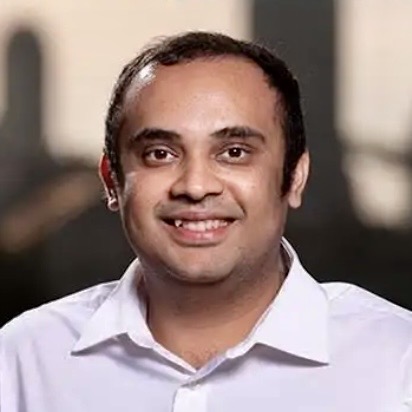
His research investigates the mathematical foundations that make modern cryptography secure, with a focus on identifying new and underexplored sources of computational hardness.
Jain aims to strengthen the long-term security of encrypted computation and address critical gaps in post-quantum cryptography. He also trains graduate students in foundational cryptographic theory.
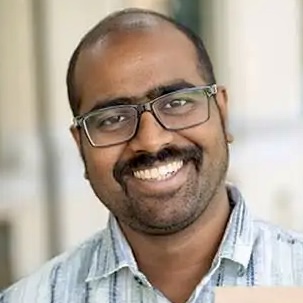
Kuchibhotla, associate professor in the Department of Statistics & Data Science at Carnegie Mellon addresses foundational challenges in statistical inference and predictive learning.
His work has many applications in machine learning and artificial intelligence, and he specializes in the development of robust, “assumption-lean” frameworks for uncertainty quantification. Kuchibhotla’s research also has utility in financial time series forecasting and significance testing in causal inference under potential interference.
Kuchibhotla develops “honest inference” procedures — like the Hull-based Confidence Method, or HulC — that remain valid in high-dimensional and irregular settings where classical tools, like the bootstrap or Wald intervals, frequently fail.
Aditi Raghunathan, assistant professor in the Computer Science Department at Carnegie Mellon focuses on identifying where and understanding why AI systems fail, and building models that remain safe, accurate and dependable in real-world settings.
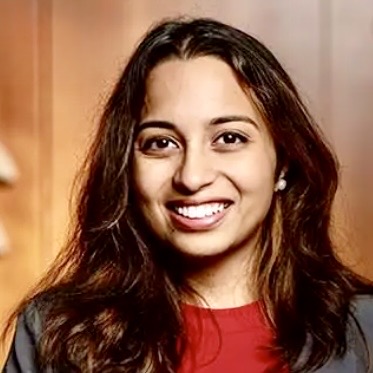
Raghunathan’s work helps ensure that advanced AI can be trusted by identifying hidden weaknesses in how systems are trained and tested. She leads the AI Reliability Lab, which builds reliable, aligned and trustworthy AI through rigorous analysis and principled methods.
Raghunathan’s work has earned awards at prestigious conferences and continues to help shed light on responsible AI system design and deployment.
Anand Natarajan is an associate professor in Electrical Engineering and Computer Science at MIT and a principal investigator in Computer Science and Artificial Intelligence Lab and the MIT-IBM Watson AI Lab.
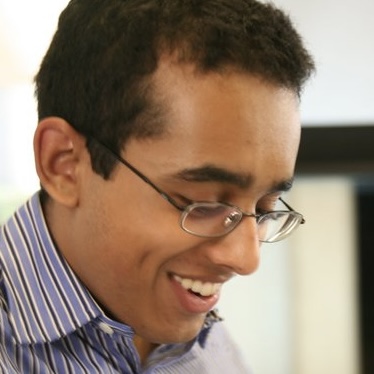
His research is mainly in quantum complexity theory, with a focus on the power of interactive proofs and arguments in a quantum world. Essentially, his work attempts to assess the complexity of computational problems in a quantum setting, determining both the limits of quantum computers’ capability and the trustworthiness of their output.
Natarajan earned his PhD in physics from MIT, and an MS in computer science and BS in physics from Stanford University. Prior to joining MIT in 2020, he spent time as a postdoc at the Institute for Quantum Information and Matter at Caltech.