



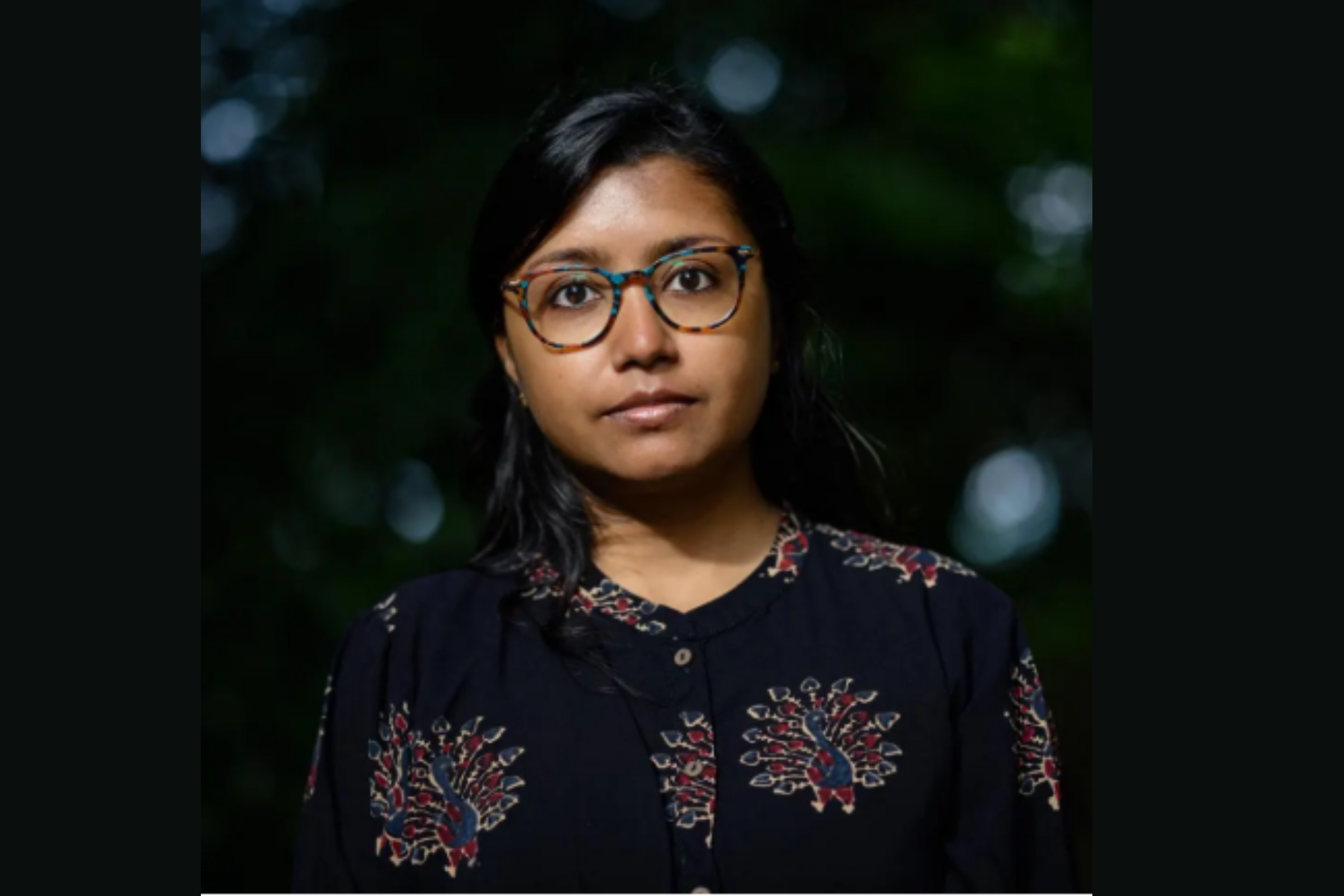
The New York Public Library’s Dorothy and Lewis B. Cullman Center for Scholars and Writers has named noted Indian American novelist Megha Majumdar as one of its 15 fellows for the 2026–2027 class.
Selected from a record pool of over 800 applicants, Majumdar joins an elite group of academics and artists who will receive nine months of unfettered access to the library’s research collections.
As the Rona Jaffe Foundation Fellow, Majumdar will utilize her residency at the landmark Stephen A. Schwarzman Building to develop her latest novel, titled “No Indian Can Know English.”
The project explores the intersection of South Asian art and the American stage, following a Bengali playwright and director attempting to produce a work inspired by the intricate, real-life friendship between Irish poet W.B. Yeats and Indian polymath Rabindranath Tagore.
Born and raised in Kolkata, India, Majumdar’s journey from the streets of West Bengal to the pinnacle of the American literary scene provides a deep well of cultural nuance for her work.
She moved to the United States to attend Johns Hopkins University before earning her graduate degree in social anthropology from Harvard. This background in observing human structures and power dynamics has become a hallmark of her storytelling.
Her selection for the Cullman Center fellowship follows a string of significant literary achievements. Earlier this month, she was awarded a Guggenheim Fellowship, further cementing her status as a vital voice in contemporary fiction.
Her debut novel, “A Burning,” was a commercial and critical juggernaut, earning a spot on the National Book Award longlist. She followed that success with “A Guardian and a Thief,” which garnered the American Library Association’s Carnegie Medal for Excellence and was a finalist for the Kirkus Prize.
The fellowship, which runs from September 2026 through May 2027, provides each scholar with a $90,000 stipend and a private office within the library’s Fifth Avenue headquarters.
For Majumdar, the residency offers more than just financial support; it provides the logistical resources necessary to bridge the historical gap between the intellectual heritage of her Indian roots and the contemporary Western artistic landscape.
By focusing on the connection between Tagore and Yeats, Majumdar’s upcoming work promises to interrogate the complexities of cross-cultural mentorship and the translation of South Asian identity in global spaces.
As she begins her tenure at the Cullman Center, the literary community awaits a narrative that reflects the same visceral urgency and emotional depth that have defined her career since she first arrived on the global stage.