



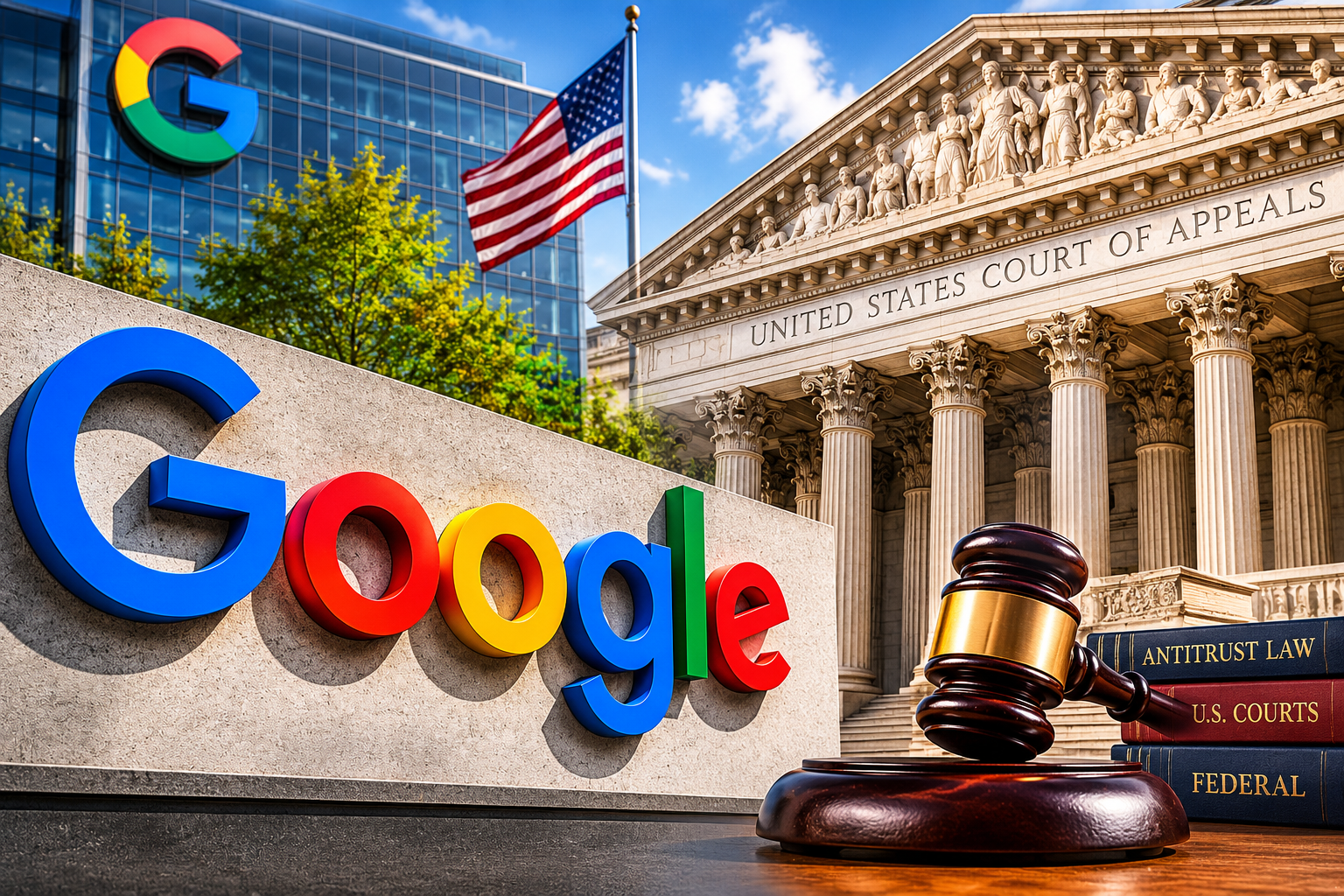
Alphabet-owned Google has appealed a U.S. federal court ruling that found the company maintained illegal monopolies in online search and related advertising markets, escalating one of the most consequential antitrust battles facing Big Tech in decades.
The appeal, filed Friday in the U.S. Court of Appeals for the District of Columbia Circuit, challenges a 2024 decision by U.S. District Judge Amit Mehta. He ruled that Google unlawfully blocked competition by paying billions of dollars annually to companies including Apple to remain the default search engine on smartphones and browsers.
Google argued that the court made legal errors in concluding that its agreements harmed competition. The company maintained that device makers and browser developers were still free to promote rival search engines, including Microsoft’s Bing.
In court filings cited by Reuters, Google said it succeeded by building a “superior search engine through hard work, bold innovation, and shrewd business decisions.”
READ: Google unveils biggest Search update in 25 years with AI-powered features (May 21, 2026)
The appeal represents a major test of how aggressively U.S. regulators can challenge the market power of dominant technology firms. The case has drawn close attention from policymakers, competitors, publishers, and artificial intelligence companies because the outcome could reshape how internet search operates globally.
Judge Mehta previously ordered Google to share portions of its search data with competitors to restore competition. Reuters reported that potential beneficiaries could include AI firms such as OpenAI, which increasingly rely on search and web-indexing capabilities to develop generative AI products.
An appeals court victory for Google could overturn those remedies and preserve business practices that regulators say helped the company dominate online discovery and digital advertising for years.
The U.S. Department of Justice is expected to submit its own appellate arguments in July. The DOJ has already indicated it believes stronger remedies may be necessary, including possible restrictions on Google’s business agreements and broader structural changes.
The case also highlights growing tensions between traditional antitrust law and the rapidly evolving AI economy. Regulators have argued that access to search data and distribution channels could determine which companies lead the next era of artificial intelligence, while Google contends that forced data-sharing could undermine innovation and user privacy.
READ: Pentagon strikes deal with 8 AI firms including Google, Microsoft, OpenAI, Nvidia (May 4, 2026)
For consumers, the litigation could eventually affect how search engines are selected on phones, browsers, and AI assistants. For tech workers and digital businesses, especially immigrant-founded startups and Indian American entrepreneurs active across Silicon Valley, the outcome may influence how future technology platforms compete and scale in the United States.
The appeal is expected to unfold over several months and could ultimately reach the U.S. Supreme Court if Google loses before the appellate court.