



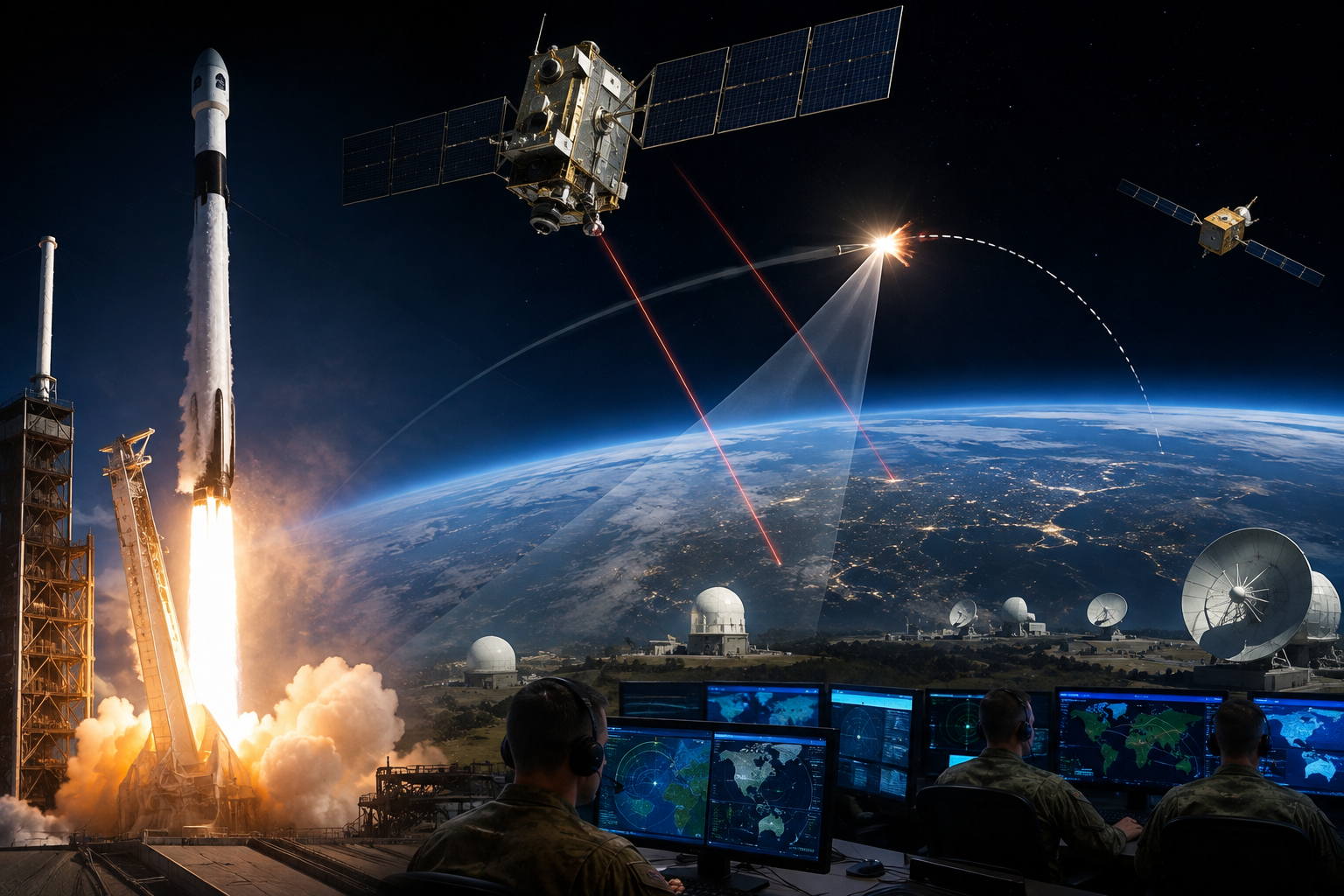
SpaceX, Northrop Grumman and other companies developing space-based interceptors for President Donald Trump’s Golden Dome missile defense initiative have completed an initial round of key tests, marking an early milestone for the ambitious U.S. defense program.
U.S. Space Force Gen. Michael Guetlein, who leads the Golden Dome program, said August 11 that participating companies had completed their first key tests and would now move toward demonstrating that their technologies can operate in the space environment.
The initial testing included demonstrations such as transmitting data from sensors to interceptor systems and testing spacecraft propulsion technologies, according to reporting on Guetlein’s remarks. The companies will eventually need to demonstrate their systems in space as the program moves toward more advanced testing.
READ: SpaceX’s $60 billion cursor bet could fuel AI growth (August 11, 2026)
SpaceX and Northrop Grumman are among the companies working on the Space-Based Interceptor component of Golden Dome, a proposed layered missile defense architecture intended to counter ballistic, hypersonic and cruise missile threats.
The U.S. Space Force established its Space-Based Interceptor program to develop a proliferated low Earth orbit constellation capable of engaging threats during the boost, midcourse and glide phases of flight. The service aims to demonstrate an initial capability integrated into the broader Golden Dome architecture by 2028.
In April, Space Systems Command announced 20 Other Transaction Authority agreements with 12 companies for the interceptor program, with a potential combined value of up to $3.2 billion. The agreements were designed to maintain competition among traditional defense contractors and newer space companies.
Northrop Grumman has separately said it completed key ground tests in 2026 and is working toward an on-orbit space-based interceptor demonstration in 2027. The company has partnered with Apex Space for that demonstration and said it is building on more than $1 billion in company-led investment in missile defense technology.
SpaceX’s role extends beyond the interceptor effort. The company has also been selected for major elements of the broader Golden Dome architecture, including the Space Data Network backbone, adding to its expanding role in U.S. national security space programs.
READ: SpaceX backs Nvidia exclusively for future AI infrastructure (August 5, 2026)
The Golden Dome initiative is one of the Trump administration’s most ambitious defense projects. The administration has described the system as a comprehensive shield against advanced missile threats, with space-based sensors, tracking systems and interceptors forming key components.
The Space Force has said the program will integrate next-generation space-based tracking and advanced interceptors with artificial intelligence to address increasingly fast and maneuverable threats.
The latest tests remain an early stage of development. Companies must still demonstrate that their systems can function in orbit, followed by increasingly complex testing and, ultimately, demonstrations of actual interception capabilities. The Space Force has said some details of the program will remain undisclosed because of operational security concerns.
For SpaceX and Northrop Grumman, the successful ground-testing milestone provides an early indication that the companies are advancing toward the space-based defense capabilities envisioned under Golden Dome.