



At an age when most children are just beginning to explore their academic interests, 11-year-old Indian-American Myra Saxena is already an award-winning scientist, inventor and entrepreneur whose independent research into pediatric Type 2 diabetes has earned recognition at state and national competitions.
Saxena, a seventh-grader at Ellen Fletcher Middle School in Palo Alto, has been nominated for the 2026 Thermo Fisher Scientific Junior Innovators Challenge (JIC), the Society for Science’s prestigious national STEM competition for middle school students.
The nomination follows an exceptional year for Saxena, whose work focuses on the early detection and prevention of pediatric Type 2 diabetes using artificial intelligence, machine learning and wearable technology.
Her research earned her the prestigious Isabelle Stone Grand Prize at the Synopsys Silicon Valley Science and Technology Championship, making Saxena the only middle school student from the Palo Alto Unified School District to receive the honor. She also won a first-place category award and a special award from the Association for Computing Machinery (ACM) for her work involving artificial intelligence and machine learning.
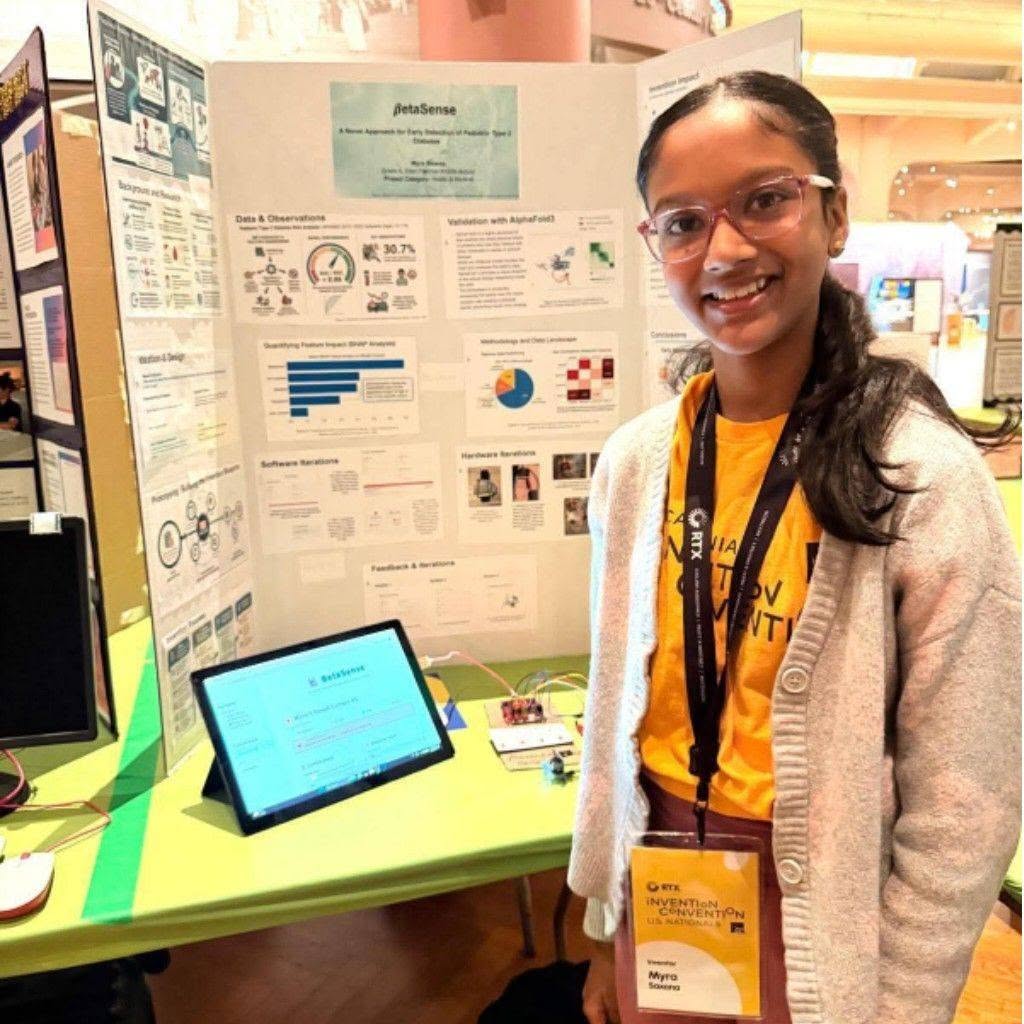
Saxena went on to win third place in the Medicine and Physiology category at the California Science and Engineering Fair, where she was up against older seventh and eighth-grade students from across the state.
Her work has also reached an international scientific audience. A research paper by Saxena, “A Novel Approach for Early Detection of Pediatric Type 2 Diabetes using Low-cost Blood Biomarkers,” was accepted for presentation at the 2026 IEEE Engineering in Medicine and Biology Conference (EMBC), an international gathering of researchers, engineers and medical professionals.
For Saxena, the pursuit of solutions to diabetes is deeply personal. She lost her grandfather to the disease, an experience that helped inspire her interest in using technology to identify risks earlier and encourage healthier outcomes for children.
Her journey as an innovator began several years earlier.
Saxena started learning to code at age 8. As a fifth-grader, she developed “Healthy Littles powered by SmartGenes,” an app and wearable technology project aimed at helping identify and reduce the risk of Type 2 diabetes in children.
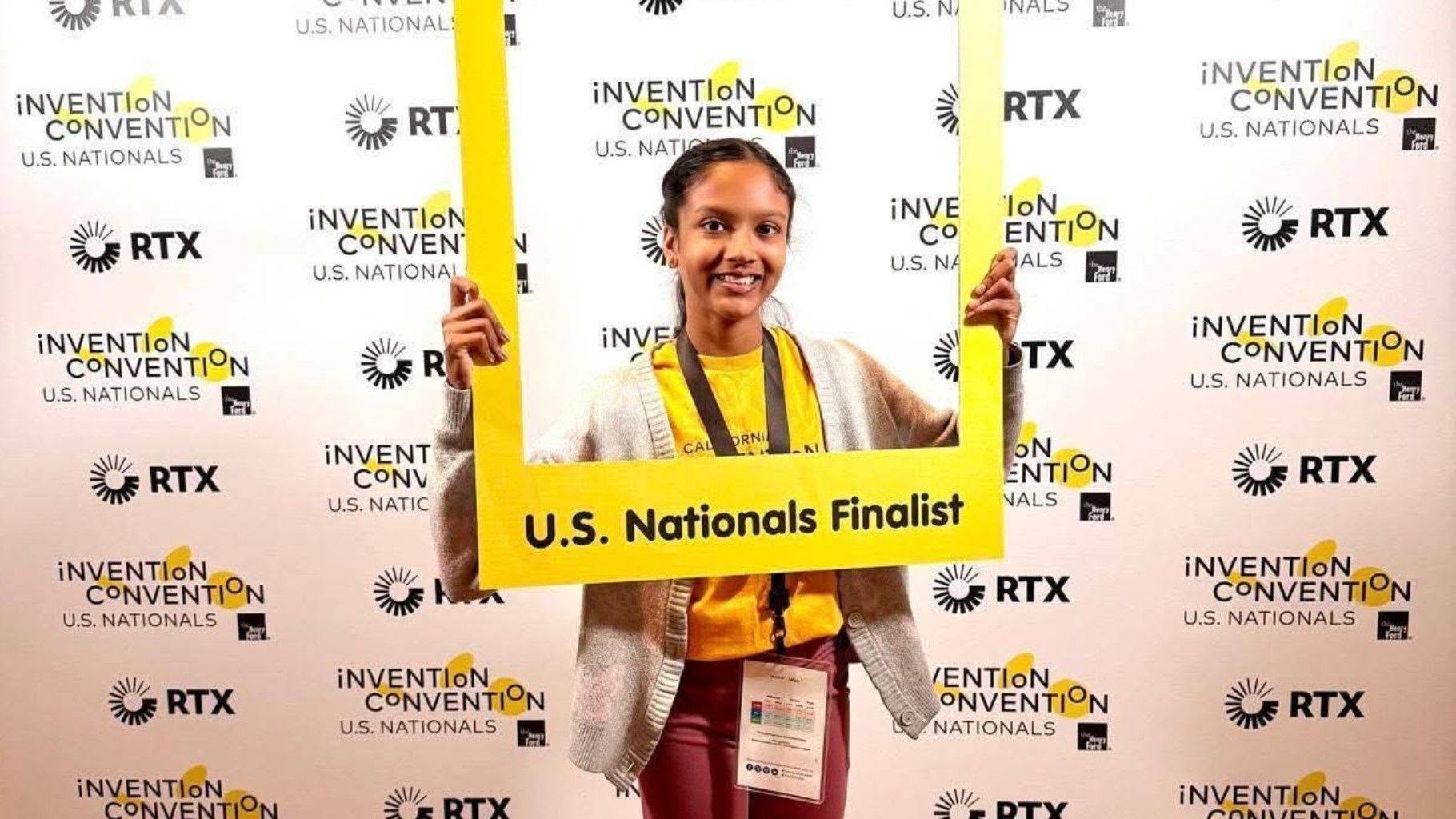
The project propelled the young inventor onto the national stage. She advanced to the Invention Convention U.S. Nationals, where she won second place, and was the only student from her school district selected to compete nationally. Her innovation also earned first place in the World Series of Innovation Challenge.
The recognition marked the beginning of an increasingly sophisticated scientific journey. What started as a young child’s interest in coding and invention has evolved into independent research combining artificial intelligence, machine learning, biomarkers and health technology.
READ: Rice student’s AI health startup Kairos named to America250 top startups list (July 21, 2026)
Despite her growing list of accolades, Saxena’s philosophy is remarkably straightforward.
“Never give up, even if people tell you that you can’t do it or you’re too young,” she says. “It’s never too late or too early to start.”
Born in Virginia, Saxena spent her early childhood in Ashburn, Loudoun County, before moving to California with her parents and younger sister at age 8.
Her interests extend well beyond science and technology. Saxena is also a youth entrepreneur, TEDxYouth speaker and competitive ballet dancer.
At an even younger age, she began exploring another form of entrepreneurship. Saxena is the founder and “Chief Sparklez Officer” of Sparklez, a nonprofit initiative she started in 2021 to support children in underserved communities.
The idea grew partly from an experience when she was 6, after her mother, Sweta Sinha, visited a school for blind girls in India. Videos her mother brought home prompted Saxena to think about what she could do to help other children.
She turned to one of her favorite hobbies — making jewelry.
Saxena began creating and selling handmade charm jewelry at children’s business fairs, farmers markets, holiday markets and other events, using the proceeds to support projects benefiting children. Her efforts have supported causes in both the United States and India.
“I started Sparklez, a non-profit organization, in 2021 to support and empower kids in need in underprivileged communities,” Saxena says. “My vision is to expand this platform to support kids in need by empowering them through healthy living and quality education. It’s a platform built by Kids for Kids.”
READ: Aditya Agarwal announces SPC’s $575M fund to help founders (August 11, 2026)
Saxena has also served as a youth ambassador for children’s health and kindness initiatives.
But it is her rapid progression in science – from learning to code at 8, to building a health technology invention, competing nationally and conducting biomedical research – that distinguishes her emerging journey.
Now, as she enters seventh grade, Saxena is continuing to build on research that has already taken her from a middle school classroom in Palo Alto to statewide competitions, the national invention stage and an international biomedical engineering conference — all before her 12th birthday.