



By R. Sridharan
Editorial note: This article is based on Anil Srivatsa’s personal account, social media documentation and interviews. The American Bazaar has contacted Nanak Foods and the Canadian Food Inspection Agency for comment. The story will be updated if responses are received.
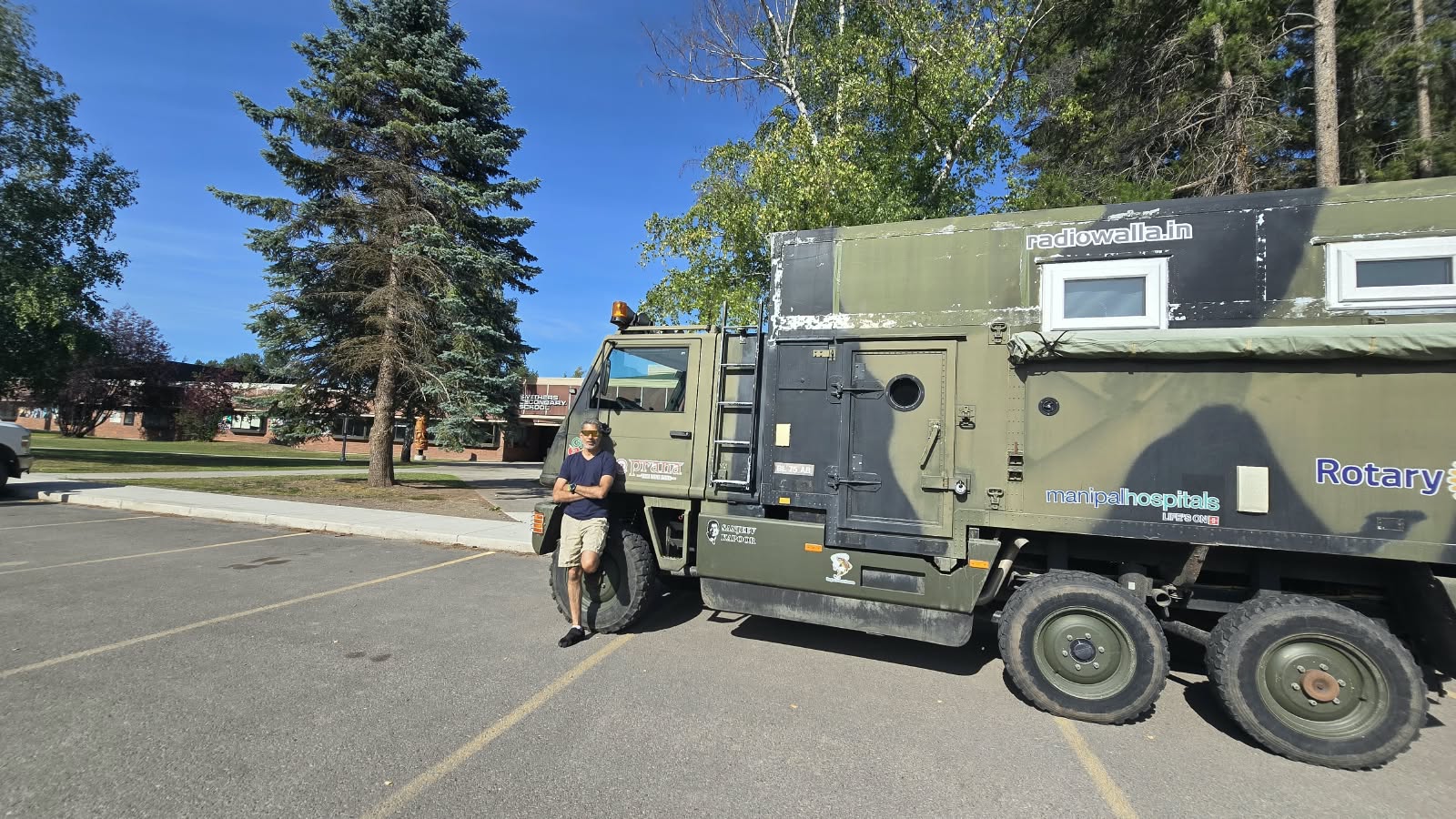
With nearly 7,200 miles of driving ahead of him, Anil Srivatsa dropped by a friend’s grocery warehouse in New Jersey to stock up on provisions. An American who lives mostly in India, Srivatsa was a man on a mission: to ensure that, by 2050, no one dies waiting for an organ donation. This was his 10th global awareness drive, and this year he would pick up his truck (literally an army truck; see photo) in Halifax, Canada, meet his wife, who would be his co-passenger, in New Jersey, drive through the northern U.S. (the shorter, cheaper route), attend his high-school reunion in Smithers, British Columbia, and drive all the way back to New Jersey, where he still keeps a home.
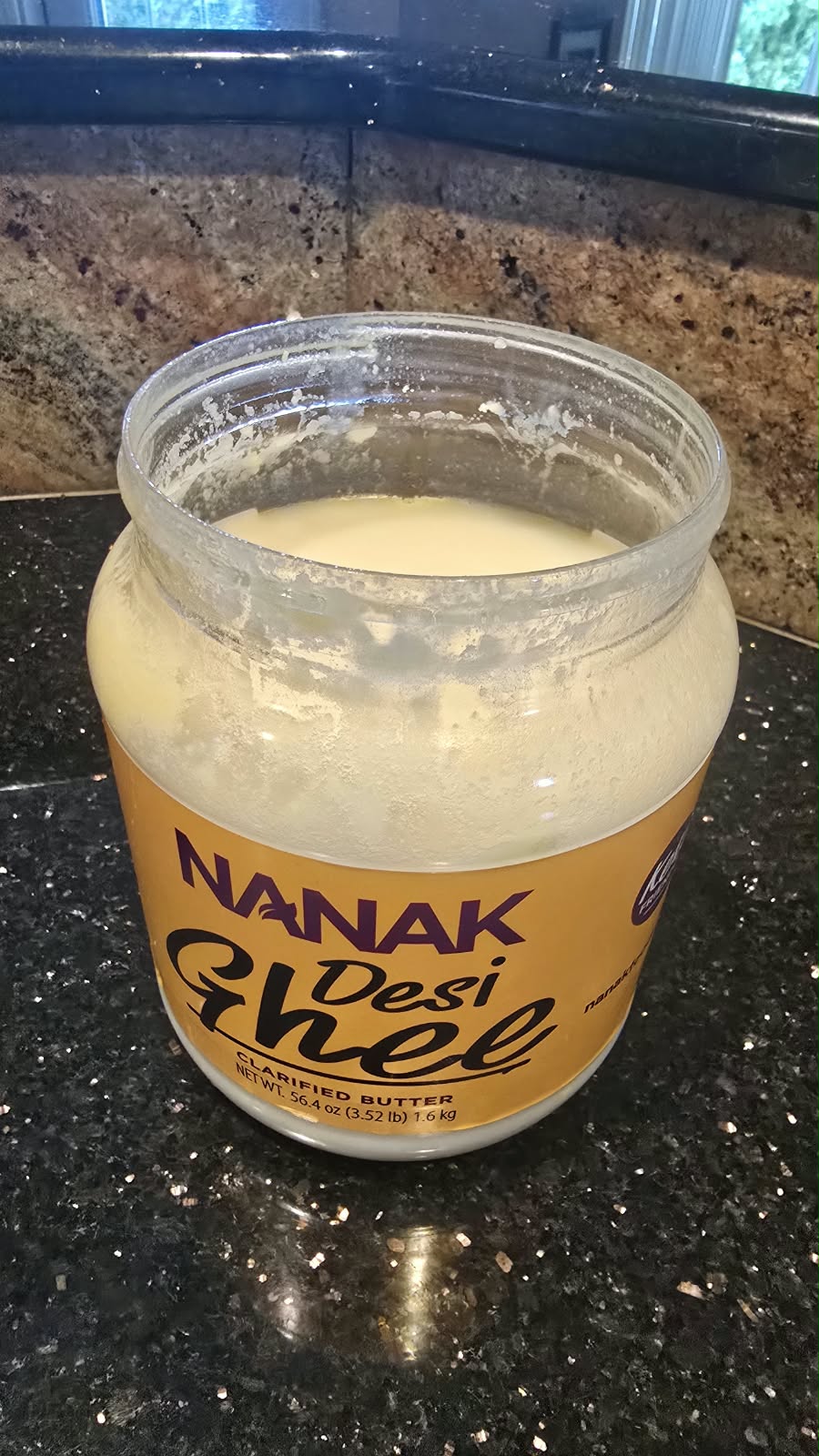
Among the provisions that Srivatsa, 58, picked up that July morning was a jar of Nanak ghee, or clarified butter—a staple of Indian cooking. Unbeknown to him, the small plastic jar would pit him against its Canadian manufacturer, Nanak Foods, which describes itself as “one of the world’s largest Indian dairies.”
“It was the last thing I would have expected on a trip like this one,” says Srivatsa, now back in Bengaluru, where he runs his non-profit foundation, Gift of Life Adventure (GoLA).
A reunion and a fundraiser
By July 29, Srivatsa had arrived in Smithers, a mountain town in northern British Columbia with a population of fewer than 6,000. It was here, many decades ago, that Srivatsa attended Smithers Secondary School as an exchange student from India. For the next two days, nearly 600 of the school’s former students would gather for its 42nd reunion. Srivatsa’s plan was to use the reunion as an opportunity to raise funds for the free organ transplants he facilitates back in Bengaluru.
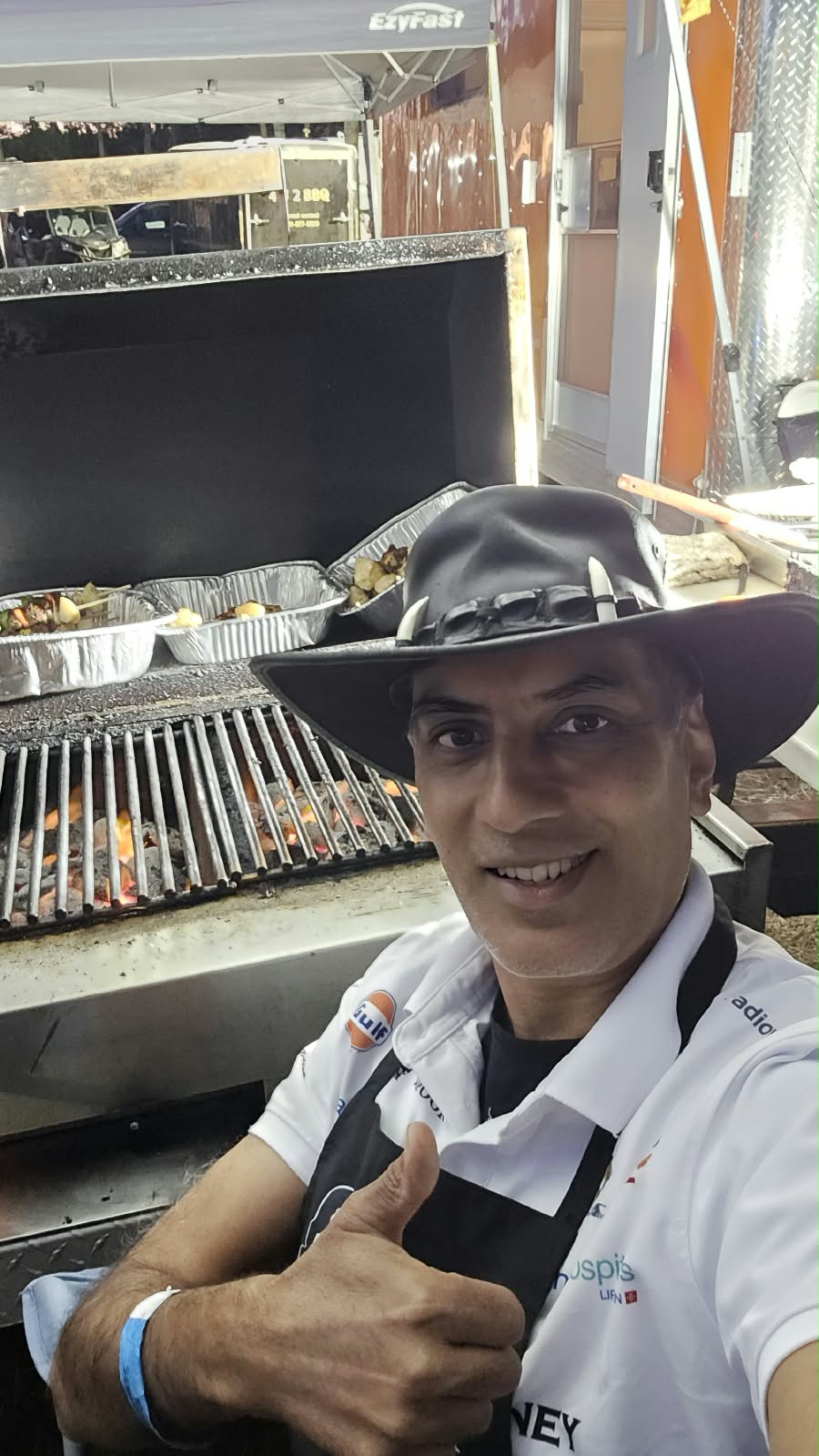 At the fundraiser’s food stall, Srivatsa made and sold seekh kebabs. And the ghee he used—you guessed it—came from the Nanak jar that had travelled with him from New Jersey. When Srivatsa took the jar out of his truck, he noticed that the ghee had not fully solidified, although it had been kept in the truck’s small refrigerator. He decided to use the liquid portion to make the kebabs. Luckily for him, the kebabs sold out, and Srivatsa managed to collect about $1,000 from the fundraiser.
Reunion over, Srivatsa hit the road again. By Aug. 28, he had stopped at a friend’s house in Portland, Oregon. It would be a long stop: the truck’s tyres were worn out, and replacements had to come from a particular shop in the U.S.
“I had all the time in the world,” recalls Srivatsa. “I was having fun, chilling and cooking. That’s when I decided that maybe I should ‘finish’ the ghee. I felt Nanak hadn’t heated the butter enough to make ghee the way we do at home, so I thought heating it properly would give me the ghee I am used to eating.”
In the Srivatsa household, as in many other Indian families, ghee is made at home from white butter. Srivatsa remembers watching his grandmother and then his mother make ghee, and falling in love with its rich aroma. “I love cooking, too, so I know exactly how different oils and ghee behave when used in cooking,” says Srivatsa.
Idle but viral curiosity
Srivatsa’s kitchen tinkering in Portland marked the beginning of his accidental run-in with Nanak Foods. As a road warrior, he was accustomed to recording his adventures on video. The Gift of Life Adventure Foundation has its own YouTube channel documenting Srivatsa’s adventures. With the trip temporarily grounded, Srivatsa decided to record himself finishing the ghee as filler content for his Instagram account
https://www.instagram.com/anilsrivatsa?xtok=a2E5Nno1bjhtdWJz
“You have to understand that I am not a social media influencer,” says Srivatsa. “I am an organ-donation activist with a few hundred Instagram followers. In that sense, I don’t expect any earth-shattering reaction to my posts,” he adds with a laugh.
The first video of him finishing the ghee that he posted on Instagram was about three minutes long. In it, Srivatsa provides a running commentary on the process, including his surprise that, even after ten minutes of heating, the Nanak ghee continued to smoke rather than behave as he expected traditional ghee to. At one point, the fire alarm in the kitchen went off, and the pot had to be taken outside to prevent further smoke.
The video ends with Srivatsa pouring the heated ghee back into its jar, where it solidifies into a white, Vaseline-like jelly rather than the golden, granular solid he expects it to be. Srivatsa later learnt that the solidification in the jar occurred due to a phenomenon called crystal memory. Just before the video ends, Srivatsa can be heard saying, “It tastes like sh*t.”
In the second video, Srivatsa decides to have some fun. He can be seen taking a dollop of the white ghee from the jar and turning it into a moisturizer. Since the ghee did not smell pleasant, he decides to add a few drops of vanilla concentrate and a little cinnamon powder to make the moisturizer smell better. “Both my wife and I have dry skin, so we use a lot of moisturizer, and I must tell you, this was the best moisturizer we have ever used,” says Srivatsa with a laugh.
READ: Chicago nonprofit Apna Ghar releases cookbook featuring 29 recipes from survivors of gender-based violence (October 21, 2026)
As with the previous video, he posted it on Instagram and didn’t think much about it. Unknown to Srivatsa, the post had struck a chord with Instagram viewers. His posts on organ donation usually attracted a few hundred views. The ghee videos, however, took off. People began sharing the videos and commenting on their own experiences. Some, of course, criticised the crude experiment, pointing out that ghee smokes rather than boils. But few could explain why the ghee had turned white or why it “stank.”
Srivatsa hadn’t initially tagged Nanak Foods. But after the posts topped 400,000 views, he decided to bring the company into the conversation. Nanak Foods responded, not in the public comments thread but by sending Srivatsa a direct message on Instagram. The company said his claims in the videos were “incorrect and misleading”. It added that its products were “100% pure with zero adulteration” and that the company was “prepared to have them tested at any time by any accredited laboratory”. In the same message, the company also asked Srivatsa to remove the video within 30 minutes.
 “Failure to do so may result in legal action,” it warned.
After being threatened with legal action, Srivatsa decided to take his posts down. “I thought about it and asked myself whether I really wanted to get into a legal fight with a multimillion-dollar company. The answer was no,” he says.
Over the next few days, Srivatsa spoke to dairy experts, including a representative of another manufacturer. From what he gathered, pure ghee would turn white and develop an unpleasant odour only if it contained a substantial amount of butter oil.
Armed with this new knowledge, Srivatsa decided to confront Nanak Foods and ask specifically about the composition of its ghee. He also reposted the videos, which then spread even more widely. Nanak Foods again replied that “the composition of our ghee is 100% milk fat.” It went on to explain how triglycerides behave, but did not explain why, when heated, its ghee had turned a petroleum jelly-like white and developed an unpleasant odour rather than the intensely buttery aroma Srivatsa expected.
Some outraged viewers called for a class-action lawsuit against Nanak Foods; others said ghee from other manufacturers should also be checked, while still others said they would stop buying Nanak ghee. The man who triggered the social-media kerfuffle, however, remains stoic about it.
“I have no axe to grind. For me, the starting point was that people should know what they are putting into their bodies,” says Srivatsa. “Most organ failures happen because of the harmful stuff people consume. Therefore, my 2050 goal is as much about preventing organ failure through awareness as mobilizing organ donation.”
Srivatsa should know a thing or two about organ donation. He himself donated a kidney to his elder brother, a neurosurgeon in Bengaluru, and after that decided to become an organ donation and awareness evangelist.
At the time of writing, Srivatsa had received no further communication from Nanak Foods. On Instagram, however, the posts continued to attract attention. At last count, the two videos had garnered more than a million views.
(R. Sridharan is a contributing editor at The American Bazaar.)