



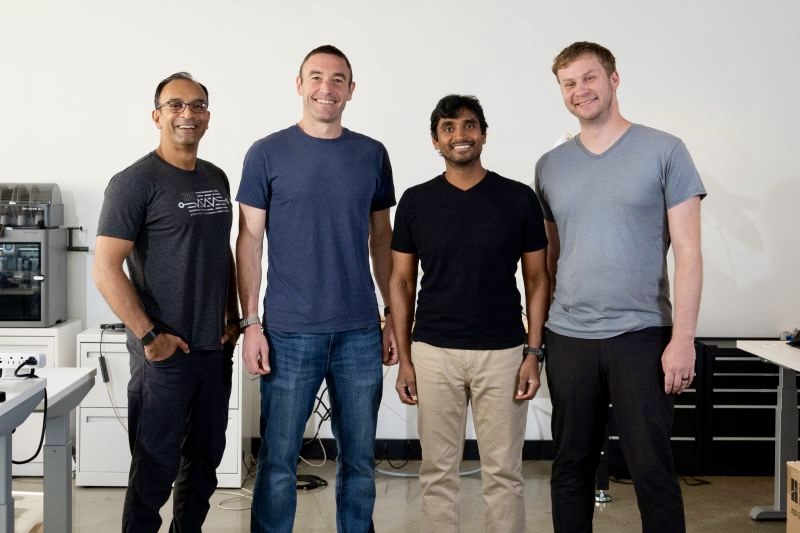
Indian American tech entrepreneurs DJ Patil and Manohar Paluri in partnership with Kevin Weil and Solomon Reisberg, have launched Warp Sciences with $215 million to accelerate drug discovery in the United States.
“Our mission is to help the world discover new medicines faster—and build the capacity to do it here in America,” the new company stated. ‘We’re not developing drugs of our own. We’re building the infrastructure for the people who do.”
AI can design new molecules, but a design only becomes useful when scientists can make it, test it, and learn from the result, Navin Chaddha Managing Partner at Mayfield Fund noted in a blog post. Warp brings AI, robotics, and life sciences together in labs built for increasing automation, designed to run and learn from experiments so each cycle improves the next.
READ: Jignesh Patel named founding dean of Carnegie Mellon’s Miami campus (October 21, 2026)
Warp Sciences’ “founding team is exceptional, with deep technical insight, a clear understanding of customer pain points, and the ambition to change how people live and to reimagine entire industries,” he wrote.
“Together, they bring a rare combination of experience across AI, data infrastructure, healthcare, and drug discovery,” Chaddha who leads the fund’s venture practice added.
Chief Operating Officer Patil was a founding executive at Devoted Health and the first U.S. Chief Data Scientist for the White House. Co-founder Paluri was a VP at Meta Superintelligence Labs and a founding member of FAIR.
READ: US to spend $5 billion on AI research to speed drug discovery, Trump administration says (July 22, 2026)
CEO Weil served as VP of Science and CPO at OpenAI and co-founder Reisberg was a medicinal chemistry leader at Terremoto Biosciences.
Warp is starting as a preclinical contract research organization (CRO) in the United States, making and testing molecules for companies developing new medicines.
As much of the physical work in drug discovery research is happening overseas today, their goal is to shorten the path from molecular design to testing, and help scientists discover new medicines faster in the U.S.
Their ambition is to make discovery compound: experimental data helps train better AI, better AI powers more capable labs, and scientists gain the capacity to test more ideas.