



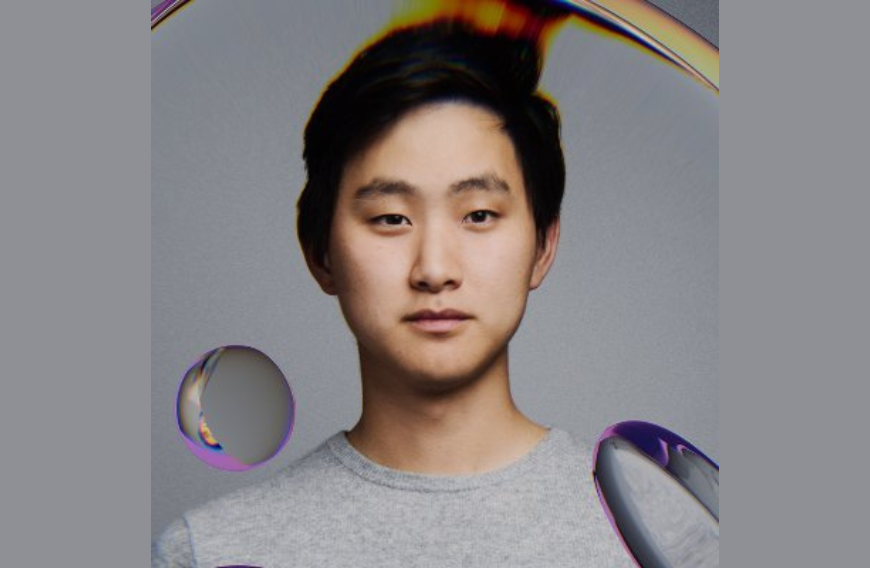
Meta’s Chief AI Officer Alexandr Wang said humanity might be at risk of losing control of AI. His comments came after an employee at AI giant Anthropic announced that he had used Claude to solve the Riemann hypothesis, one of the most difficult problems in mathematics.
Wang said the breakthrough dwarfed any human achievement in terms of “sheer intellectual might.” He added that the milestone showed emerging AI models would become “clearly superhuman” at improving themselves, while “massively accelerating” research in fields such as biology, armaments and economics.
“Superintelligence is arriving,” Wang said on X. “How humanity acts over the next year will have great consequences on what future world we live in.”
READ: Meta acquires AI coding startup Conductor as it expands its artificial intelligence push (November 5, 2026)
Wang, who joined Meta as its first chief AI officer last year, said it was unlikely humanity would be able to control AI capable of unconstrained recursive self-improvement or systems that are “1000x smarter and more capable than humans in every field.”
“Now that we are at a point where the scientific and technical problems on capability progress are likely solved, we must not only make progress in the extremely urgent areas of safety, alignment and security, but we have to start thinking through how we progress thoughtfully,” Wang said.
AI safety advocates have long identified recursive self-improvement — in which AI models become capable of advancing without human input — as a critical tipping point after which humanity could lose the ability to control the technology.
The response in Silicon Valley to this possibility has been mixed. Meta has largely positioned itself on the optimistic side of the debate. CEO Mark Zuckerberg has rejected Anthropic CEO Dario Amodei’s call for a global AI slowdown, which has also received support from others, including OpenAI CEO Sam Altman.
READ: Meta raises AI fundraising plan to $97.5 billion as Nvidia, AMD pledge investments (October 27, 2026)
In an essay published in August, Zuckerberg lamented that discussions about AI were “filled with doom” and said the technology should lead to “more people sharing greater prosperity, health and freedom.”
In his post on Sunday, Wang criticized what he called “lazy thinking” within the AI industry, saying it treated superintelligence as inevitable.
“We should not be okay with a ‘handover’ of society to AI. We should endeavor ourselves to build a technology which delivers a positive future for humanity, where all humans have greater agency and empowerment,” Wang said.
“I strongly believe this is possible, but likely involves the whole industry taking meaningfully different actions from the ‘default path’ in front of us.”