



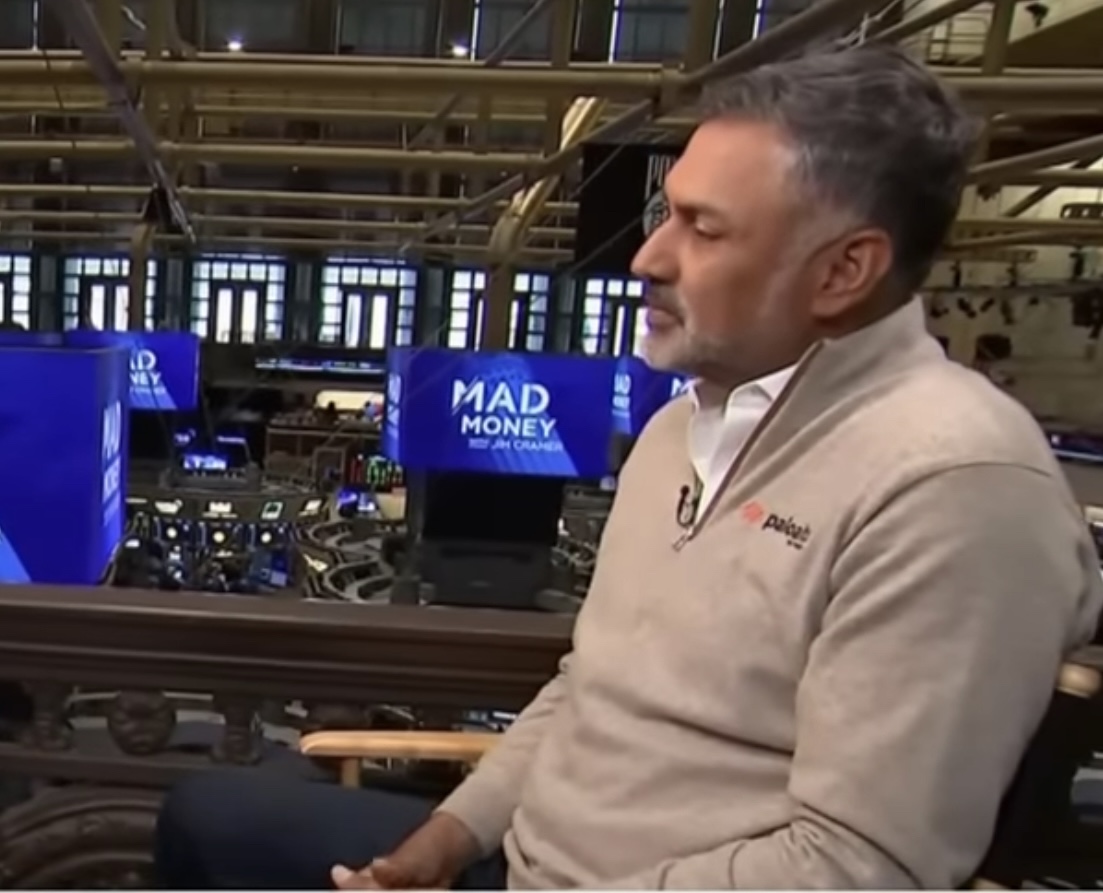
Global cybersecurity provider Palo Alto Networks’ Indian American CEO Nikesh Arora has warned how agentic artificial intelligence technology comes with cybersecurity challenges.
In an interview with CNBC Tuesday, Arora pointed to robotaxi company Waymo as an example of how autonomous self-driving agents illustrate a new, more physical, iteration of AI beyond generative technology.
“Giving it arms and legs is kind of the next frontier,” he said of agentic AI. “You get into Waymo, you just gave AI arms and legs — you let it decide where to turn, when to stop, how fast to drive and how to get you from point A to point B.”
READ: Amazon unveils plans for AI supercomputer with Apple, Anthropic as first users (December 4, 2024)
Along with a new wave of technological innovation comes more opportunities for hackers, Arora said. He explained that the “attack surface” continues to expand as new techniques speed up processes. Bad actors, Arora continued, can use those same advanced techniques to attack.
At the Morgan Stanley tech conference in early March, he argued that the development of agentic AI has brought about “a whole new threat vector,” adding that the “biggest example” of what an agent can do is drive a car.
Once AI agents start to manage critical infrastructure, he stressed it’s necessary to make sure “access points” are protected from hackers. He said this is especially important because over time, there will be less and less human intervention and supervision of the technology.
READ: Amazon forms new group for agentic AI (March 11, 2025)
Palo Alto Networks has been in touch with “various parts of the government,” according to Arora. He suggested that automation can help entities like the Department of Government Efficiency with its efforts to prune the federal budget.
“One of the biggest opportunities as we get through the phase of cost cutting is automation and efficiency driven by technology,” he said. “So, I expect the only way DOGE will be able to get where it wants to get — or we can get to a much more efficient, lower cost operation — is to automate a lot of stuff.”