



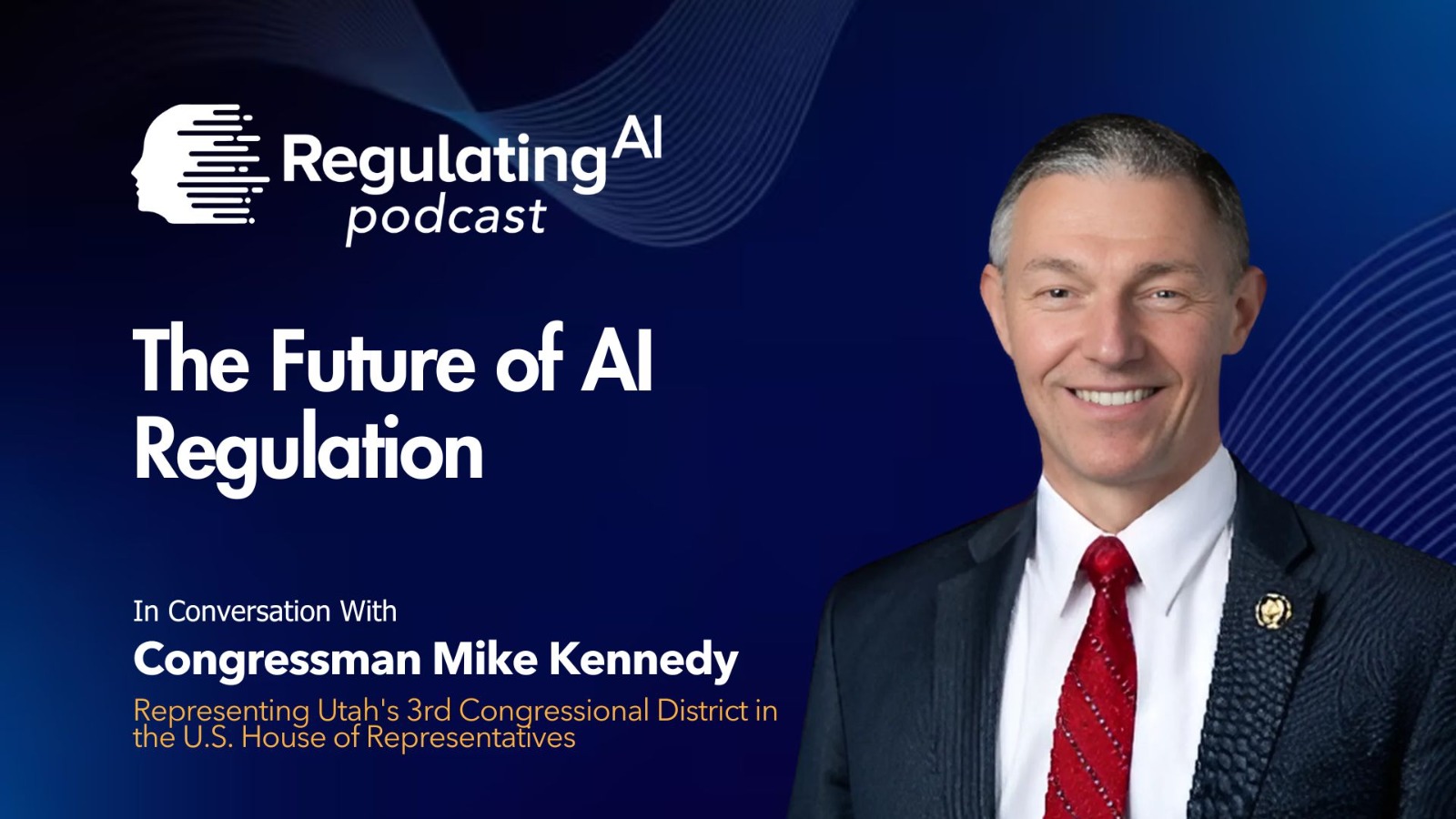
Editor’s note: This article is based on insights from a podcast series. The views expressed in the podcast reflect the speakers’ perspectives and do not necessarily represent those of this publication. Readers are encouraged to explore the full podcast for additional context.
As the conversation around artificial intelligence continues to accelerate on Capitol Hill, Congressman Mike Kennedy is emerging as a prominent voice advocating for a balanced approach to regulation—one that fosters innovation while protecting patients and providers.
In a recent discussion with “Regulating AI Podcast” host Sanjay Puri on the future of AI in healthcare, Kennedy emphasized the transformative role the technology could play in improving both efficiency and accuracy in medical settings.
“With that patient interaction, artificial intelligence could help make it more efficient, effective as well as more likely to be accurate with the ultimate diagnosis and subsequent treatment,” Kennedy said.
READ: ‘The future is now’: Congressman Gabe Amo on AI policy, equity and education (April 2, 2025)
Congressman Mike Kennedy, M.D., represents Utah’s 3rd Congressional District. A Republican, Kennedy brings a unique blend of expertise to Capitol Hill as both a practicing family physician and an attorney.
Born in Lansing, Michigan, he earned his medical degree from Michigan State University and his law degree from Brigham Young University. Before his election to Congress in 2024, Kennedy served in the Utah House of Representatives from 2013 to 2019 and in the Utah Senate from 2021 to 2025.
Rather than viewing AI as a replacement for doctors, Kennedy argued for a more integrated model in which technology augments human expertise.
“I don’t see artificial intelligence as replacing but augmenting what a doctor does,” he noted, suggesting that AI tools could enhance clinical decision-making and help medical professionals deliver better outcomes.
Kennedy also pointed to the potential for advanced technology to expand access to specialized care through innovations like remote and robotic surgery.
“The idea that the best surgeon in the country could remote in… and actually do a surgery on somebody is a really interesting possibility,” he said, referencing the power of telemedicine to bridge healthcare disparities, especially in rural or underserved regions.
Still, Kennedy cautioned that lawmakers must proceed carefully when crafting regulations to ensure that AI is used responsibly.
“We need surgical precision when we’re doing these things, especially when it comes to an extremely valuable technology that could be used for bad but it also could be used for good,” he said.
For Kennedy, much of AI’s promise lies in its ability to harness data—accurately and responsibly—to drive innovation.
READ: Google’s AI chatbot Gemini faces accuracy concerns (December 20, 2024)
“Data is power, and if we can have accurate data and analysis from AI, I’m very excited about the possibilities not only in healthcare but throughout our country,” he said.
As Congress debates how to regulate emerging technologies, Kennedy’s comments reflect a growing consensus among lawmakers: that AI, if handled wisely, could play a pivotal role in shaping the future of American healthcare—and beyond.