



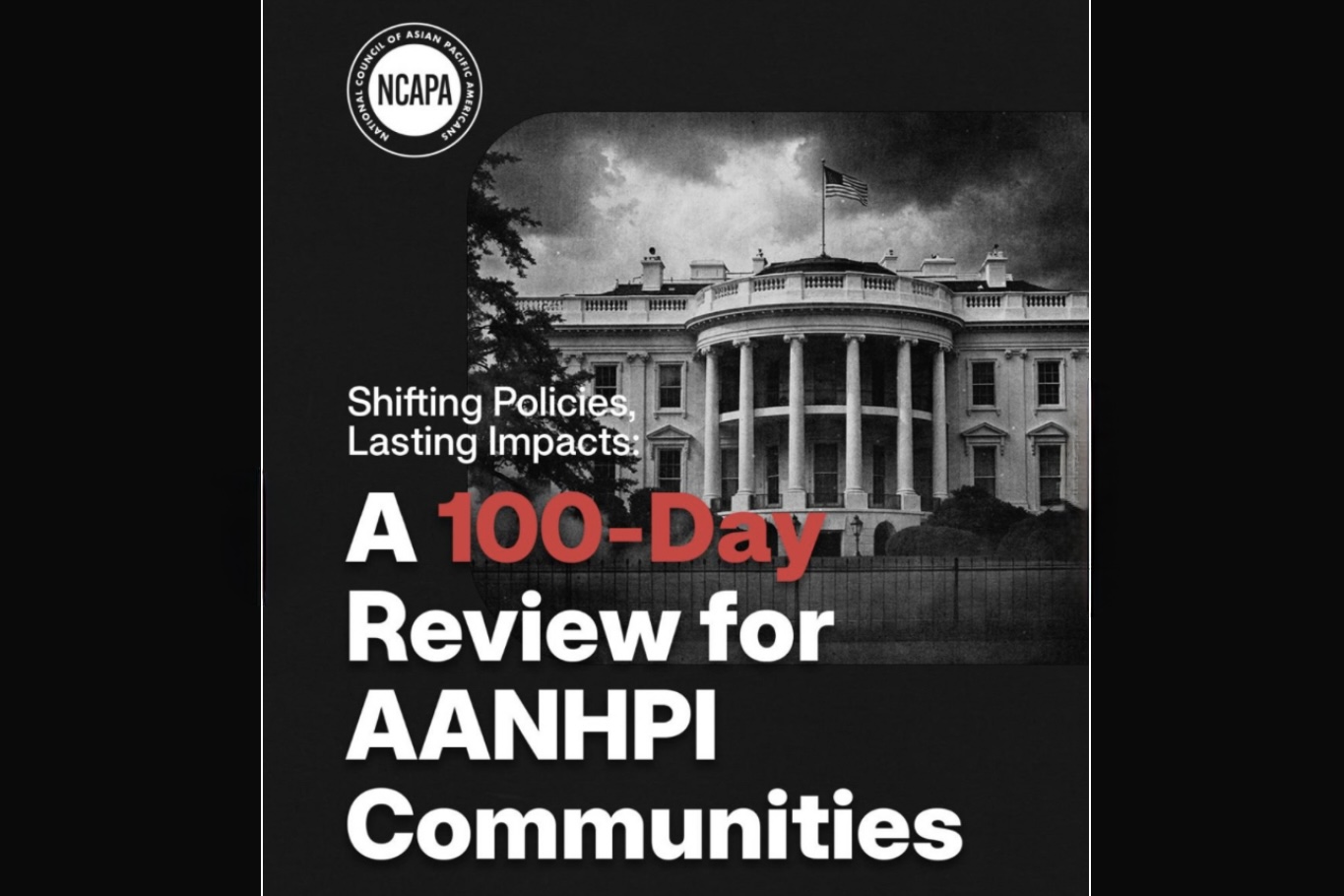
Student visa revocations, deportations, and anti-Asian hate are on the rise under Trump, the NCAPA warns.
Indian students make up 50% of the 1,800 international students and recent graduates at over 280 public colleges and private universities whose visa were revoked as part of Trump administration’s immigration crackdown, according to a new report.
“While the Administration has temporarily paused its revocation of student visas, there is continued uncertainty regarding the length of time for the current pause and the development of further policies designed to terminate student visas,” says the National Council of Asian Pacific Americans (NCAPA) in its report on Trump’s first 100 days.
The report, titled “Shifting Policies, Lasting Impacts: A 100-Day Review of AANHPI Communities,” provides a stark overview of the impact of recent federal immigration policies on Asian American, Native Hawaiian, and Pacific Islander (AANHPI) communities.
The report also cites the examples of two Indians hit by their advocacy for Palestinian rights.
READ: Indian students have second thoughts about US under Trump: WaPo (May 14, 2025)
Ranjani Srinivasan, an Indian national and Fulbright Scholarship recipient at Columbia University left the United States out of fear she would be unlawfully detained for having attended protests in support of Palestine. Her release from immigration custody six-weeks later was recently ordered by a federal judge.
The Department of Homeland Security detained Badar Khan Suri, an Indian graduate fellow at Georgetown University, who also expressed pro-Palestine views. Khan Suri was released Wednesday on a federal judge’s order after two months.
Since January, the Administration has indicated that over 100,000 immigrants have been deported including those of Chinese, Indian, Nepalese, Sri Lankan, Pakistani, Hmong, Bhutanese, and other heritages, according to the report.
There are 1.7 million Asian undocumented immigrants in the United States, the report stated citing AAPI Data. One out of 7 Asian immigrants in the U.S. is undocumented, and most come from India (725,000), China, (375,000), Philippines (130,000), and Korea (110,000).
In a report by Stop AAPI Hate, an estimated 66% surge in anti-Asian slurs following Trump’s election win and increasing anti-immigrant hate, peaking in January 2025.
The NCAPA report examines and documents the impact of the administration’s policy actions in the first 100 days across eight critical issue areas: Civil Rights, Immigration, Health, Education, Housing and Economic Justice, Destruction of Civil Society, Environmental Justice, and AANHPI representation.
“This report isn’t just a policy overview—it’s a reflection of lived experiences,” says NCAPA National Director Gregg Orton. “Within just 100 days, the Trump Administration has advanced an agenda that sidelined inclusion, fueled fear in immigrant communities, and has left AANHPI families and communities more vulnerable and with fewer opportunities than before. We believe it’s vital to document and learn from these intended harms so we can chart a path forward rooted in justice, equity, and accountability.”
The first 100 days of the Trump Administration have made it clear that sweeping federal actions can have profound consequences for Asian American, Native Hawaiian, and Pacific Islander communities, the report states.
“From rollbacks in civil rights protections, increasing obstacles to healthcare access, and harmful immigration policies, the Administration’s agenda has deepened existing disparities and made many in the AANHPI community more vulnerable,” it says.
“Yet, amid these challenges, the resilience and power of AANHPIs continue to grow. AANHPIs are among the fastest-growing racial demographics in the nation,” the report says.
“With over 24 million people, holding over a trillion dollars in buying power, our communities’ influence is rapidly growing and we demand to be heard and seen” it said. “Policymakers must recognize that addressing the needs of the AANHPI community is a matter of equity, democracy, and economic strategy.”
Calling it a serious moment where far-reaching executive orders have tangible and immediate impacts that aim to reshape America, the report noted AANHPI advocates are organizing, educating, and mobilizing communities to advocate for their best interests.