



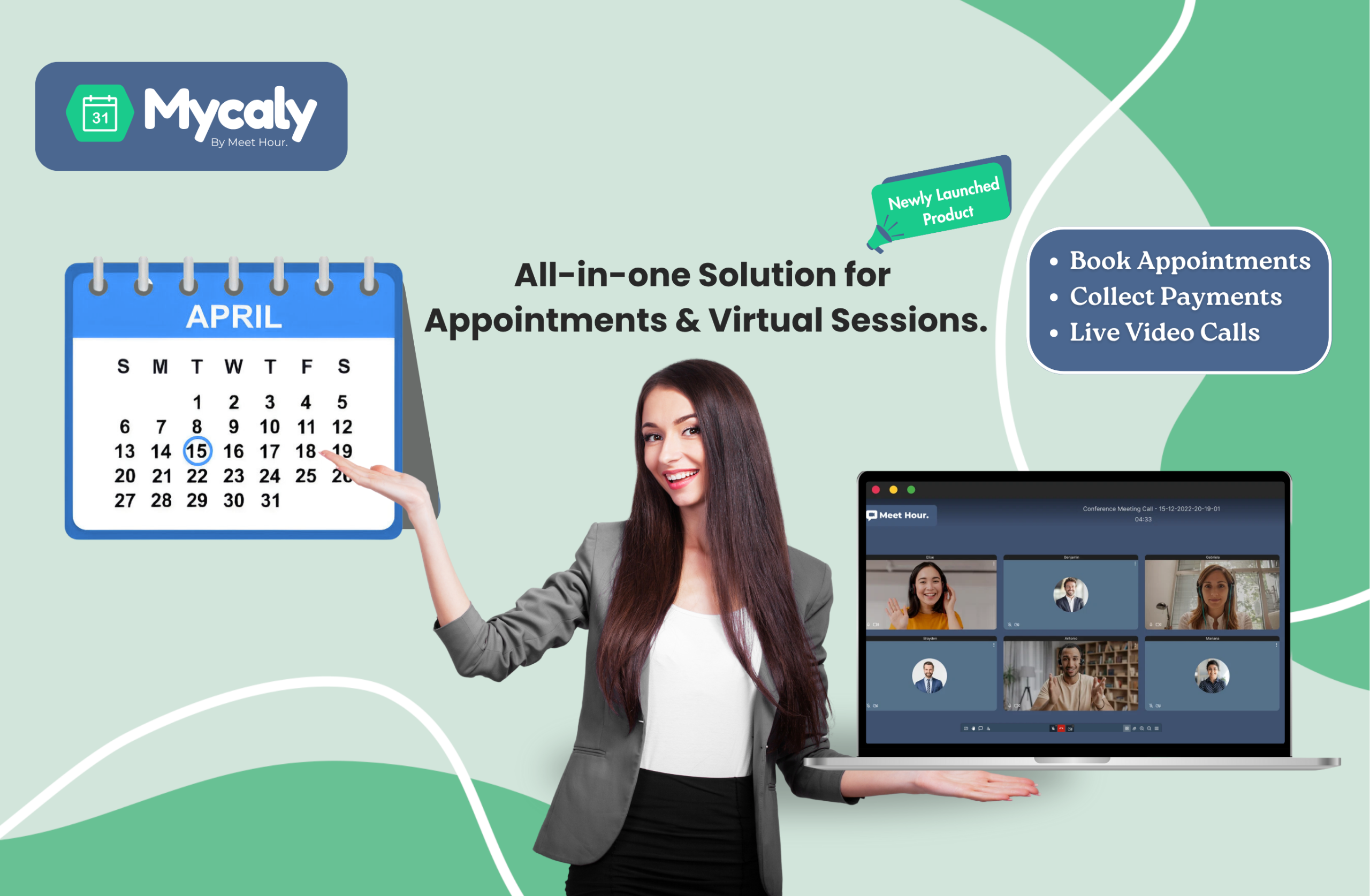
In a world increasingly reliant on remote connectivity and seamless scheduling, MyCaly emerges as a cutting-edge platform that bridges the gap between appointment management and real-time communication. Marketed as the world’s first appointment booking system that offers both in-person and virtual meeting options, MyCaly allows professionals to create free or paid booking pages, streamline client engagements, and integrate secure video conferencing via Meet Hour without the need for third-party platforms.
Read more about Meet Hour’s new features here: Meet Hour launches real-time transcription and translation features (June 16, 2025)
What sets MyCaly apart from traditional schedulers is its hybrid approach, designed to accommodate a variety of industries including healthcare, legal, therapy, coaching, and education. With its intuitive interface, users can manage availability, accept payments through Stripe or PayPal, and conduct meetings via branded video conferences. Whether you’re an independent consultant or a corporate professional, MyCaly offers a tailored, all-in-one solution that simplifies booking and boosts client trust.
The team behind MyCaly
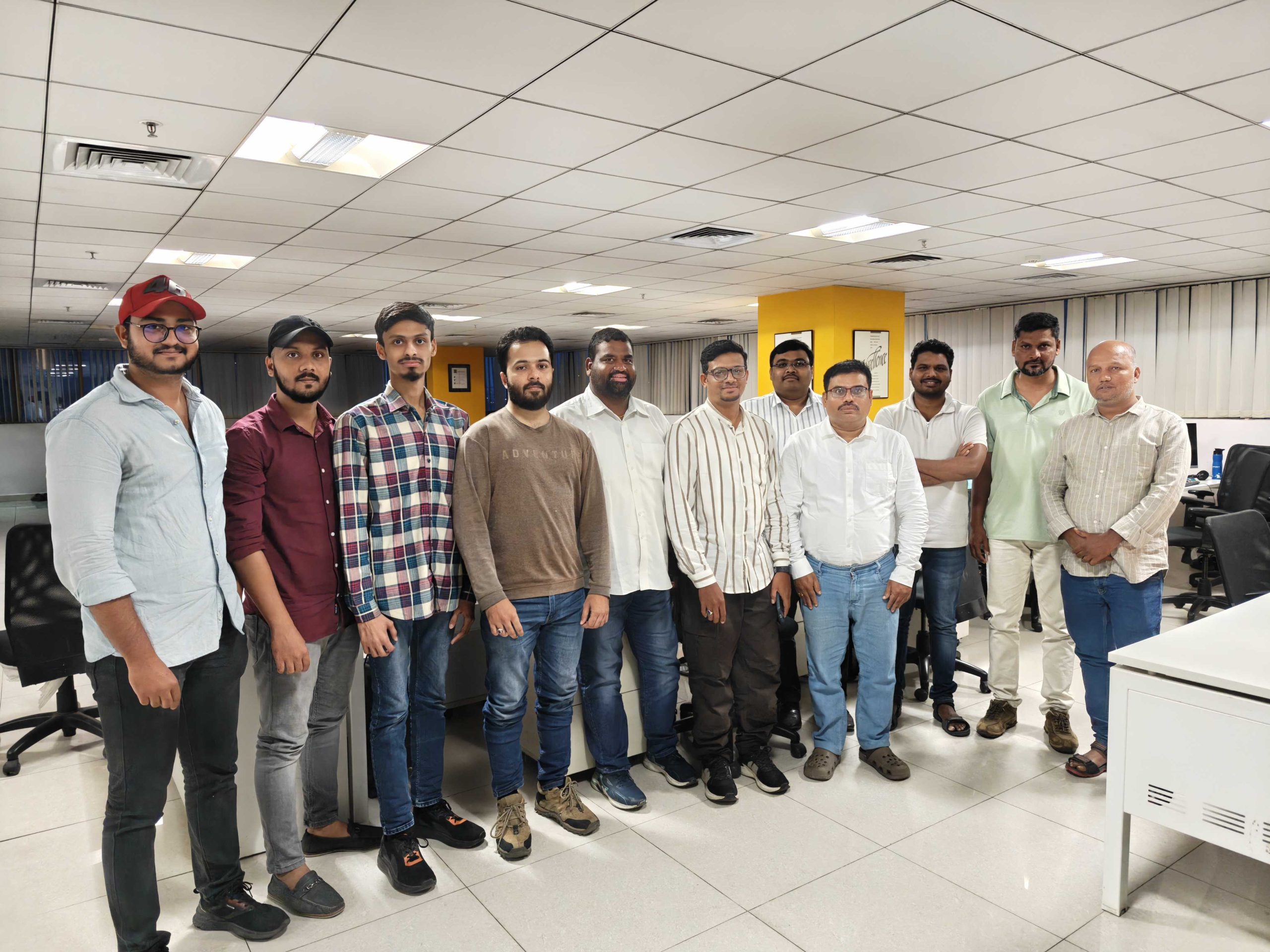
In an exclusive interview with The American Bazaar, the core team behind MyCaly — Founder and CEO Shukoor Ahmed, Product Manager and Customer Engagement Lead Abdul Muqeet, and Senior Developer and Programmer Kareem Ahmed Ata Ul — discuss the journey of building an all-in-one scheduling solution.
They also share the integrations that make MyCaly stand out, and their vision for the future.
The American Bazaar: So is Meet Hour under MyCaly?
Muqeet: It’s actually the other way around. MyCaly is a separate product, but it connects seamlessly with Meet Hour. Think of MyCaly as your booking assistant. When I wanted to schedule this interview, I used MyCaly to check availability. Once we locked a time, the video conferencing happened through Meet Hour. That’s how we’ve integrated the two platforms. Other tools like Calendly only offer scheduling, which means they don’t have their own video conferencing. They usually sync with Zoom or Google Meet. But with MyCaly, users don’t need separate subscriptions. Everything from booking to video calls happens within our ecosystem.
And MyCaly has been around for a while, right?
Shukoor: That’s right. Actually, MyCaly came about because we hit a roadblock with Calendly. Calendly didn’t want to integrate Meet Hour, even though many of our users wanted a unified solution. So people end up paying for both Calendly and a video conferencing platform like Zoom. Our CTO, Shoeb, came up with a better idea, ‘what if we offered calendar booking, video conferencing, and even payment processing under one roof?’ That’s how MyCaly was born. It’s built on Meet Hour’s core technology but extends into scheduling and payment. We designed it specifically for individual professionals like therapists, doctors, lawyers, and coaches.
That makes a lot of sense. So essentially, it’s one platform instead of three separate services?
Muqeet: Exactly. And we recently added payment collection features too. If you’re a therapist, you can link your Stripe or PayPal account and collect payment during the booking itself. That way, the entire workflow, from scheduling to payment to meeting, happens in one place.
What have been some of the biggest challenges you’ve faced while onboarding professionals?
Shukoor: The biggest challenge is that users are already comfortable with platforms like Zoom, Teams and Calendly. These are established tools with lots of features. So, we had to build our platform to meet or exceed those expectations. For example, people asked for webinar mode and AI transcription. We didn’t have those at first, but when we made a commitment, we delivered. It’s all about showing that we’re serious and capable.
Are you open to discussing MyCaly’s funding stage?
Shukoor: Sure. We’re not currently raising funds specifically for MyCaly. The focus right now is on Meet Hour, the video conferencing engine that powers MyCaly. We have funding from Global Alliant and Scale Capacity, and V-Empower has been self-funding us for over three years. We’re now in talks with crowdfunding platforms like StartEngine. We’re also converting from an LLC to a C-Corp to be more investor-friendly. That should help us secure institutional interest. For now, our goal is to scale sustainably.
What kind of marketing strategies are you using to reach more users?
Muqeet: We’re running ads on Google, Facebook, and YouTube. We also have a dedicated sales team on LinkedIn doing outreach. Recently, we ran a campaign on AppSumo for Meet Hour, which is great for getting early adopters. They offer lifetime deals, so users pay once and get to use the software forever. We may not make huge profits from those deals, but it gives us visibility and word-of-mouth growth.
Shukoor: AppSumo has been a great platform for us. They have over a million users, many of whom are early tech adopters. We gave them a deal, they took a cut, and in return, we got exposure to a wide audience. It helps us build a user base even if margins are thin. We have another campaign coming this autumn.
What’s one of the hardest parts about user adoption?
Shukoor: Honestly, it’s habit. People are used to Zoom and Google Meet. It’s like convincing someone to switch from their favorite burger joint like McDonalds. Even if our product is cheaper and better, they hesitate to change. But once people try Meet Hour and MyCaly together, they often stick with us. That’s why we offer six months free, since we want to give users time to adjust.
READ: ‘Uncommitted’ Maryland Democratic candidate Shukoor Ahmed voices opposition to Biden, Trump (May 13, 2024)
That’s a smart approach. Where do you see the platform evolving in the next few years?
Muqeet: We have a roadmap full of exciting features. For e-learning, we’re looking into AI-powered teaching assistants that can train users in real time during a virtual session. Imagine a language tutor powered by AI that interacts just like a human. That’s one of our future goals.
Kareem: We’re inspired by platforms like Duolingo, but we want to go further. Instead of passive learning, our AI models will allow for interactive education. A student could talk to an AI teacher in a video conference and get real-time feedback. Beyond that, we’re exploring voice cloning. Let’s say I speak in English but my client understands Arabic. The translation could be delivered in Arabic, imitating own voice. It’s still in R&D, but it’s possible.
Shukoor: Long term, we’re also exploring the concept of digital legacy. Imagine if one day, your kids could talk to a bot that sounds and thinks like you, even after you’re gone. It might sound futuristic, but with AI moving this fast, it’s not impossible. For now, our priority is building a versatile platform that can serve individuals and large enterprises alike, all while keeping costs and complexity low.