



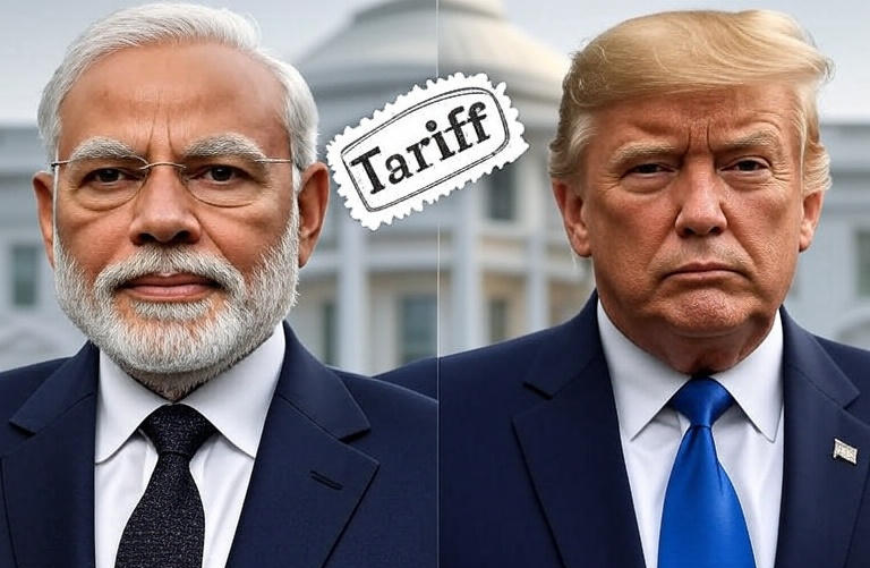
After the escalating tariff tensions between the United States and India, it looks like US President Donald Trump is de-escalating his rhetoric.
As of 2025, U.S.-India trade relations have grown increasingly strained, with Washington imposing a steep 50% tariff on Indian goods. The Trump administration has justified the move by pointing to India’s comparatively high tariffs on American products, calling it a matter of fairness. This marked one of the sharpest escalations in trade policy between the two longstanding partners. In response, India retaliated with reciprocal tariffs on American exports. The tit-for-tat measures have created heightened economic uncertainty, disrupting supply chains and affecting multiple sectors in both countries. These tensions come at a moment when both governments are already grappling with broader geopolitical and economic challenges, making the dispute particularly consequential.
According to reports, New Delhi is proceeding with caution after Trump appeared to moderate his tone following weeks of heightened rhetoric over the tariffs.
READ: Trump still wants to trade with India despite tariff threats? (
Economically, the tariff conflict is projected to have serious implications for India’s growth. Key export sectors, notably apparel, have already faced downgrades in their outlook. The Indian government is actively working on relief measures and support packages for exporters hurt by these new trade barriers. Despite these challenges, India emphasizes the importance of maintaining a constructive and respectful economic partnership with the U.S., urging dialogue to resolve disputes and foster mutual growth. The evolving tariff tensions in 2025 underscore the delicate balance required to manage trade relations between two of the world’s largest democracies and economies.
On Friday, Trump told reporters at the White House that there was “nothing to worry about” regarding U.S.-India ties and described the two countries as having a “special relationship.” He called Prime Minister Narendra Modi a “great prime minister” and added that he would always be friends with him.
“I don’t expect a dramatic turnaround in ties,” said Pramit Pal Choudhuri, India practice head of the Eurasia Group. “These tactics are outlined in Trump’s book, The Art of the Deal.” The US president will use every leverage possible to attack, threaten and “wear out the opponent and then make a generous gesture,” he said.
READ: Trump slams ‘one-sided’ US-India ties, cites trade imbalance (
Still, despite Trump’s softened tone, the reality of U.S.-India tariff tensions in 2025 remains severe. The United States continues to maintain its 50% tariff on Indian goods, citing India’s trade barriers on American products. India’s retaliatory tariffs have in turn hit U.S. exports in key sectors such as fish, steel, diamonds, and electronics. This back-and-forth has already contributed to a projected 6.4% decline in India’s shipments to the U.S. this year, with economists estimating a drag on India’s GDP of 0.5% to 0.6%. Businesses on both sides are grappling with disrupted supply chains and heightened uncertainty, which continues to overshadow the goodwill expressed by political leaders.
While Trump has publicly praised Prime Minister Narendra Modi and emphasized the special relationship between the two countries, substantive trade tensions persist beneath the surface. Both nations are actively pursuing negotiations to finalize a trade agreement aimed at boosting bilateral trade to $500 billion by 2030, reflecting a mutual interest in economic cooperation despite current disputes.
The situation highlights the complex balancing act required to manage economic interests alongside diplomatic ties. Moving forward, sustained dialogue and pragmatic negotiations will be critical for resolving tariff conflicts and fostering a stable, mutually beneficial trade relationship between the U.S. and India.