



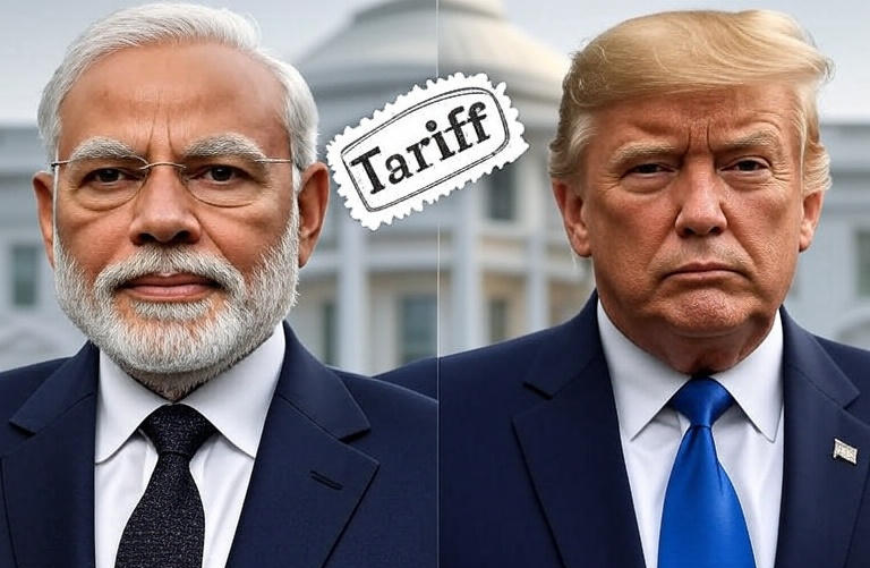
It looks like President Donald Trump still wants to trade with India despite his escalating tariff threats against the country. Trump left the door open for a trade deal with India, claiming New Delhi had agreed to zero tariffs, even as his MAGA supporters took aim at the services sector that has been spared so far because it is a more even playing field.
Earlier this year, Trump significantly escalated trade tensions with India by imposing a 50% tariff on a broad range of Indian imports. This move was driven by multiple factors, including India’s continued purchase of Russian oil amid Western sanctions related to the Ukraine conflict, and longstanding grievances about India’s high trade barriers and its substantial trade surplus with the United States. The tariffs directly affected major Indian export sectors such as pharmaceuticals, textiles, and gems and jewelry, placing Indian exporters at a competitive disadvantage in the U.S. market.
READ: Who lost India? Trump’s tariff approach puts a generation of U.S.-India progress at risk (
With India exporting over $87 billion worth of goods to the U.S. annually, this aggressive tariff hike strained the economic relationship between the two nations and raised concerns about the future of bilateral trade.
In response, India countered with tax cuts on hundreds of consumer goods to boost domestic consumption and mitigate the tariffs’ impact. The Indian government also emphasized its strategic autonomy, affirming its right to pursue independent energy policies and diversify its supply chains.
Diplomatically, this trade conflict prompted India to deepen its ties with China and Russia, signaling a shift in its foreign policy away from traditional alignment with the West. The U.S.-India tariff dispute highlights the complex interplay between economic interests and geopolitical strategies in global trade. As both countries navigate this challenging environment, the outcome will likely influence broader international trade dynamics and the balance of power in the Indo-Pacific region.
READ: India hit by Trump’s 50% tariffs as Modi pushes back with economic, self-reliance measures (
In remarks at the White House on Tuesday and in a call-in to a radio jock subsequently, Trump kept up his incessant complaints about New Delhi’s excessive tariffs on U.S. imports while characterizing India as a friend who is “killing us” with tariffs, while also asserting that weaponizing tariffs is what has enabled him to sign trade deals with EU and Japan, Trump said he “can sign with India” a similar deal, indicating that channels are still open with New Delhi and he is pressing for a better offer.
The ongoing trade tensions between the U.S. and India highlight a complex relationship marked by both conflict and cooperation. While President Trump’s steep tariffs on Indian imports have intensified economic strain, his openness to negotiating a trade deal indicates that dialogue remains possible. Trump’s criticism of India’s tariffs and emphasis on using tariffs as leverage reflects his broader trade strategy, which has yielded agreements with the EU and Japan.
Meanwhile, India’s response, cutting taxes to protect domestic consumption and reinforcing its strategic autonomy, shows its determination to maintain economic independence while navigating global pressures.